



By Charles Pitts

ELKO, Nev. : Barrick Gold Corporation (NYSE:GOLD)(TSX:ABX) has secured a pivotal set of federal exploration permits for its high-priority targets in north-central Nevada, marking a significant milestone in the company’s strategy to extend the life of its Tier 1 assets. The approvals, granted by the Bureau of Land Management (BLM) earlier this week, clear the path for advanced drilling at several prospects adjacent to the world-class Cortez and Carlin complexes.
The new permits arrive at a critical juncture for the industry as mining permits reform 2026 initiatives begin to yield tangible results in streamlining federal environmental reviews. For Barrick, and its joint venture partner Newmont in Nevada Gold Mines (NGM), these clearances represent more than just a bureaucratic win; they are the catalyst for a multi-year exploration campaign intended to feed the hungry mill circuits of the world’s most productive gold district.
Strategic Footprint Expansion in the Cortez District
The primary focus of the newly approved permits is the Fourmile project, a 100%-Barrick owned discovery that sits just north of the Goldrush development. Fourmile is widely considered one of the highest-grade gold discoveries in recent Nevada history. While it is currently outside the Nevada Gold Mines joint venture, Barrick has been aggressively de-risking the asset with the intent of eventual integration.
According to technical filings, the new permits allow for an additional 45 drill pads and expanded access roads within the Fourmile-Cortez boundary. This will enable “step-out” drilling to test the northern strike of the high-grade breccia bodies that have already returned significant intercepts. In previous exploration rounds, Fourmile has delivered grades exceeding 10 grams per tonne, far above the average open-pit grades typically found in the region.
More Read

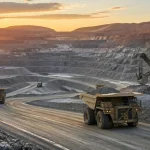
The expansion also covers brownfield targets near the Goldstrike and Turquoise Ridge operations. By securing these permits now, Barrick is positioning itself to capitalize on existing infrastructure, reducing the capital intensity required to bring new ounces into the production profile. This “hub-and-spoke” model: utilizing massive, established processing plants to treat ore from surrounding satellite deposits: is a cornerstone of Barrick’s North American growth strategy.


Impact of Mining Permits Reform 2026
The speed of these recent approvals has been attributed to the federal mining permits reform 2026 framework, which was designed to shorten the National Environmental Policy Act (NEPA) review timelines for projects deemed essential to economic security. While the reform has been a point of contention among environmental advocacy groups, the mining industry has lauded the shift toward “synchronized permitting.”
More Read

“What we are seeing in Nevada right now is the first real evidence of a more predictable regulatory environment,” said a spokesperson for the Nevada Mining Association. “The 2026 reforms haven’t lowered the environmental bar, but they have removed the redundant administrative loops that used to add three to five years to a project’s timeline.”
For gold mining operations, this means the “concept-to-production” cycle is tightening. In the case of Barrick’s new Nevada permits, the environmental assessment (EA) process was completed in approximately 14 months: a significant improvement over the 24- to 30-month averages seen earlier in the decade. This efficiency is vital as the industry faces declining global grades and the need to replace depleted reserves in stable jurisdictions.
The reform also includes the “Single Point of Contact” (SPOC) initiative, which assigns a lead federal agency to coordinate with state regulators, such as the Nevada Division of Environmental Protection (NDEP). This has been particularly effective in Nevada, where overlapping federal and state land ownership often complicates the permitting of haul roads and tailings expansions.
Data Snapshot: Nevada Gold Production and Market Trends
As of June 2026, Nevada remains the premier jurisdiction for gold investment, bolstered by a steady gold price and a favorable regulatory tailwind.
| Metric | 2025 Actual (Est.) | 2026 Forecast |
|---|---|---|
| Nevada Gold Production (Million Oz) | 4.12 | 4.35 |
| Average AISC (All-In Sustaining Cost) | $1,280/oz | $1,340/oz |
| Permitted Exploration Drill Holes | 1,450 | 1,820 |
| Capital Expenditure – Nevada Gold Mines | $1.1B | $1.4B |
| Spot Gold Price (Avg. per Q2) | $2,450/oz | $2,580/oz |
Source: Skillings Mining Intelligence Market Tracker 2026
The increase in forecast production for 2026 is largely driven by the ramp-up of the Goldrush underground mine and the anticipated inclusion of early-stage ounces from newly permitted satellite pits. Investors are watching these developments closely, particularly as Barrick evaluates the potential spin-off of its North American assets into a separate entity, a move that could value its Nevada holdings upwards of $60 billion.
Modernizing Exploration Through Integrated Data
The permit approval also clears the way for Barrick to deploy new autonomous drilling rigs and remote sensing technologies. In the Nevada Gold Mines control room, engineers and geologists are now using real-time telemetry to adjust drilling patterns based on instantaneous core analysis.

This technological edge is critical for exploring the “blind” deposits of the Carlin Trend, where gold mineralization is often buried under hundreds of meters of barren “post-mineral” cover. By integrating advanced geophysical data with the newly permitted drill sites, Barrick aims to increase its discovery success rate and lower the cost per discovery ounce.
The use of high-resolution hyperspectral imaging and seismic surveys, permitted under the new exploration plan, allows geologists to map the deep-seated fault structures that acted as conduits for gold-bearing fluids millions of years ago. These tools are essential for identifying the next generation of multi-million-ounce deposits in a district that has already produced over 90 million ounces of gold.
Geopolitical Context and the “Safe Haven” Premium
The push for increased exploration in Nevada is also a response to the shifting geopolitical landscape. With rising resource nationalism in South America and Africa, major producers are pivoting back to “Tier 1” jurisdictions. The United States, specifically Nevada, offers a combination of geological potential and legal certainty that is increasingly rare.
This trend is reflected in recent market activity, such as Hycroft Mine’s significant NPV assessment, which highlights the long-term value inherent in the state’s massive, low-grade deposits. Barrick’s focus, however, remains on the high-grade spectrum, where the margins are wider and the environmental footprint per ounce produced is smaller.
“The 2026 outlook for Nevada is incredibly robust,” noted a senior analyst at Skillings Mining Intelligence. “Between the permitting reforms and the bullish gold price outlook, we are seeing a level of exploration intensity that rivals the mid-1990s boom. Barrick is the primary beneficiary of this, given their dominant land position and operational scale.”
Looking Ahead: The Underground Future of Fourmile
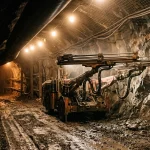
While open-pit operations continue to dominate the headlines, the future of Nevada Gold Mines is increasingly subterranean. The new exploration permits include provisions for underground diamond drilling from existing tunnels at Cortez, allowing Barrick to probe the Fourmile extensions from the bottom up.

This approach minimizes surface disturbance: a key factor in the expedited permitting process: while providing high-fidelity data on the ore body’s geometry. If the upcoming drill results confirm the continuity of the high-grade zone, Fourmile could move into the feasibility stage as early as 2027, with a production profile that could rival the legendary Goldstrike mine.
For the residents of Elko and the surrounding Crescent Valley, the permits represent continued economic stability. The mining sector remains the primary employer in the region, and the expansion of Barrick’s exploration pipeline ensures that the “Golden State of the Desert” will remain at the center of the global mining conversation for decades to come.








Would you be interested in land outside Reno nevada. 329.89acres
Email me if you are?
Sincerely john Adams