SASKATOON, Saskatchewan : Cameco Corporation (TSX: CCO; NYSE: CCJ) announced early Wednesday that it has initiated a temporary suspension of mining operations at its flagship Cigar Lake uranium mine. The decision follows a significant operational disruption at the McClean Lake mill, operated by Orano Canada, where all ore from Cigar Lake is processed.

The suspension, effective immediately, is the result of a critical failure within the sulfuric acid plant at the McClean Lake facility. As the world’s highest-grade uranium mine, the halt at Cigar Lake sends an immediate shockwave through a global nuclear fuel supply chain already struggling with lean inventories and rising geopolitical tensions.
The McClean Lake Bottleneck: Sulfuric Acid Disruption
Cigar Lake does not process its own ore. Instead, the high-grade slurry is transported via truck to the McClean Lake mill, located approximately 80 kilometers to the northeast. This toll-milling arrangement makes Cigar Lake’s production entirely dependent on the operational status of Orano’s facility.
The disruption involves a structural failure in the primary heat exchanger of the sulfuric acid plant, a core component of the leaching process required to extract uranium from ore. Sources close to the operation indicate that the failure occurred during a routine pressure cycle late Tuesday night. Without a steady supply of sulfuric acid, the mill cannot maintain its processing circuits, forcing an immediate halt to all intake.
“Our first priority is the safety of our workforce and the integrity of the environment at both the mine and the mill sites,” a Cameco spokesperson stated. “While the mine itself remains operational in a technical sense, we cannot continue extraction when the destination for our ore is unable to receive it. We are working closely with Orano to assess the duration of this outage.”
More Read

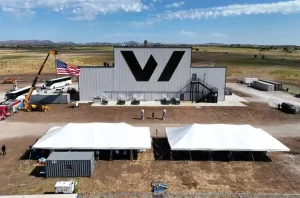
Journalistic view of the McClean Lake mill facility in northern Saskatchewan.

Impact on 2026 Production Guidance
Before this disruption, Cameco had provided 2026 production guidance for Cigar Lake of approximately 18 million pounds of U₃O₈ (on a 100% basis). With the mine now entering a period of unplanned care and maintenance, that guidance is under severe pressure.
The duration of the fix at the sulfuric acid plant is the primary variable. Industry analysts suggest that replacing or performing major repairs on a primary heat exchanger in a remote northern location can take anywhere from three weeks to two months, depending on the availability of specialized parts and labor.
More Read

If the halt lasts 30 days, it could result in a production loss of roughly 1.5 million pounds of U₃O₈. Given that the uranium market is currently characterized by a structural deficit, any loss of “Tier 1” production is magnified in its impact on global spot and term prices. This event follows a series of previous uranium price forecast 2026 updates that already pointed toward a tightening market.
Market Reaction and Supply Chain Tightness
The market reaction was swift. In early pre-market trading, Cameco (CCJ) shares saw a 4.5% decline, while spot uranium prices moved upward as traders anticipated a scramble for pounds to cover short-term delivery obligations.
Utility companies, particularly those in North America and Western Europe, have been working to diversify away from Russian supply. The sudden removal of the world’s most productive high-grade mine from the daily supply mix complicates these efforts.
“This is the ‘nightmare’ scenario for the 2026 outlook,” said one market analyst. “Cigar Lake is the cornerstone of Western supply. When McClean Lake goes down, the entire domino chain of deliveries for the second half of the year is put at risk. We expect to see immediate pressure on the spot market as intermediaries look to secure physical material.”

Operational monitoring at a northern mining facility.
Technical Challenges: The Remote Reality
Operating in the Athabasca Basin presents unique logistical hurdles. The McClean Lake mill is a highly specialized facility designed specifically to handle the high-grade, high-radiation ore from Cigar Lake. There is no alternative processing route for this ore.
The sulfuric acid plant failure highlights the aging infrastructure at some of the industry’s most critical nodes. While the mining equipment at Cigar Lake: including the innovative Jet Boring System (JBS): is state-of-the-art, the processing mills are often the “single point of failure” for the entire uranium sector.
| Facility | Owner/Operator | Role | 2026 Target | Status |
|---|---|---|---|---|
| Cigar Lake Mine | Cameco (54.55%) | Extraction | 18M lbs U₃O₈ | Suspended |
| McClean Lake Mill | Orano (77.5%) | Processing | 18M lbs U₃O₈ | Critical Outage |
| Inkai Mine | Cameco/Kazatomprom | Production | 8.3M lbs (share) | Operational |
| McArthur River | Cameco (69.8%) | Extraction | 18M lbs U₃O₈ | Operational |
What to Watch Next
As Cameco and Orano engineers evaluate the damage, investors and operators should monitor three key indicators:
- Lead Time for Parts: If the heat exchanger requires a custom build, the outage could extend into the fall of 2026.
- Inventory Drawdowns: Cameco typically maintains a buffer of inventory to meet contract commitments. The rate at which they draw from this or enter the spot market to buy back pounds will be a signal of their internal timeline.
- Secondary Supply Movement: Watch for announcements from the U.S. Department of Energy (DOE) or other national stockpiles, which may be pressured to release material if the “supply-gap” widens significantly.
This disruption underscores the volatility inherent in critical minerals stocks 2026 and the broader energy transition. While the long-term demand for nuclear power remains robust, the “mine-to-mill” link remains a fragile part of the equation.

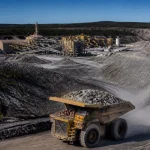
Heavy machinery on standby at a Saskatchewan uranium operation.
By Charles Pitts