By Charles Pitts

COBAR, Australia : West Cobar Metals (ASX:WC1) has announced the commencement of a multi-phase exploration and drilling program across its key Australian assets, signaling a strategic pivot toward high-demand critical minerals. The 2026 campaign targets significant resource expansion at the Bulla Park copper-antimony-silver project in New South Wales and advanced metallurgical development at the Salazar critical minerals project in Western Australia.
The dual-track program arrives as global markets face a deepening copper supply deficit, driven by the convergence of renewable energy infrastructure needs and declining grades at established Tier-1 mines. By focusing on a diversified mix of copper, antimony, and scandium, West Cobar is positioning its portfolio to capitalize on both traditional industrial demand and the specialized requirements of the global energy transition.
Bulla Park: Targeting High-Grade Copper and Antimony
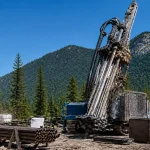
At the Bulla Park project, located within the renowned Cobar copper corridor, West Cobar is launching a combined Reverse Circulation (RC) and diamond drilling program. The primary objective is to test high-grade targets and extend the existing Inferred Mineral Resource, which currently stands at 20 million tonnes (Mt) at 0.58% copper equivalent (CuEq).
Geological modeling based on recent aeromagnetic and gravity surveys has identified several “pipe-like” structures interpreted as potential feeder zones for higher-grade mineralization. These targets will be the focus of the diamond drilling phase, aimed at intersecting the primary sources of the stratabound copper and antimony system.
More Read

The 2026 program follows a comprehensive re-assaying initiative of 2023–2024 drill core. Previous analysis suggested that antimony grades were under-reported due to historical sampling methodologies. Preliminary results from the re-assay program, expected early in the second quarter of 2026, are anticipated to refine the grade profile and potentially increase the overall copper-equivalent valuation of the deposit.


Strategic Mineral Importance: Antimony and Silver
Beyond copper, Bulla Park holds significant concentrations of antimony and silver. Antimony has gained prominence as a critical mineral due to its use in high-capacity liquid metal batteries and flame retardants.
More Read

Metallurgical testwork at Bulla Park has already demonstrated robust economics, achieving recoveries of 94.6% for copper and 82.6% for antimony. These results support a simplified, dual-product flowsheet consisting of a copper-silver concentrate and a high-grade antimony sulfide product.
“The integration of antimony into the resource model significantly de-risks the project,” stated a geological analyst familiar with the Cobar region. “In an environment where copper grades are falling globally, having a secondary high-value product like antimony provides a buffer against commodity price volatility.”
Salazar Project: Advancing Scandium and REE Metallurgy
In Western Australia, the Salazar project represents West Cobar’s primary vehicle for rare earth element (REE) and scandium exposure. The 2026 roadmap for Salazar shifts from greenfield exploration to advanced development and process design.
The company has initiated a specialized metallurgical testwork program at the Newmont and O’Connor deposits within the Salazar project area. The work is focused on producing a high-purity REE carbonate and a scandium-rich concentrate. Scandium, a key component in high-performance aluminum alloys and solid-oxide fuel cells, is increasingly sought after by the aerospace and defense sectors.
Recent studies have confirmed high scandium recoveries, which suggest a low-cost development pathway relative to more complex hard-rock REE operations. By leveraging the weathered, clay-hosted nature of the Salazar mineralization, West Cobar aims to establish a competitive midstream processing solution that could serve the broader Western Australian critical minerals sector.

Market Dynamics and US Strategic Engagement
The timing of the drilling launch coincides with increased geopolitical interest in Australian critical minerals. West Cobar has partnered with GreenMet, a U.S.-based advisory firm, to advance a North American engagement strategy. This partnership aims to align the Bulla Park and Salazar projects with U.S. supply chain security initiatives, particularly concerning antimony and rare earths.
As of July 2026, the price of copper remains supported by structural deficits, while the rare earth market continues to navigate supply constraints from traditional producers. West Cobar’s strategy of presenting its assets as a “multi-commodity hub” targets investors seeking diversified exposure across the critical minerals spectrum.
| Project Pillar | Primary Minerals | 2026 Key Milestone | Status |
|---|---|---|---|
| Bulla Park (NSW) | Copper, Antimony, Silver | RC/Diamond Drilling for Resource Expansion | Active |
| Salazar (WA) | REEs, Scandium, Gallium | Metallurgical Testwork & Carbonate Production | Active |
| Regional Cobar | Copper, Base Metals | Ground Gravity & Geochemical Sampling | Pending |
| Strategic (US) | Multi-Commodity | GreenMet Engagement & Supply Chain Alignment | Ongoing |
Exploration Logistics and Tenure Expansion
To support the long-term scale of the Bulla Park project, West Cobar has significantly expanded its regional footprint. The company recently applied for two additional exploration licenses, bringing its total landholding in the Cobar corridor to approximately 1,090 square kilometers.
Once these tenements are granted, the company plans to deploy ground gravity surveys and geological mapping to identify the next generation of “blind” copper targets: deposits that do not outcrop on the surface but are identifiable through modern geophysical techniques. This regional approach mimics the exploration successes of other major operators in the basin who have used similar technology to discover deep-seated mineralized systems.

Timeline and Key Risks
The 2026 drilling and metallurgical campaign is scheduled to run throughout the second half of the year, with continuous assay flow expected to provide steady market updates. However, several factors could influence the project’s timeline and ultimate economic viability:
- Drill Rig Availability: High demand for technical diamond drill rigs in Australia has occasionally led to delays in program execution.
- Metallurgical Complexity: While initial REE carbonate production has been successful, the transition to commercial-scale processing requires consistent grade control across the Salazar deposits.
- Regulatory Approval: Expansion into new exploration licenses is contingent on the granting of permits by the New South Wales and Western Australian mining departments.
- Commodity Price Volatility: While the long-term outlook for copper and critical minerals is positive, short-term fluctuations in the global economy could impact capital availability for junior explorers.
Despite these risks, the sheer scale of the Bulla Park exploration target: currently estimated at 30–50 Mt at 0.47–0.66% CuEq: highlights the potential for West Cobar to transition from an explorer to a significant regional developer.
Conclusion
West Cobar Metals’ 2026 drilling programs at Bulla Park and Salazar represent a critical juncture for the company. By moving beyond initial resource definitions into aggressive high-grade targeting and advanced metallurgy, the company is addressing the urgent global need for a reliable supply of transition metals.
Operators and investors will be closely watching the results of the upcoming diamond drilling at Bulla Park, as a successful intersection of the interpreted feeder zones could redefine the project’s scale and the broader potential of the northern Cobar corridor.