By Charles Pitts

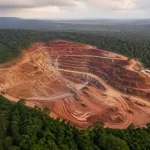
OTTAWA : The federal government has formally approved Canada Nickel Company’s massive Crawford nickel-cobalt project north of Timmins, Ontario, clearing the path for what is slated to become the Western world’s largest nickel mine.
The decision, issued on July 31, 2026, by Environment and Climate Change Minister Julie Dabrusin under the amended Impact Assessment Act, marks a watershed moment for Canadian resource development. As policymakers and investors evaluate the nickel market outlook 2026, the greenlighting of Crawford provides a generational anchor for North American critical mineral supply chains at a time when automakers, energy firms, and defense contractors face mounting pressure to secure domestic, ESG-compliant raw materials.
Spanning an estimated 41-year mine life, the Crawford project represents a capital investment of approximately $5 billion. Federal economic modeling indicates the open-pit mine and on-site mill will generate roughly 5,000 jobs during its peak construction phase and sustain 1,300 permanent operational roles in northeastern Ontario. At full capacity, the facility is expected to extract nearly 90 million tonnes of ore annually, injecting an estimated $70 billion into Canada’s gross domestic product over its operational lifespan.
A Regulatory Milestone Under the Amended Impact Assessment Act
The approval of the Crawford project is notable not only for its sheer physical scale but also for its procedural significance. It stands as the first mining venture in Canada to receive a formal Decision Statement under the revised 2019 Impact Assessment Act and serves as a test case for Ontario’s newly minted “One Project, One Process” regulatory framework, designed to eliminate duplication between federal and provincial oversight.
More Read

Referred to the federal Major Projects Office in November 2025 following the submission of comprehensive environmental impact statements, the project underwent rigorous scrutiny. Federal regulators weighed the anticipated economic and strategic windfalls against significant ecological trade-offs identified in the final assessment report.


According to the Impact Assessment Agency of Canada (IAAC), the mine will pose unavoidable negative effects on local fish and bird habitats, surface water quality, regional Indigenous communities, and national greenhouse gas accounting. However, Minister Dabrusin concluded that these adverse impacts are legally justified by the strategic necessity of establishing secure domestic supplies of critical battery metals, provided Canada Nickel adheres to a strict framework of binding environmental conditions.
More Read

“The issuance of this Decision Statement reflects a rigorous, science-based evaluation of both the ecological challenges and the profound economic imperatives of our energy transition,” federal officials noted in project briefs. “The enforceable conditions attached to the approval mandate comprehensive mitigation, long-term monitoring, and active consultation with Indigenous rights holders throughout construction and operation.”
Economic Scope and Operational Scale
The sheer magnitude of the Crawford deposit places it in a league of its own among global nickel developments. Located approximately 42 kilometers north of Timmins: a historic mining hub with deep industrial roots: the project benefits from existing regional infrastructure, including grid power access, transportation corridors, and a skilled local labor force.
| Metric | Project Projections |
|---|---|
| Total Estimated Investment | ~$5.0 Billion CAD |
| Projected Mine Life | 41 Years |
| Annual Ore Extraction | ~90 Million Tonnes |
| Construction Workforce | ~5,000 Jobs |
| Permanent Operations Workforce | ~1,300 Jobs |
| Estimated GDP Contribution | ~$70 Billion CAD |
Industry analysts point out that Crawford’s ultra-low grade, bulk-tonnage ultramafic ore body allows for high-volume, low-cost extraction. More importantly, the host rock possesses natural carbon-capture properties, a characteristic Canada Nickel has heavily emphasized in its pursuit of net-zero carbon operations. By trapping carbon dioxide directly within the tailings through accelerated carbon mineralization, the company aims to market one of the world’s lowest-carbon nickel products to Western electric vehicle (EV) manufacturers.
Shaping the Nickel Market Outlook 2026
The federal greenlight arrives as the broader nickel market outlook 2026 undergoes a structural realignment. Following years of severe price volatility driven by Indonesian capacity expansions and shifting battery chemistry demands, Western markets have increasingly bifurcated. Automakers are actively seeking out non-Indonesian, low-carbon nickel units that comply with stringent ESG criteria and North American trade pacts, such as the United States-Mexico-Canada Agreement (USMCA).

By securing federal clearance, Canada Nickel removes a major overhang that had previously hung over its financing and offtake negotiations. Financial institutions and strategic partners, including major global mining houses and EV supply chain players, have closely monitored the regulatory timeline. With the Decision Statement secured, the company can now advance detailed engineering, finalize major equipment procurement, and lock down project financing.
Market observers note that while near-term macroeconomic headwinds and surplus supply from Indonesia continue to weigh on spot prices, long-term structural deficits remain projected for the latter half of the decade as gigafactories across North America ramp up production. Crawford’s projected output: slated to come online toward the end of the decade: positions Canada as a pivotal supplier capable of meeting multi-decadal demand curves.
Environmental Mitigation and Indigenous Partnerships
Navigating the regulatory approval required extensive engagement with local First Nations, including Tayk Tagamou Nation and Mattagami First Nation, whose traditional territories encompass the project area. While the federal framework establishes baseline protections, Canada Nickel has pursued formal impact benefit agreements (IBAs) to ensure regional communities share directly in equity participation, employment, and procurement opportunities.
The enforceable conditions outlined in the Decision Statement mandate rigorous oversight of water management systems, tailings storage facilities, and wildlife migration corridors. Independent monitoring committees, comprising both government regulators and Indigenous representatives, will oversee compliance as the site transitions from exploratory planning to heavy earthworks.

Furthermore, the project’s carbon sequestration technology will be subject to continuous audit. If successfully scaled, Crawford’s tailings management strategy could establish a regulatory benchmark for future critical mineral developments across the Canadian Shield, proving that high-volume extraction can coexist with ambitious climate targets.
Next Steps and Industrial Execution
With the federal hurdle cleared, attention now shifts to provincial permitting and financial close. Canada Nickel must still secure a series of secondary permits from Ontario ministries, including approvals under the Mining Act, the Environmental Protection Act, and the Ontario Water Resources Act.
Company executives have expressed confidence that provincial approvals will proceed smoothly under the collaborative umbrella of the “One Project, One Process” initiative, which synchronizes provincial review boards with federal findings. Early works infrastructure, including access roads and geotechnical drilling, could ramp up as soon as secondary permits are finalized.

For Timmins and the wider Abitibi greenstone belt, the federal decision cements a new chapter in a century-long mining heritage. Once defined primarily by gold and base metals, the region is rapidly evolving into a premier global jurisdiction for energy transition minerals. As global supply chains decouple and sovereign governments prioritize resource security, the Crawford project stands as a definitive test of Canada’s ability to turn regulatory ambition into industrial reality.