Shandong Gold Mining Co Ltd, which has a Hong Kong listing, gave some insight into the technology moves being made by the prominent Chinese mining companies in its 2019 full-year results released yesterday.
The Company is the leading local producer and achieved a gold mine production volume of 40.12 tonnes or 1.42 Moz during the year, representing a rise of 2.03% year-on-year. This compares to a Chinese domestic total production across all mines in 2019 of 314.37 tonnes or 11.09 Moz, representing a decrease of 9.13% year-on-year. Sanshandao, Shandong Jiaojia and Linglong gold mines have all produced over 100 tonnes of gold in total, again a first for Chinese gold mining complexes.
The Company says it plans to boost its large-scale operations by “vigorously improving the mechanized operation and the efficiency of enterprises.

“the equipped production level and mechanization degree of the mining businesses firmly occupy the leading position in the domestic mining sector. Also, the underground trackless mining equipment configuration has always been at an advanced level in the world.”
Shandong says
Shandong Gold Accelerates Smart Mining Projects
Shandong Gold continues to advance the Sanshandao Gold Mine project and the Jiaojia Gold Mining Belt development. Both projects support the company’s long-term strategy to expand production and improve operational efficiency.
The company has also established three specialist research laboratories focused on deep underground mining, mineral processing, and mine backfilling. Engineers are already applying several research outcomes at the Sanshandao Gold Mine to improve safety, productivity, and underground operations.
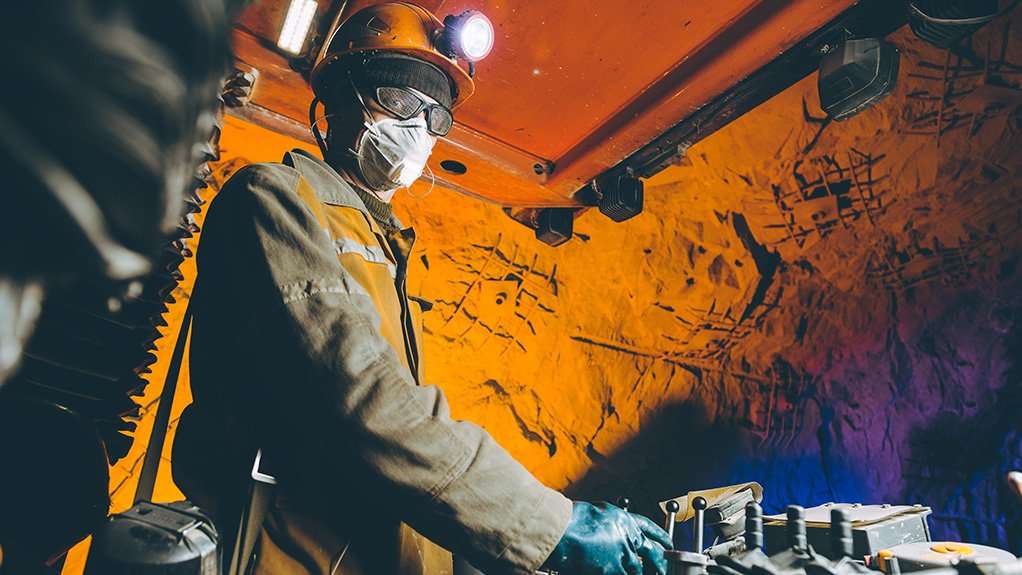
In addition, Shandong Gold has introduced China’s first industrial 5G mining application at the Laixi Mine. The technology supports remote equipment operation, improves underground communications, and strengthens automation across mining activities.
The company plans to continue investing in smart mining technologies as it transforms the Sanshandao Gold Mine into a safer, more efficient, and digitally connected operation.

5G Technology Powers Underground Operations
China Mobile and Huawei deployed one of China’s first underground 5G networks at the Laixi Mine. The companies installed 5G base stations about 500 metres below the surface to support real-time mine operations.

The network now controls unmanned electric rail transport vehicles and provides stable communication throughout the underground workings. During field tests, download speeds exceeded 800 Mbps, upload speeds remained above 100 Mbps, and latency stayed below 20 milliseconds.
Shandong Gold plans to combine 5G connectivity with autonomous vehicles, edge computing, cloud platforms, and intelligent drilling systems to further automate underground mining.

At Laixi, field test data reveals that the downlink speed is steady at over 800 megahertz. While the end-to-end delay is significantly less than 20 milliseconds, the uplink rate is stable at more than 100 megahertz. This actually exceeded customer expectations. In the future, Shandong Gold’s Laixi mine plans to combine the 5G, Unmanned motor, edge computing, cloud platform, and other new-generation information technologies to gradually achieve remote control and automation of its underground production fleet as well as scrapers and rock drilling rigs.