Key Takeaways
- Legislative overhaul: Amendments to the MMDR Act will enable state funding for overseas acquisitions of critical minerals.
- Funding source: The ₹6,000 crore National Mineral Exploration Trust to be renamed and given a broader acquisition mandate.
- Innovation push: The National Critical Mineral Mission targets 1,000 patents by FY 2031 to reduce reliance on foreign technology.
- Strategic minerals: Focus includes lithium, cobalt, copper, nickel, tungsten, and rare earth elements for clean energy and high-tech industries.
- Global context: India’s strategy mirrors moves by China, Japan, and South Korea to secure upstream control in supply chains.
Why Critical Minerals Matter for India’s Future
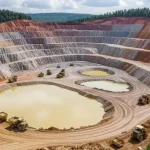
Critical minerals India depends on — from lithium and cobalt to copper and rare earth elements — are increasingly recognized as strategic assets, vital for electric vehicles, renewable energy systems, semiconductors, and defense technologies.

Global demand for these resources is surging. At the same time, supply chains remain highly concentrated in a few regions, exposing countries to price shocks, export restrictions, and geopolitical friction.
“Control over critical minerals is fast becoming as important as oil security was in the last century,” a senior official at the Ministry of Mines told The Wall Street Journal.
Legislative Shift: How India Plans Overseas Mineral Acquisitions
Parliament is set to debate amendments to the Mines and Minerals (Development and Regulation) Act (MMDR) that would, for the first time, allow public funding to acquire overseas mineral assets.
Under the proposal, the National Mineral Exploration Trust (NMET) — with a corpus exceeding ₹6,000 crore from levies on mining lease holders — would finance acquisitions of critical minerals India needs for strategic industries. The trust’s remit would expand beyond exploration to include acquisition and development, with a new name reflecting its broadened scope.
More Read

“This is about moving from being a price-taker to a participant in the upstream value chain,” the Mines Ministry official said.

National Critical Mineral Mission Goals
The overseas asset push is paired with domestic innovation under the National Critical Mineral Mission (NCMM), approved by the Cabinet in January. The NCMM aims to support the filing of 1,000 patents by FY 2031 in technologies linked to exploration, extraction, processing, and recycling.
In May and June alone, 62 patent applications were filed and 10 granted, covering sodium-ion battery designs, tungsten–polymer composites, and rare-earth-doped nanoparticles. These innovations strengthen India’s ability to process and utilize the minerals it seeks to secure abroad.

Patent Push: Innovation at the Heart of Critical Minerals India
By embedding research and development in its mineral policy, India aims to avoid over-reliance on imported intellectual property. NCMM officials say the patent drive will complement Production-Linked Incentive schemes for battery manufacturing, electronics, and renewable energy.
“Without domestic technology, securing raw materials alone won’t make India competitive,” said an NCMM program lead. “We need the know-how to process and deploy them.”
Role of the MMDR Act in Securing Critical Minerals India
The MMDR Act amendments, if passed, could enable participation in global bidding rounds for projects in Africa, South America, and Australia before the year ends.
Officials say co-investment models with private sector partners are under discussion, blending public capital with industry expertise to de-risk large-scale overseas mining ventures.
Risks, Opportunities, and Global Competition
Analysts warn that overseas mining investments are complex. Political instability, environmental opposition, and sudden regulatory changes can derail projects.
“Mining abroad isn’t just about signing a cheque,” said Madhu Pillai, a Singapore-based resource-sector consultant. “You need local partnerships and a robust compliance framework.”
India’s approach mirrors moves by China, Japan, and South Korea, where state-backed entities have long pursued stakes in critical mineral assets as part of industrial strategy.
Looking Ahead
With the twin pillars of legislative reform and patent-led innovation, India is positioning itself as a serious contender in the race for critical minerals. Success will hinge on aligning resource acquisition with technology development, ensuring both raw material supply and the means to process them domestically.
“In the 21st century, those who control critical minerals will shape the global economy,” the Mines Mihttps://mea.gov.in/nistry official said. “Critical minerals India secures today will define its industrial strength tomorrow.”