Key Takeaways
- Brook Mine is the first new U.S. rare earth mine in 70 years, located in Wyoming.
- Estimated reserves of 1.7 million tons of rare earth elements and critical minerals.
- Could supply 3–5% of U.S. permanent magnet demand for military and high-tech manufacturing.
- China currently controls 90% of the global rare earth market and has restricted exports.
- Ramaco Resources plans to mine coal first to finance rare earth extraction.
- Processing challenges, environmental oversight, and volatile pricing remain key risks.
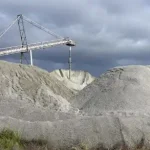
The Wyoming rare earth mine at Brook Mine marks a pivotal moment in America’s mineral strategy, becoming the first new rare earth operation in the U.S. since the Cold War.

Owned by Kentucky-based Ramaco Resources Inc., the site is estimated to hold 1.7 million tons of rare earth elements and critical minerals. “We are the only place that we are aware of, and the government’s aware of, that will produce those rare earths in the continental U.S.,” said Chief Executive Randy Atkins. The mine could supply up to 5% of U.S. demand for permanent magnets — essential for fighter jets, nuclear submarines and advanced electronics.
Brook Mine’s initial development covers 4,500 acres of fully permitted land, with an additional 11,500 acres still unexplored. Mining is expected to start within a year, with commercial-scale rare earth production targeted within several years.
The Wyoming rare earth mine at Brook Mine marks a pivotal moment in America’s mineral strategy, becoming the first new rare earth operation in the U.S. since the Cold War.
Owned by Kentucky-based Ramaco Resources Inc., the site is estimated to hold 1.7 million tons of rare earth elements and critical minerals. “We are the only place that we are aware of, and the government’s aware of, that will produce those rare earths in the continental U.S.,” said Chief Executive Randy Atkins. The mine could supply up to 5% of U.S. demand for permanent magnets — essential for fighter jets, nuclear submarines and advanced electronics.
More Read

Brook Mine’s initial development covers 4,500 acres of fully permitted land, with an additional 11,500 acres still unexplored. Mining is expected to start within a year, with commercial-scale rare earth production targeted within several years.

Why the Wyoming Rare Earth Mine Matters for U.S. Security
Rare earth elements — a group of 17 chemically similar metals — are vital for national defense, renewable energy and advanced manufacturing. They are used in guidance systems, radar arrays, electric vehicle motors and clean energy technologies.
China dominates the market, controlling about 90% of global supply. In April, it banned exports of several critical minerals, a move that heightened concerns in Washington about supply chain vulnerabilities. The United States imported nearly all of the 10,000 metric tons of rare earths it used in 2023.
More Read

Brook Mine’s projected output of 1,400 metric tons annually will make only a small dent in total U.S. demand, but its strategic significance is far greater. Alongside rare earths such as terbium, dysprosium, neodymium and praseodymium, the Wyoming rare earth mine also contains gallium, scandium and germanium — all designated as critical for national security.
Wyoming Rare Earth Mine vs. Mountain Pass
Currently, the only other operational U.S. rare earth facility is the Mountain Pass mine in California. Brook Mine’s development gives the U.S. a second domestic source, reducing reliance on imports and increasing resilience in the supply chain.
While Mountain Pass benefits from decades of operational experience, Brook Mine is taking a novel approach. Ramaco plans to mine coal first, using sales revenue to help finance rare earth extraction from the surrounding claystone and shale. “We’ll mine about 2 million tons of coal, and from that, produce roughly 1,200 tons of rare earth oxide,” Atkins said.
Challenges Facing the Wyoming Rare Earth Minehttp://Ramaco estimates
Processing rare earth elements is complex and capital-intensive. Ramaco estimates that building a facility capable of separating and refining the minerals will cost hundreds of millions of dollars. The company hopes to secure federal funding to offset these costs, citing the project’s importance to U.S. security.
Environmental oversight will also be a factor. Rare earth mining abroad has been linked to hazardous waste, prompting calls for cleaner extraction and processing methods in domestic projects.
Market volatility adds another layer of uncertainty. Prices for rare earth elements can swing sharply, influenced by geopolitical tensions, technological shifts and changes in demand.
The Future of Wyoming’s Rare Earth Industry
If Brook Mine meets its production goals, it could encourage further exploration and development across Wyoming. The state’s mineral wealth, long tied to coal and energy production, could shift toward supplying the high-tech and defense sectors.
For Sheridan, the Wyoming rare earth mine represents a rare opportunity for economic diversification. The transition from coal to critical minerals could redefine the region’s role in the national economy, tying its fortunes to advanced manufacturing and strategic defense.