
The August Consumer Price Index (CPI) report revealed a headline inflation rate of 2.5%, while core inflation—excluding volatile food and energy prices—ticked up to 3.2%. This slight but meaningful increase indicates that inflationary pressures remain strong, despite certain sectors experiencing price declines. A significant contributor to the inflationary trend has been the unexpected behavior of energy prices, which have continued to fall even as geopolitical tensions in the Middle East persist.
This fall in energy prices comes against the backdrop of crude oil inventories at a five-year low, confounding expectations that tighter supply would fuel price hikes. However, inflationary pressure remains concentrated in the services sector, where shelter costs continue to rise above 5%. Vehicle prices have dropped, partly driven by a 21% increase in unsold inventories, but this relief is being offset by surging costs associated with insuring and maintaining those vehicles, both of which saw double-digit inflation increases.
Commodities and Food Inflation: Stabilizing but Still Pressured
Food prices, which have been a focal point of inflation concerns, have shown signs of stabilizing. During earlier periods, 78% of tracked food items saw inflation rates exceeding 5% year-over-year, but recent data suggests that this inflationary pressure has eased. Despite the large harvests of commodities like grains and oilseeds, strong demand continues to support price floors, making further significant drops unlikely.
This stabilization in food prices reflects broader trends in commodity markets, where sharp price declines have been followed by periods of stabilization. Although this offers some relief to consumers, strong demand—especially from global markets—could prevent a meaningful deflation in these categories, keeping upward pressure on overall inflation figures.

U.S. Debt Crisis 2024: A Growing Dilemma for Policymakers
One of the most pressing concerns for the U.S. economy is the mounting national debt, which has escalated to unprecedented levels. U.S. government spending has ballooned to over $500 billion per month, while the annual deficit is expected to surpass $2 trillion this year. These figures, typically associated with economic downturns, are being sustained in an otherwise stable economy, signaling deep structural challenges.

You might be Interested In
- Bank of Canada seen cutting interest rates faster as markets panic
- TNM Podcast: ‘The gold price action is not a Western story’, ft Canaccord Genuity’s Cam Currie
- Barrick Gold on way to becoming major copper producer
- BRICS: The Emerging Power Club That’s Turning Heads and Attracting New Admirers
The dilemma for the Federal Reserve and other central banks lies in balancing inflation control with debt management. As government spending rises, the central banks face the difficult task of managing inflation without triggering a debt deflation spiral. In this environment, higher inflation might become an accepted reality as a means of managing the mounting debt burden.
The “ratchet effect” comes into play here—a concept in economics where each crisis leads to an increase in government intervention, pushing debt levels higher while interest rates ratchet down. This effect has created a scenario in which interest rates fall more quickly during crises than they rise during recoveries, trapping policymakers in a cycle of low rates and high debt.

The Rise of BRICS and the Push for a Gold-Backed Currency
On the international stage, the BRICS nations—Brazil, Russia, India, China, and South Africa—are gaining prominence, challenging Western economic dominance and potentially reshaping global currency dynamics. Recent reports indicate that Turkey, a NATO member, is exploring joining the BRICS bloc, further strengthening its global influence.
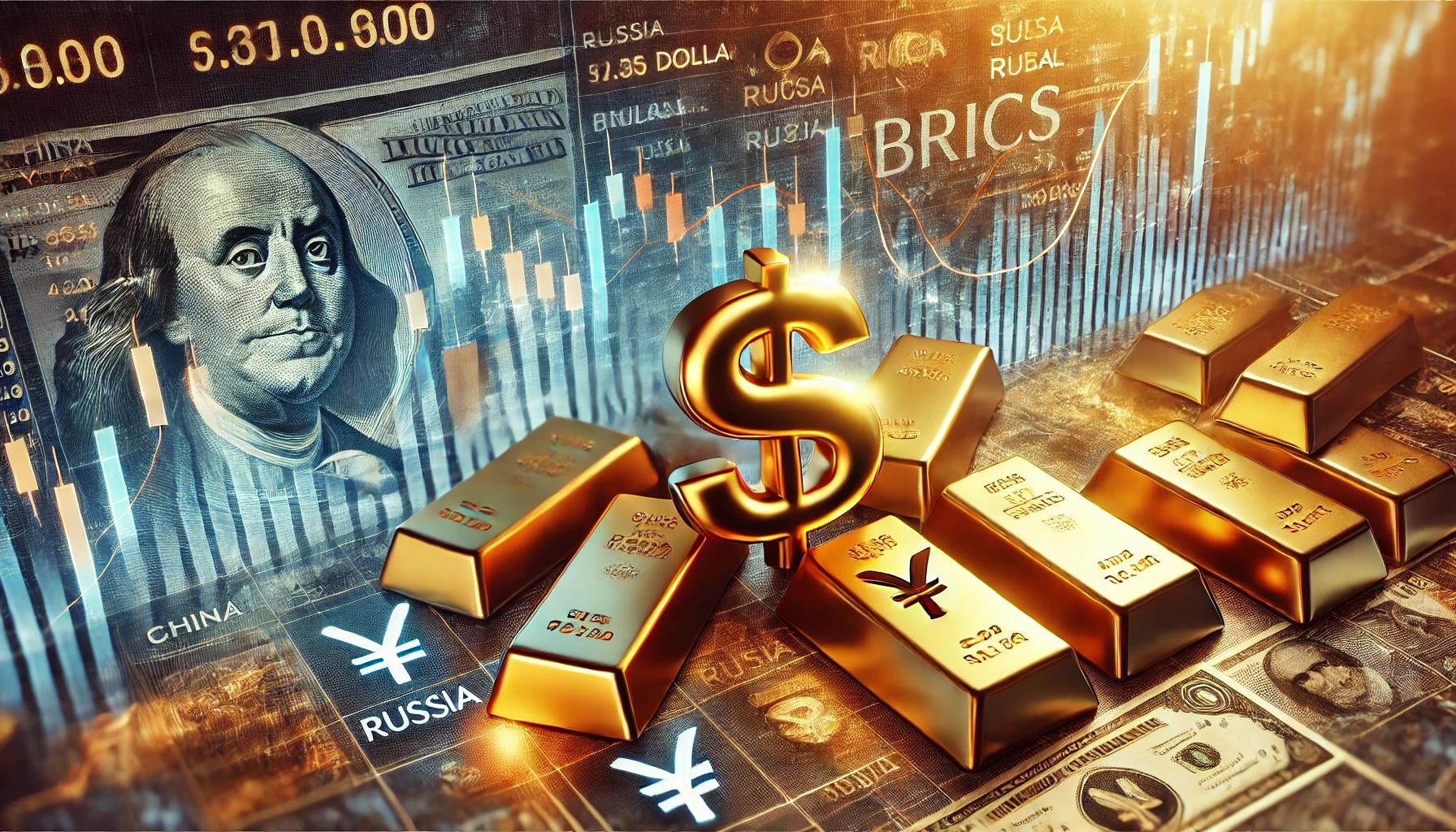
One of the most significant developments in the BRICS nations’ strategy has been their move toward a currency that may be partially backed by gold. In the last 28 months, central banks in BRICS countries have collectively purchased over 4,000 tons of gold, while simultaneously divesting from U.S. Treasury securities to the tune of $800 billion. This shift signals a clear intent to reduce reliance on the U.S. dollar in international trade and finance.
If the BRICS currency gains widespread acceptance, it could trigger a bull market in gold, driven by increased demand for the yellow metal. Such a move would not only diminish the U.S. dollar’s global dominance but also introduce a new dynamic into global trade, with profound implications for commodities markets.
Consumer Debt: A Looming Economic Threat
Domestically, the surge in consumer debt is raising alarms. Revolving credit in the U.S. has increased by 9%, with credit card interest rates climbing to as high as 30%. Compounding this, consumer savings have plummeted from $6 trillion in 2019 to just $800 billion today, leaving many Americans increasingly dependent on high-interest debt to sustain their lifestyles.
The rising cost of living, coupled with stagnant real wage growth, is eroding consumers’ ability to manage their debt. Delinquencies are beginning to rise, and lenders are tightening their standards. These trends suggest that the U.S. consumer debt crisis is fast approaching a tipping point where many households could face unsustainable debt burdens.
Investment Implications: The Need for Diversification
As the U.S. grapples with inflation, mounting debt, and a shifting global economic landscape, investors are being urged to reconsider their strategies. Relying solely on the stock market may no longer suffice. Commodities, bonds, and foreign currencies are gaining attention as potential hedges against inflation and volatility in traditional markets.
The rise of BRICS and the weakening of the U.S. dollar could further drive demand for gold and other tangible assets. As central banks continue to stockpile gold, especially in BRICS-aligned nations, investors may find increased opportunities in precious metals markets.
Conclusion: Navigating an Uncertain Economic Future
The current economic landscape is defined by persistent inflation, mounting debt, and significant shifts in global power dynamics. As the BRICS nations continue to challenge the status quo, and as the U.S. faces its own internal economic challenges, investors and policymakers alike will need to adapt. Gold and alternative assets are likely to play a central role in protecting wealth and maintaining stability in an increasingly uncertain world.