KEY TAKEAWAYS

- China controls 90% of global rare earth refining, pressuring U.S. supply chains.
- The U.S. is funding mining and rare earth recycling as parallel solutions.
- Less than 20% of America’s e-waste is currently recycled, despite its resource value.
- Companies like Glencore, Aurubis, Cyclic, and Redwood are investing in U.S.-based recycling.
- Tax credit uncertainty adds risk, but demand trends favor long-term growth.
When the Pentagon announced its equity stake in MP Materials last week, it confirmed what many in industry already feared: the rare earth supply chain has become a national vulnerability. As tensions with China escalate, the U.S. is embracing a less obvious but increasingly critical solution — rare earth recycling.
Discarded electronics, from data center hard drives to EV batteries, are being recast as strategic resources. They contain rare earth elements like neodymium and dysprosium, vital to everything from missiles to MRI machines. Until recently, most of these materials were sourced from China, which dominates 90% of global refining. That grip is now forcing a rethink in Washington.
“Recycling is not optional. It’s inevitable,” said Kunal Sinha, Glencore’s global head of recycling. “People don’t realize how big this can be.”
China’s Grip, America’s Response
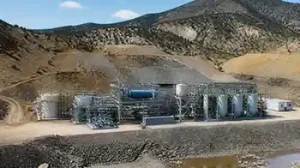
In April, China restricted exports of seven rare earths, triggering magnet shortages that temporarily shuttered U.S. auto plants. Although exports resumed under provisional licenses, the disruption rattled manufacturers. The Department of Defense’s latest investment, alongside earlier Biden-era grants, aims to build domestic capacity at Mountain Pass — the nation’s only active rare earth mine.
But mining alone won’t close the gap. With new mines taking decades to deliver output, attention is turning toward rare earth recycling from e-waste.
More Read
The U.S. generated nearly 8 million metric tons of e-waste in 2022. Yet less than 20% was recycled, according to the UN’s International Telecommunication Union. That leaves a vast untapped stockpile of critical minerals embedded in aging laptops, servers, and smartphones.

| Metric | Value | Source |
|---|---|---|
| China’s share of rare earth processing | ~90% | USGS |
| U.S. e-waste generated (2022) | ~7.8 million metric tons | ITU |
| U.S. e-waste recycling rate | 15–20% | UNITAR/ITU |
| Forecast share of recycled copper by 2050 | 45% | Wood Mackenzie |
Strategic Waste Streams
Glencore’s copper smelter in Quebec, one of the first to recover precious metals from e-waste, now sources 15% of its feedstock from recycled materials. Startups like Cyclic Materials and Illumynt are pioneering methods to recover rare earths from electric motors and hard drives. Cyclic is investing $20 million in a new Arizona facility, backed in part by Glencore.
German recyclers Aurubis and Wieland are building U.S.-based operations to capture market share as policy shifts accelerate.
More Read
“A lot of people are still sleeping at the wheel,” Sinha said. “We’ve been shipping metals to landfills for decades.”
The Battery Connection
Beyond magnets and circuit boards, another hotspot is lithium-ion batteries. Redwood Materials and Cirba Solutions are ramping up capacity to recover lithium, nickel, and cobalt. These feedstocks are essential for automakers betting on electric vehicles — a sector tightly linked to U.S. decarbonization goals and now intertwined with national security.
Yet the sector isn’t without risk. Glencore’s $327 million stake in Li-Cycle became a cautionary tale when the battery recycler filed for bankruptcy in May. Glencore has since bid to acquire its New York facility, highlighting the volatility of the space.
Policy, Investment, and Fragility
Many recyclers rely on incentives like the 45X production tax credit, which faces potential cuts under current budget negotiations. If repealed, some business models could falter. “Don’t build a recycling company on the back of one tax credit,” Sinha warned.
Still, the macro picture remains bullish. Wood Mackenzie estimates that recycled copper will supply 45% of global demand by 2050. Similar projections exist for nickel and cobalt — positioning rare earth recycling as a linchpin of America’s industrial future.
“We’re rethinking the global supply chain,” Sinha said. “It’s too long and too fragile. It needs to be more local.”