




By Penny Langford
The global rare earths supply chain in 2026 is undergoing a structural realignment characterized by a shift toward specialized "pure-play" entities. As Western original equipment manufacturers (OEMs) and governments intensify their efforts to de-risk from Chinese dominance, diversified mining companies are increasingly spinning off non-core assets to unlock valuation premiums and attract dedicated critical minerals capital.
This strategic spin-off trend is most visible in emerging hubs like Brazil, where companies are streamlining operations to focus exclusively on the extraction and processing of Neodymium-Praseodymium (NdPr) and heavy rare earth elements (REEs) like Dysprosium and Terbium.
The Pure-Play Premium: Why Spin-Offs are Accelerating
In the current 2026 market, investors are showing a clear preference for companies with high exposure to the energy transition. Diversified miners often find their rare earth assets "hidden" within broader portfolios, where they are valued at the lower multiples typical of base metals or industrial minerals. By separating these assets, companies can achieve a "pure-play" status that resonates with ESG-focused funds and strategic offtake partners.
More Read

A primary driver of this trend is the demand for vertical integration. According to recent market analysis, the REE supply chain is migrating toward a "mine-to-magnet" model. Spin-offs allow newly independent entities to form agile partnerships with midstream processors and magnet manufacturers without the bureaucratic weight of a parent conglomerate.

Case Study: Brazilian Rare Earths and the Alurion Distribution
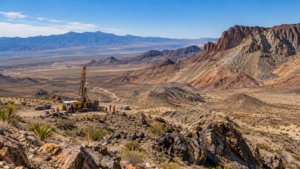
Brazilian Rare Earths Ltd (ASX: BRE) serves as a flagship example of this tactical restructuring. The company recently executed an in-specie distribution of Alurion shares to its existing shareholders. This move was designed to separate non-core exploration assets from its Tier 1 Rocha da Rocha Rare Earths Province in Bahia, Brazil.
By shedding these side-interests, BRE has clarified its value proposition: a district-scale developer focused on high-grade monazite sand deposits. The Rocha da Rocha project currently boasts a resource of 510 Mt at 1,513 ppm Total Rare Earth Oxide (TREO), including the high-grade Monte Alto deposit which features a core of 4.1 Mt at 3.2% TREO.
More Read


For decision-makers, the BRE model highlights how regionalization is becoming a competitive advantage. Brazil is positioning itself as a reliable, non-Chinese jurisdiction with a established mining code. This makes "pure" Brazilian REE stocks attractive for those looking at mining stocks to watch in 2026.
Market Snapshot: Rare Earth Element Indicators 2026
The following table illustrates the current supply-demand dynamics for key critical minerals within the REE basket.
| Commodity | Primary Use | 2026 Price Trend | Supply Constraint Level |
|---|---|---|---|
| NdPr Oxide | EV Motors, Wind Turbines | Bullish | High (Limited non-China separation) |
| Dysprosium (Dy) | High-Temp Magnets | Stable/Increasing | Extreme (Heavy REE scarcity) |
| Terbium (Tb) | High-Performance Alloys | Increasing | Extreme |
| Niobium (Nb) | Specialty Steel, Batteries | Moderate | Low (Brazil-dominant supply) |
The focus on heavy rare earths (Dy and Tb) is particularly significant. Most Western projects are rich in light rare earths (NdPr) but lack the heavy elements required for the most advanced permanent magnets. BRE’s exploration intersections have shown promising grades of these heavy elements, alongside significant by-product potential from uranium and niobium.
Strategic Partnerships and the Midstream Bottleneck
The spin-off trend is not occurring in a vacuum; it is being supported by technical partnerships aimed at solving the "separation bottleneck." For years, the inability to process REE oxides outside of China was the industry’s greatest vulnerability.
In 2026, we are seeing the emergence of "midstream-ready" developers. Brazilian Rare Earths has entered a long-term strategic partnership with Carester, a processing specialist, to secure heavy REE feedstock for an initial 10-year term. Simultaneously, the company is collaborating with Senai Cimatec on a pilot plant targeted for commissioning in mid-2026.

This shift toward domestic processing is reflected in other regions as well. Companies like Lynas Rare Earths (ASX: LYC) continue to expand their separation capabilities in Australia and the United States, while Arafura Rare Earths (ASX: ARU) is advancing the Nolans project with a focus on producing refined oxides for the European market.
Regulatory and Operational Hurdles
Despite the optimism surrounding the 2026 outlook, the strategic spin-off trend faces significant headwinds. Many REE deposits, including those in Brazil and parts of Africa, contain elevated levels of radioactive elements like uranium and thorium.
As discussed in our recent analysis of uranium supply 2026, the regulatory environment for radioactive materials is becoming more complex. For a spin-off to be successful, the new entity must demonstrate robust ESG protocols and the technical ability to handle these by-products. In BRE’s case, the potential for uranium by-product credits is an economic boon, but it necessitates high standards for radiological management and community relations.
Furthermore, the "pure-play" strategy exposes companies to the inherent volatility of a single commodity group. Unlike diversified majors, these focused entities do not have the cushion of gold or copper revenues during periods of REE price weakness.
2026 Outlook: The Competitive Landscape
As we move through 2026, the rare earths supply chain is becoming more fragmented yet more integrated. We expect to see more companies follow the BRE and Alurion model, carving out specific projects to attract offtake financing.
Key names in the Brazilian sector, such as St George Mining (ASX: SGQ), are also participating in initiatives like the MagBras program, which aims to build a comprehensive Brazilian magnet supply chain. This reflects a broader trend of sovereign states treating critical minerals as a matter of national security, similar to the policy shifts seen in the Argentina lithium boom.

Conclusion for Decision-Makers
For operators and investors, the strategic spin-off trend offers a clearer path to capital allocation but requires a deeper understanding of metallurgical and jurisdictional risks. The "pure-play" REE companies of 2026 are no longer just miners; they are chemical processors and strategic partners in a global race for permanent magnet dominance.
As the West continues to build its alternative supply chain, companies that can successfully navigate the transition from exploration to midstream processing: while maintaining clean, focused balance sheets: will likely define the next generation of the rare earths industry.
Social Media Snippet (LinkedIn/X):
The "Pure-Play" shift is here. In 2026, the rare earths supply chain is being reshaped by strategic spin-offs as companies like Brazilian Rare Earths (BRE) decouple non-core assets to focus on the high-stakes REE market. With the Rocha da Rocha province yielding Tier 1 grades and new midstream partnerships coming online, Brazil is emerging as a critical mineral powerhouse. ??⚒️ #RareEarths #Mining2026 #CriticalMinerals #EnergyTransition #SupplyChain






ASX uranium stocks could benefit significantly if nuclear power continues gaining support as a low-emission energy solution worldwide.
https://kapitales.com.au/asx-200