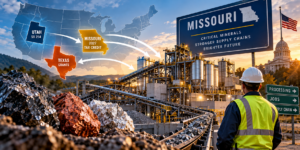
The United States is finally moving past the “white paper” phase of mineral security.

Washington just committed $250 million to anchor a new $1 trillion investment vehicle. The goal? To shatter China’s stranglehold on the global critical mineral and energy supply chains. This isn’t just another bureaucratic earmark. It is the opening salvo in a desperate attempt to catch up to Beijing’s “Green Energy Statecraft”: a decade-long, $120 billion spending spree that has left the West effectively locked out of its own future.
The strategic calculus here isn’t subtle: China owns the processing. They own the midstream. And if you’re building a missile, an EV, or a data center in 2026, you’re likely doing it with Chinese permission.
This $1 trillion “Mineral Security Shield” is the G7’s attempt to rescind that permission.
The $120 Billion Head Start
Let’s be honest about the numbers. While the U.S. celebrates a $250 million seed commitment, China has already spent $120 billion over the last ten years securing lithium, cobalt, and rare earth elements across Africa, South America, and Southeast Asia.
More Read

They didn’t just buy mines. They built the industrial cathedrals required to turn raw rock into high-purity chemicals.

For years, the West watched as China executed a masterclass in resource vertical integration. Now, the bill is coming due. The US government is mobilizing more than $30 billion across various initiatives, but the “Shield” is the first attempt to create a private-sector-led vehicle with the scale to actually compete.
It’s an uncomfortable truth: $250 million is a rounding error in the mining world. But as a signal to private equity and sovereign wealth funds? It’s a flare in the dark.
More Read
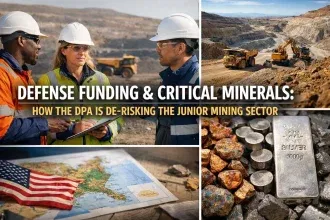
Project Vault and the $1T Ambition
The $1 trillion target isn’t just a catchy headline. It’s the estimated capital required to build a non-Chinese supply chain from scratch.
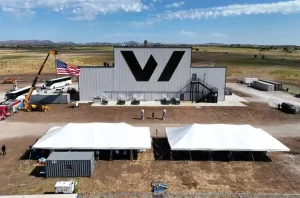
To understand where this is going, look at Project Vault. This $12 billion public-private effort is already laying the groundwork for a commercial stockpile of critical minerals. It includes a $10 billion, 15-year loan from the US Export-Import Bank (EXIM): the largest in the agency’s history.
When you add the $1.67 billion in private capital already flowing into Project Vault, the “Mineral Security Shield” starts to look less like a pipe dream and more like a massive capital multiplier.
The strategy is simple:
- De-risk the entry: Use government capital ($250M) to absorb the first-loss risk.
- Attract the Titans: Pull in the 10 titans defining the 2026 resource realignment.
- Build the Shield: Fund the mining finance news cycles that actually move the needle on extraction and processing.
The 2027 Deadline: A Looming Crisis
The clock isn’t just ticking; it’s screaming.
Beginning in 2027, updated Federal Acquisition Regulation (FAR) provisions will prohibit US defense systems from using Chinese-origin rare-earth magnet materials. That’s next year.
Right now, the US is almost entirely dependent on Chinese processing for those magnets. If the Shield doesn’t start deploying capital into domestic or allied processing facilities: and fast: the US military will face a procurement crisis that makes the 2020 chip shortage look like a minor inconvenience.
This is why we’re seeing such a frantic push toward the Forum on Resource Geostrategic Engagement (FORGE). It’s an attempt to build a “Minerals NATO” where the G7 coordinates investments to ensure no single point of failure.

Geopolitics of the “Shield”
This isn’t just about the US and China. It’s about where the dirt is.
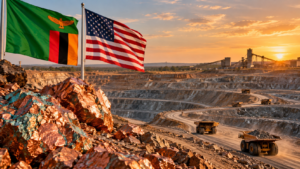
The US commitment is specifically designed to counter Chinese influence in the “Lithium Triangle” and the African Copperbelt. We’ve seen the 2.5B reversal in Chilean courts and the volatility in African mining jurisdictions. The Shield is intended to provide a “Western alternative” to China’s Belt and Road Initiative.
Instead of just building a road to a mine, the Shield wants to build the processing plant, the power grid, and the ESG-compliant supply chain.
It’s about copper expansion and securing the strategic metal supercycle driven by the AI boom. Without the Shield, the AI revolution is just another technology stack owned by Beijing.
Why Junior Miners Should Pay Attention
For the average junior mining executive, this $1 trillion target sounds like “macro talk.” But the trickle-down effect is real.
The US Department of Defense is already preparing to purchase $1 billion in critical minerals for a national strategic stockpile. This is the largest purchase since the Cold War. For a junior miner with a nickel project or a rare earths discovery, the Shield represents a buyer of last resort: and a source of de-risking capital that didn’t exist two years ago.
The EXIM Bank has already issued letters of interest for hundreds of millions in financing to support rare earth processing. If you have the ore, the government now has the bankroll to help you refine it.
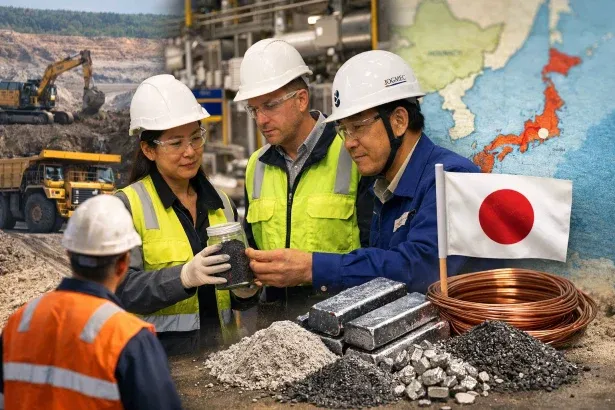
The G7 Context: Japan and the EU Join the Fray
The US isn’t doing this alone. Japan, arguably the world leader in rare earth de-risking since their 2010 spat with China, is a key architect of the FORGE multilateral framework.
They’ve seen this movie before.
The “Shield” aims to harmonize standards across the G7. If the US, Japan, and the EU all agree on what constitutes “clean” or “secure” minerals, they can effectively create a two-tiered market. One tier for Chinese-controlled “dirty” minerals, and a premium tier for “Shield-verified” resources.
It’s a bold gamble. It assumes that the world is willing to pay a “security premium” for minerals that don’t come from a geopolitical adversary. Given that gold prices have topped $5,200 on the back of tariff plans and jitters, the market seems to be pricing in this fragmentation already.
The Innovation Angle: AI and Automation
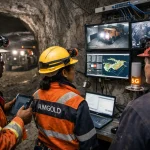
You can’t build a $1 trillion shield with 1970s technology. The Shield is also looking at how AI is powering the next generation of mining gear.
To beat China’s lower labor costs and lax environmental standards, the West has to be faster, cleaner, and smarter. This means investing in eco-friendly mining technology and deep-sea mining possibilities.
If the Shield succeeds, it won’t just be because of the $250 million seed. It will be because it catalyzed a technological leap that made Chinese dominance obsolete.

Is It Enough?
Here is the grim reality: China’s lead is massive.
The $250 million US commitment is a start, but $1 trillion is the requirement. Those two numbers are very far apart.
To bridge the gap, the US needs to stop treating mining like a dirty secret and start treating it like the foundational industry of the 21st century. We’ve seen U.S. Steel at a crossroads and we’ve seen the struggles in Greenland’s mining industry.
The Shield is a defensive move. But in the global resource war, you don’t win on defense. You win by digging holes, processing ore, and securing the global battery revolution.
2026 is the inflection point. The US has finally put its money where its mouth is. Now, the industry has to see if the “Shield” is made of steel: or just more paper.