2026 Lithium Power Map : Early Access Open ($59) | Get the latest sector data and secure your copy here: https://skillings.short.gy/LithiumPreSale

By Salini Krishnan
The Democratic Republic of Congo (DRC) has fundamentally altered the trajectory of the global energy transition by announcing a fivefold increase in its planned copper sales to the United States. This strategic pivot, which raises the annual export target to 500,000 tonnes, represents one of the most significant shifts in critical mineral diplomacy since the onset of the “green” industrial revolution.
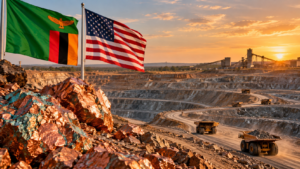
For decades, the DRC’s mineral wealth: specifically the world-class deposits of the Katanga region: has been largely oriented toward Chinese industrial hubs. However, a new framework led by the state-owned miner Gécamines, in partnership with global trader Mercuria and backed by the United States International Development Finance Corporation (DFC), is re-routing the flow of red metal. This realignment is not merely a commercial transaction; it is a geopolitical statement that redefines the relationship between the African Copperbelt and Western supply chains.
The Mechanics of the Gécamines-Mercuria Joint Venture
At the heart of this surge is a restructured joint venture between Gécamines and the Swiss-based commodity giant Mercuria. Previously, the DRC had targeted a more modest export volume of 100,000 metric tons, primarily sourced from the Tenke Fungurume Mine (TFM). The expansion to 500,000 tonnes signals a mobilization of broader state assets and a clear intent to institutionalize the “US-aligned” supply corridor.
More Read



The joint venture operates as a critical intermediary. By leveraging Mercuria’s logistics and trading expertise, Gécamines can bypass traditional Chinese-controlled refining routes. This mechanism ensures that the copper cathode produced in the DRC meets the stringent provenance requirements now being established by Western regulators. This volume: half a million tonnes: is sufficient to cover a substantial portion of the US’s projected industrial deficit, providing a buffer against the volatility of the London Metal Exchange (LME).
DFC Backing and Geopolitical De-risking
The acceleration of these exports would be functionally impossible without the institutional backing of the US International Development Finance Corporation (DFC). The DFC’s role is twofold: providing the political risk insurance necessary for high-volume trade in a volatile region and facilitating the infrastructure required to move ore to the coast.
More Read

This financial scaffolding is a direct response to China’s “Belt and Road” dominance in Central Africa. For the US, securing 500,000 tonnes of copper is a national security priority. As explored in our analysis of the copper supercycle through 2030, the world faces a potential 30% supply deficit by the end of the decade. By locking in DRC production now, the US is attempting to de-risk its high-tech and defense sectors from future price shocks and supply embargoes.
The involvement of the DFC also signals a broader commitment to the Lobito Corridor: a rail link designed to connect the DRC and Zambia to the Angolan port of Lobito. This “Atlantic route” is the physical manifestation of the strategic realignment, allowing minerals to bypass the often-congested and Chinese-invested ports of East Africa.
Countering China’s Critical Mineral Dominance
The DRC is currently the world’s second-largest copper producer and the undisputed leader in cobalt production. Historically, upwards of 80% of these minerals were refined in China. The increase to 500,000 tonnes of copper sales to the US marks the first serious challenge to this monopoly.

This shift is not limited to copper. The DRC government has recently signaled a desire to create strategic reserves for cobalt and germanium: minerals essential for semiconductor manufacturing and advanced aerospace applications. By aligning with US and European interests, Kinshasa is utilizing its “resource nationalism” as a tool for diplomatic leverage. The message to Beijing is clear: the DRC is no longer a captive supplier, but a competitive player on the global stage.
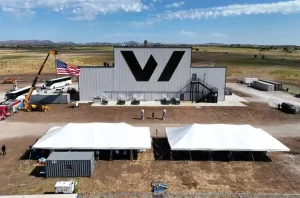
The US-mediated “Washington Peace Agreement” between the DRC and Rwanda has further stabilized the eastern provinces, allowing for a more predictable investment climate. This stabilization has paved the way for deals like the $700 million acquisition by Virtus Minerals, which secured key copper and cobalt assets from Chemaf, ensuring that even junior-tier production is being funneled toward “US-aligned” buyers.
Strategic Reserves: Cobalt, Germanium, and Beyond
While copper is the high-volume driver of this deal, the strategic realignment encompasses the entire critical mineral spectrum. The DRC’s move to establish strategic stockpiles for cobalt and germanium serves as a “price floor” mechanism and a security offtake for Western allies.
- Cobalt: Essential for EV batteries and superalloys used in jet engines.
- Germanium: Vital for fiber optics, night-vision goggles, and high-efficiency solar cells.
- Copper Cathode: The backbone of the electrical grid and AI data center expansion.
As seen in our Mining Innovator List, the intersection of the AI grid and mineral security is becoming the defining investment theme of 2026. The DRC’s ability to provide these minerals at scale, under transparent governance frameworks, is a prerequisite for the Western AI and energy transition to succeed.

Impact on Global Copper Supply and Price Floors
The influx of 500,000 tonnes into the US market has profound implications for global pricing. Historically, the US has relied on a mix of domestic production and imports from Chile and Peru. However, as documented in our report on the Vicuña District expansion, South American supply is facing its own set of regulatory and grade-decline challenges.
By introducing a massive, consistent flow of DRC copper, the US and the DRC are effectively creating a secondary market liquidity pool. This move helps establish a “strategic price floor.” When supply is guaranteed through state-backed offtake agreements rather than purely speculative spot market trading, industrial consumers can plan long-term capital expenditures with greater certainty.

Furthermore, the Gécamines-Mercuria joint venture includes provisions for shipping copper to Saudi Arabia and the United Arab Emirates. This reflects a broader “Middle Corridor” strategy where Gulf capital is used to refine and process DRC minerals before they reach final Western markets, further diversifying the supply chain away from East Asian refining dominance.
Future Outlook: Risks and Opportunities
The realignment is not without its hurdles. Governance issues at Gécamines and environmental concerns in the Katanga region remain significant hurdles for ESG-conscious investors. However, the shift toward a more transparent, DFC-backed model suggests a maturing of the DRC’s mining sector.
For operators and investors, the 5x increase in US-bound copper is a signal that the “de-risking” phase of the energy transition is over, and the “execution” phase has begun. The US is no longer just talking about mineral security; it is financing the physical movement of the world’s most important industrial commodities.
As the global mineral shift accelerates, the DRC’s role as the “Saudi Arabia of the energy transition” is being solidified. The question for 2026 and beyond is no longer whether the West can compete with China for African minerals, but how quickly the infrastructure can be built to handle the massive volumes now committed to the Atlantic route.
2026 Lithium Power Map : Early Access Open ($59) | Get the latest sector data and secure your copy here: https://skillings.short.gy/LithiumPreSale