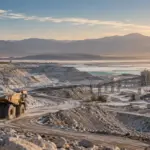
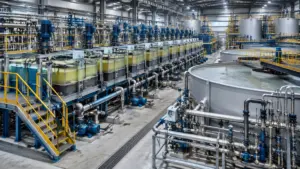
Arizona copper operations increasingly depend on the design, cost and durability of their water systems.

By Sonny Rollins
Arizona’s copper expansion is entering a more demanding phase in 2026. Federal policy is accelerating domestic critical-minerals development, copper prices remain supportive of new supply, and projects including Resolution Copper, Copper World, Santa Cruz and Florence are advancing through construction, permitting or ramp-up milestones.
But in the U.S. Southwest, a legal permit or water right does not guarantee a mine will have an affordable, durable water supply for its full operating life.
That distinction is becoming central to the critical minerals supply chain 2026 outlook. The question for operators, lenders and policymakers is no longer simply whether a project can obtain water. It is whether the water will remain physically available, technically usable and socially acceptable for 20 to 40 years.
The issue is particularly important for Arizona copper, where the state supplied more than 70% of U.S. copper in 2024, according to the U.S. Geological Survey. Agriculture remains Arizona’s largest water user, while cities, industry and ecosystems are competing for supplies affected by long-term drought and declining Colorado River flows.

Water is becoming a project-screening variable
A September 2026 report by The Northern Miner described water availability as a harder constraint for Southwest mining projects than permitting alone. The report cited research indicating that groundwater commitments exceed estimated long-term supply in parts of Nevada, while Arizona’s copper sector relies heavily on groundwater as Colorado River deliveries become less certain.
The physical risks are different from the legal ones. A project may hold a groundwater right yet face:

- Deeper wells and higher pumping costs.
- Poorer water quality requiring additional treatment.
- Declining aquifer levels over the mine life.
- Conflicts with senior agricultural or municipal rights.
- Delays in permits for wells, discharge systems or aquifer protection.
- Higher closure, monitoring and reclamation obligations.
That gap between paper entitlement and reliable supply is likely to influence which projects reach construction and which remain technically viable but financially difficult.

Water storage, reclaim ponds and monitoring systems are becoming core mine infrastructure rather than secondary facilities.
Copper and lithium do not have the same water profile
Water comparisons in mining can be misleading because companies and regulators use different definitions. “Water use” may refer to gross water circulated through a plant, new water withdrawn, water consumed through evaporation or water removed during dewatering.
Available studies nevertheless show a meaningful difference between processing routes.
| Development type | Indicative water metric | Main exposure in the Southwest | What decision-makers should test |
|---|---|---|---|
| Conventional sulfide copper concentrator | About 1,500–3,500 liters per tonne of ore processed; Southwestern porphyry operations are often toward the upper end | Fresh-water supply, tailings storage and evaporation | Net withdrawal after recycling, dry-season reliability and tailings-water balance |
| Copper heap leach/SX-EW | Roughly 300–900 liters per tonne of ore in cited U.S. operating ranges, depending on recycling and site conditions | Evaporation, solution losses and groundwater protection | Lined facilities, leak detection, reclaim capacity and closure water |
| In-situ copper recovery | Project-specific; Florence operator Trekor Metals says its process uses 78% less water per pound of copper than a conventional Arizona open pit | Aquifer connectivity and solution containment | Baseline groundwater data, pressure control and restoration plan |
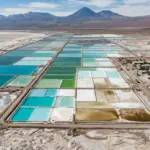
| Lithium brine | Up to about 500,000 liters of brine per tonne of lithium carbonate equivalent in high-end industry estimates | Brine/freshwater interaction and aquifer drawdown | Whether the metric is brine handled or freshwater consumed, plus basin-wide impacts |
| Recycled copper | No mine-site ore-processing water required for the recovered unit of metal | Collection, sorting, refining capacity and scrap availability | Feedstock security, quality, logistics and regional processing capacity |
The figures are not directly interchangeable. Copper metrics generally describe water per tonne of ore, while lithium-brine figures often describe brine handled per tonne of lithium product. A brine project can therefore report low freshwater consumption while still creating significant hydrogeological risk if pumping changes pressure relationships between brine and freshwater layers.
For copper developers, the most useful comparison is not gross water intensity alone. It is net freshwater requirement per unit of payable metal, under a dry-year operating case.
Recycling can reduce pressure, but not replace mines
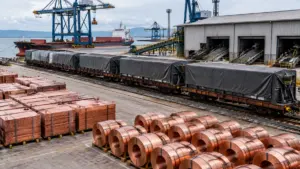
Recycling is one of the clearest ways to moderate primary supply-chain pressure. The USGS 2026 Mineral Commodity Summary for copper reports that U.S. copper recovered from scrap supplied about 30% of domestic copper supply in 2025.
That represented approximately 920,000 short tons of recovered copper:
- About 760,000 tons came from new manufacturing scrap.
- About 160,000 tons came from old, post-consumer scrap.
- Brass and wire-rod mills accounted for roughly 80% of recovered copper.
This is a substantial supply contribution, but it does not eliminate the need for primary copper. Scrap availability depends on the stock of copper already in use, collection systems, manufacturing activity and the ability to process complex or contaminated materials.
Recycling also does not solve the timing problem facing grid, data-center and energy-transition demand. New mines take years to permit and build, but recycled supply grows as products reach retirement and collection rates improve. The practical implication is that recycling should be treated as a water-avoidance strategy that complements, rather than replaces, new mine development.
For Arizona, the strongest supply-chain approach may combine lower-water processing, regional recycling and more efficient use of existing smelter and refining capacity.
Arizona permitting is increasingly water-quality centered
Arizona’s Aquifer Protection Permit program is central to the development pathway for mines that could discharge pollutants to groundwater.
An individual permit generally requires an operator to demonstrate that the project will:
- Meet applicable Aquifer Water Quality Standards at defined points of compliance.
- Use Best Available Demonstrated Control Technology.
- Install monitoring wells and submit regular reports.
- Maintain financial and technical capability for operation, monitoring and closure.
- Prepare contingency measures for spills, exceedances or unauthorized discharges.
The framework means that water risk is not limited to supply volume. A copper project may have sufficient water for processing but still face permitting exposure if regulators, tribes, local governments or neighboring users question the effects of dewatering, leach solutions, tailings seepage or long-term aquifer change.
The Copper World permit illustrates the level of scrutiny applied to a major Arizona project. Its permit covers multiple facilities and requires groundwater monitoring at designated compliance wells. The review also involved concerns about enforceability, monitoring and the protection of already stressed groundwater systems.
Projects on private land may avoid some federal review, as Ivanhoe Electric emphasizes for its Santa Cruz Copper Project. That can simplify the land-use pathway, but it does not remove state aquifer-protection requirements or the need to demonstrate a durable water balance.
Project finance is starting to price water durability
The 2026 financing cycle shows how government and strategic capital are supporting U.S. copper. Ivanhoe Electric said in August that Santa Cruz had received a preliminary project letter from the U.S. Export-Import Bank for up to $1.1 billion in potential debt financing. The project has also disclosed approximately 3,600 acre-feet of Type 1 groundwater rights and is pursuing additional water arrangements.
Those developments improve the project’s financing profile, but public support does not remove hydrological uncertainty. Lenders will still need to examine:
- Whether water rights match the mine plan across the full production period.
- The sensitivity of pumping costs to deeper water levels.
- Treatment requirements for poor-quality groundwater.
- The cost of process-water recycling and replacement capacity.
- Water-related permit conditions and possible litigation.
- Closure and post-closure monitoring liabilities.
- Contingency plans if production must be reduced.
A mine with a lower gross water requirement may therefore be more financeable than a larger project with greater reserves but uncertain supply. Water efficiency can improve debt capacity by reducing operating costs, lowering permit exposure and making production more resilient during drought.
The same logic applies to lithium. A project that relies on brine or groundwater must demonstrate not only that its process works, but that its pumping does not create unacceptable impacts on connected freshwater resources or existing users.

Lithium projects must distinguish brine handled from freshwater withdrawn or consumed.
A practical 2026 scenario framework
The following framework links water, permitting and the copper price forecast 2026 without assuming a single price outcome.
| Scenario | Copper market | Water and permitting conditions | Likely project response |
|---|---|---|---|
| Base case: selective buildout | Prices remain strong enough to support construction, but capital remains disciplined | Projects with secured rights, credible water balances and advanced permits progress; others face delays | More recycling, phased expansions and greater use of strategic or government-backed finance |
| Bull case: supply urgency accelerates | Sustained tightness increases incentives for new domestic copper | Federal and state agencies prioritize infrastructure, but water-quality reviews remain | Faster funding for lower-water projects, expanded recycling and premiums for secure domestic supply |
| Downside case: hydrological stress dominates | Weaker prices reduce tolerance for cost overruns and delays | Drought, aquifer drawdown or litigation raises pumping and compliance costs | Deferrals, staged mine plans, asset consolidation and greater reliance on secondary copper |
The key conclusion is that a higher copper price can support water infrastructure, but it cannot create water in an overallocated basin. Conversely, a lower-water project may retain strategic value even during a weaker commodity cycle if it has a reliable permit and a credible route to production.
What operators and investors should monitor
For the rest of the 2026 mining cycle, five indicators deserve close attention:
- Net water balance: Look beyond gross process-water circulation to new withdrawals, evaporation, discharge and recycling.
- Basin-level availability: Assess competing rights, recharge assumptions and drought scenarios rather than relying only on project-level entitlements.
- Permit milestones: Track Aquifer Protection Permits, monitoring-well requirements, discharge authorizations and tribal consultation.
- Process selection: Compare flotation, heap leach, in-situ recovery and direct lithium extraction on site-specific evidence, not headline claims.
- Finance terms: Examine whether lenders require water reserves, contingency capital, additional monitoring or production triggers.
Arizona is not necessarily running out of copper projects. It is running out of margin for projects that treat water as a late-stage permitting detail.
The winners in the Southwest supply chain are likely to be projects that integrate hydrogeology, processing design, recycling, community engagement and finance from the beginning. In that sense, water is no longer only an environmental variable. It is becoming a core determinant of production cost, construction timing, social license and long-term asset value.
Related Skillings analysis
- Copper price forecast 2026: deficit math, consolidation and scenarios
- Critical minerals supply chain 2026: drivers, risks and scenarios
- Mining ESG compliance: carbon costs, disclosure and capital access
- Copper market coverage and mining industry analysis
Social snippets
LinkedIn:
Arizona’s copper expansion is meeting a harder constraint than permitting: durable water availability. Our latest Operation 100K analysis compares water intensity across conventional copper, heap leach, in-situ recovery and lithium brine projects : and shows why recycling, aquifer protection and finance terms are becoming inseparable. Read the full analysis: https://www.skillings.net/copper-supply-chain-arizona-water-limits-mining-growth
X:
Arizona’s 2026 copper buildout faces a binding constraint: water. New analysis compares copper, lithium brine, recycling, permitting and project finance : and explains why a legal water right is not the same as a durable operating supply. https://www.skillings.net/copper-supply-chain-arizona-water-limits-mining-growth