Reported shipment disruptions to U.S. buyers are exposing the processing gaps that new Western rare-earth projects still need to close.

By Penny Langford
A reported halt in some Chinese rare-earth shipments to U.S. buyers is testing whether Western manufacturers have practical alternatives to China before new mines, separation plants and magnet facilities reach full capacity.
According to Pomegra, several Chinese suppliers have declined U.S. orders since early August amid concern that supplying companies linked to American compliance and audit programs could trigger retaliation from Beijing. The reported disruption comes ahead of a scheduled diplomatic summit involving Chinese President Xi Jinping and U.S. President Donald Trump.
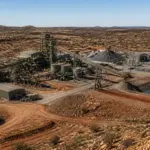
The timing is significant. The reports emerged one day after USA Rare Earth completed its combination with Brazil’s Serra Verde Group, adding the Pela Ema ionic-clay operation in Goiás to a platform that also includes the Round Top project in Texas, rare-earth metals and alloys capacity in the United Kingdom, and planned magnet manufacturing in the United States.

The transaction strengthens the Western supply chain. It does not yet remove its central weakness: separating, refining and converting rare earths into magnet-grade materials at commercial scale.

A disruption below the level of a formal export ban
The reported shipment halt is different from a new, formal Chinese export restriction. Suppliers are reportedly choosing not to ship even where export licences or commercial arrangements may exist, reflecting the operational uncertainty created by geopolitical controls.
That distinction matters for procurement teams. A formal ban is visible, can be modelled and may trigger an immediate government response. A voluntary or informal withdrawal is more difficult to detect and manage. It can affect one customer, product or destination while leaving other trade flows open.

The reported disruption also illustrates how compliance requirements have become part of the mineral supply chain. The Pomegra report linked supplier concerns to Beijing’s sanctions against the U.S.-based Responsible Business Alliance and its affiliated Responsible Minerals Initiative. Chinese companies that fear being identified as supporting a restricted foreign organisation may decide that avoiding a shipment is less risky than completing it.
For manufacturers, the effect can resemble an export ban even when the policy language is less direct. Delivery schedules become uncertain, contract terms may need to be renegotiated and buyers are forced to assess not only the mineral’s origin but also the technology, audit system and counterparties involved in its movement.
Why non-Chinese processing remains the weak link
Rare-earth supply chains are often described in terms of mine production. The more difficult constraint is usually further downstream.
Ore must be concentrated, cracked or leached, separated into individual oxides, converted into metals and alloys, and then incorporated into permanent magnets. Each step requires different equipment, technical expertise, quality controls and customer qualification.
The International Energy Agency has highlighted the concentration of rare-earth refining and processing, while the Center for Strategic and International Studies has noted that new processing hubs outside China take substantial time to build and commission.
Industry estimates generally place China’s share of global rare-earth separation and refining capacity at about 90%. Its position is even stronger in high-performance permanent magnets. Heavy rare earths such as dysprosium and terbium are particularly exposed because they are used to improve magnet performance at high temperatures and remain difficult to process outside China.
That creates a gap between resource ownership and supply-chain security. A company may control a deposit in the United States, Brazil or Australia, but the project does not provide resilient supply unless the material can be separated, refined and converted into a specification accepted by magnet manufacturers.

Separation and refining require specialised industrial infrastructure beyond the mine site.
What the Serra Verde combination changes
USA Rare Earth’s completed combination with Serra Verde adds an operating rare-earth asset in Brazil to a broader mine-to-magnet strategy.
The transaction announcement describes Pela Ema as an ionic-clay operation in Goiás and the only commercial ionic-clay rare-earth mine outside Asia. Company materials indicate that Phase 1 is expected to reach approximately 4,000 tonnes per year of total rare-earth oxides by the end of 2026, increasing toward about 6,400 tonnes per year at nameplate capacity by the end of 2027.
Those figures refer to total rare-earth oxides, or TREO. They are not equivalent to 6,400 tonnes of neodymium-praseodymium, dysprosium or terbium. Public disclosures do not provide a full element-by-element production breakdown, which is important when evaluating the project’s contribution to magnet supply.
The transaction also includes a 15-year, 100% offtake agreement for Serra Verde’s Phase 1 production. The agreement includes price floors for neodymium, praseodymium, dysprosium and terbium, supported by a special-purpose vehicle capitalised by U.S. government agencies and private sources.
That structure addresses two practical issues:
- It provides a committed commercial destination for Pela Ema’s output.
- It links production to customers and financing arrangements outside China.
However, the deal does not mean that all Pela Ema material will immediately become finished magnets in the United States. The broader platform still requires ramp-up at the Brazilian operation, downstream processing, customer qualification, logistics and the successful development of U.S. magnet capacity.
A similar distinction appears in Skillings’ coverage of Energy Fuels’ rare-earth strategy. Adding metal and alloy production to an oxide platform closes an important gap, but it does not automatically complete the final magnet-manufacturing stage.

Metallisation and alloying are separate stages between oxide production and finished magnets.
A capacity-risk framework for Western supply
The key question for operators and policymakers is not whether projects have been announced. It is whether each supply-chain stage is operating, qualified and connected to the next stage.
| Supply-chain stage | Current risk | Evidence of constraint | Operational consequence | What to monitor |
|---|---|---|---|---|
| Mining and concentrate | Medium | New projects are advancing in Brazil, the United States and Australia | Feedstock may exist without a qualified refinery | Production ramp-up and concentrate specifications |
| Separation and refining | High | China retains roughly 90% of global capacity by widely cited industry estimates | Non-Chinese mines may remain dependent on limited processors | Commissioning, recoveries, reagent supply and product purity |
| Heavy rare-earth separation | Very high | Dysprosium and terbium processing remains concentrated in China, with only limited capacity elsewhere | Defense, aerospace and high-temperature magnet users face elevated disruption risk | Commercial Dy/Tb oxide output outside China |
| Metals and alloys | High | Few plants outside China can consistently produce magnet-grade metals and alloys | Oxides may not translate into usable magnet feedstock | Customer qualification and sustained production rates |
| Permanent magnets | Very high | China retains the dominant share of high-performance magnet production | Alternative mines cannot fully backstop motor and defense manufacturers | Plant construction, tooling, workforce and offtake contracts |
| Logistics and compliance | Medium-high | Trade controls can affect route, customer and technology as well as mineral origin | Shipments may be delayed or rejected despite available material | Licences, audit rules, sanctions and chain-of-custody data |
This framework also explains why a shipment disruption can have an impact disproportionate to the volume directly affected. When alternative capacity is thin, a small interruption can consume available inventories, delay customer qualification and force manufacturers to compete for limited non-Chinese material.
The practical bottlenecks ahead
1. Ramp-up risk
Pela Ema’s disclosed capacity is a target reached in stages, not an immediate supply increase. Commissioning an ionic-clay operation requires process optimisation, recovery improvements and stable product specifications.
The same applies to separation plants, alloy facilities and magnet factories. Nameplate capacity does not equal qualified commercial output.
2. Heavy rare-earth availability
New light rare-earth production, particularly NdPr, will not fully solve the shortage of dysprosium and terbium. These elements are required in smaller quantities but can be critical to magnet performance in electric vehicles, wind turbines, drones and defense systems.
Any Western strategy that measures success only in total TREO risks overstating its impact on high-performance magnet security.
3. Feedstock compatibility
Processing plants are not interchangeable. Facilities are designed around particular ore mineralogy, impurity profiles and recovery routes. A mine in Brazil may not provide feedstock that can be processed economically in a plant designed for Australian mineral sands or U.S. concentrate.
That makes supply-chain integration a technical problem, not only a financial one.
4. Qualification and customer acceptance
Automotive and aerospace customers typically require extensive testing before accepting a new magnet or alloy supplier. A new product must meet performance, traceability and reliability requirements over time.
Western producers may therefore have material available but still lack immediately qualified demand.
5. Workforce and operating expertise
Rare-earth separation and metallisation require specialised chemical, metallurgical and maintenance skills. Projects can be financed and permitted yet miss schedules if they cannot recruit operators with experience in continuous processing and product quality control.
What the summit may and may not resolve
A diplomatic summit could reduce near-term uncertainty if both governments agree to maintain existing trade arrangements or improve licensing clarity. That would help manufacturers rebuild inventories and give suppliers greater confidence in fulfilling contracts.
It would not eliminate the structural imbalance.
Even if Chinese shipments resume, Western buyers would still face concentrated processing capacity, limited heavy-rare-earth alternatives and a long lead time for new magnet plants. A diplomatic pause can reduce immediate disruption; it cannot create separation capacity overnight.
For that reason, the Serra Verde transaction is strategically important but should be viewed as one component of a wider build-out. Its value lies in adding commercial feedstock, strengthening offtake visibility and connecting Brazilian production to a Western-headquartered platform. The remaining test is whether that material can move consistently through separation, metals, alloys and magnet manufacturing.
The broader rare-earths coverage at Skillings and analysis of China’s critical-minerals controls point to the same conclusion: supply-chain resilience depends less on discovering another deposit than on building and operating the missing midstream and downstream capacity.
Bottom line
The reported Chinese shipment disruptions have exposed a vulnerability that new Western mine announcements cannot solve on their own.
USA Rare Earth’s Serra Verde combination adds a meaningful non-Chinese source of magnetic rare earths and strengthens the case for an integrated mine-to-magnet platform. Yet the company, like its peers, still faces the industry’s central execution challenge: converting mineral resources into separated oxides, magnet-grade metals, alloys and qualified finished magnets at scale.
For operators, the most relevant indicators are commissioning progress, recoveries, product qualification and contracted offtake. For policymakers, the priority is to support the entire chain rather than concentrate funding only on mining. For manufacturers, the immediate task is to map exposure at each processing stage.
The diplomatic track may determine how quickly the current disruption eases. Capacity outside China will determine whether the next disruption is manageable.
LinkedIn snippet
China’s reported halt of some rare-earth shipments to U.S. buyers is testing more than diplomatic relations. It is exposing the midstream gap between non-Chinese mining and reliable magnet supply.
USA Rare Earth’s completed Serra Verde combination adds Brazilian production, a 15-year offtake structure and access to all four key magnetic rare earths. But separation, heavy-rare-earth processing, metallisation and magnet manufacturing remain the critical bottlenecks.
Read the capacity-risk framework for the stages that operators, manufacturers and policymakers should monitor.
X snippet
Reported Chinese rare-earth shipment disruptions are testing Western supply-chain capacity.
USA Rare Earth’s Serra Verde deal adds Brazilian output, but the harder gaps remain: separation, dysprosium and terbium processing, magnet-grade metals and qualified magnet manufacturing.
The mine-to-magnet bottleneck is still downstream.
Sources
- Pomegra: China halts rare-earth shipments ahead of Xi visit
- MarketScreener: USA Rare Earth completes combination with Serra Verde Group
- USA Rare Earth: completion announcement
- International Energy Agency: concentration risks in critical-mineral supply chains
- CSIS: developing rare-earth processing hubs
- Skillings: Rare Earths Supply Chain; Energy Fuels Adds Mine-to-Magnet Link