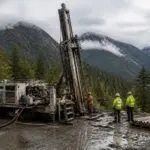
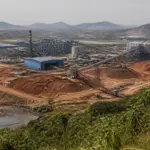
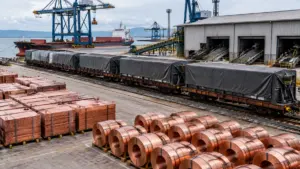
Lithium carbonate processing infrastructure highlights the industrial supply chain behind China’s battery-materials market.

By Penny Langford
Lithium carbonate is trading around the 150,000 yuan ($20,800) per tonne level as China enters its traditional battery-demand peak season. The market has room to test 170,000 yuan per tonne, but the path higher is being constrained by a competing force: September production schedules are rising by roughly 10% month on month.
The balance between those two factors will determine whether the current rally develops into a sustained move or remains rangebound. A further complication is the reversal of environmental approval at CATL’s Jianxiawo mine in Jiangxi province, which has pushed a significant amount of expected domestic supply further into question.
The near-term outlook is therefore neither a straightforward bull case nor a return to the oversupply conditions that weighed on lithium prices in 2024 and 2025. It is a market where stronger seasonal demand, tighter inventories and project-level permitting risk are meeting a visible increase in chemical production.
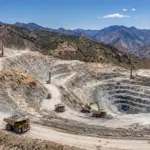
Lithium carbonate is near a key market threshold
Mysteel reported on Sept. 3 that the most-traded GFEX lithium carbonate futures contract had fallen below 150,000 yuan per tonne after reaching a near-term high of approximately 160,000 yuan. Its assessment described a market with strong September supply and demand, continuing inventory destocking and growing pressure from higher exchange warrants.

The distinction between spot and futures pricing matters. CarbonCredits, citing market data, placed lithium carbonate at around 156,000 yuan per tonne on Sept. 3, while Mysteel’s analysis pointed to futures trading below the 150,000-yuan threshold. Together, the figures show a market consolidating near 150,000 yuan rather than moving in a single direction.
At that level, prices are high enough to improve the economics of some marginal supply sources, but not necessarily high enough to eliminate operational and permitting constraints. The market is also coming off a low base. Lithium carbonate prices have recovered sharply from their 2025 trough, making buyers more sensitive to restocking costs and encouraging producers to increase output where possible.
Mysteel’s central near-term view is that prices will remain rangebound, even as the peak season provides support. Its analysis identifies several counterweights to the rally:
- Rising GFEX warehouse warrants.
- A slower pace of inventory drawdown.
- Front-loaded battery-cell orders ahead of changes to China’s tax regime.
- Higher production plans from lithium-carbonate refiners.
- Uncertainty over the durability of downstream demand after peak-season procurement.
That combination creates the conditions for a possible 170,000-yuan test, but not necessarily a clean breakout above it.
September production is rising into peak season
The supply response is becoming visible in production schedules. Mysteel’s detailed survey indicates that China’s lithium carbonate production is planned at approximately 116,800 tonnes in September, compared with about 106,500 tonnes in August. That represents a month-on-month increase of roughly 9.7%, or approximately 10%.
The figure is close to the 10%-11% range now being discussed across the market, but the detailed Mysteel estimate is 9.7%. That distinction is important for analysts tracking whether supply growth is accelerating or merely returning from maintenance-related disruptions.
Battery production is also scheduled to rise. Mysteel reported that China’s September lithium-ion battery production schedule was approximately 332 gigawatt-hours, up about 9.2% month on month. LFP battery production is expected to be a particularly important driver, reflecting continued demand from electric vehicles and energy-storage systems.
The result is a market with strong activity on both sides:
- Supply: Lithium carbonate production is scheduled to rise by about 10% month on month.
- Demand: Battery-cell production schedules are rising by roughly 9.2%.
- Inventories: Stocks are still being drawn down, but at a slower pace.
- Pricing: Futures have retreated from recent highs while remaining substantially above 2025 levels.

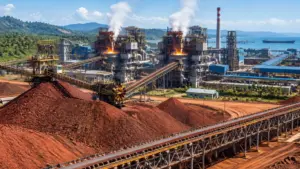
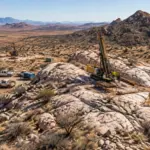
Lithium supply growth is expanding across brines, hard-rock mines and chemical-conversion facilities.
This is why peak-season demand alone may not be sufficient to produce a prolonged price spike. If scheduled production is delivered on time and downstream buyers have already built inventories, the market could absorb much of the seasonal strength.
Jianxiawo adds a structural supply risk
The more significant bullish variable is the status of CATL’s Jianxiawo lithium mine in Jiangxi.
According to CarbonCredits, Chinese regulators revoked the mine’s environmental impact assessment approval after the operation had briefly moved toward a restart. The mine had already been offline since August 2025 after its mining permit expired. Although CATL secured a safety production permit in June 2026, the operation was subsequently placed back into care and maintenance.
The environmental-approval reversal means Jianxiawo must undergo another review before a meaningful restart. CarbonCredits, citing Benchmark Mineral Intelligence, reported that the process could extend into the fourth quarter of 2026 or into 2027.
The expected production impact is material:
| Jianxiawo output estimate | Lithium carbonate equivalent |
|---|---|
| Earlier 2026 forecast | 62,500 tonnes |
| Revised 2026 forecast | 32,000 tonnes |
| Reduction | 30,500 tonnes |
| Reduction percentage | Approximately 49% |
The mine is not large enough by itself to determine the global lithium balance. However, the lost output is significant relative to China’s domestic market, particularly while inventories are falling and battery production is rising.
Jianxiawo is also important because it represents more than a single delayed mine. The operation produces lithium-bearing lepidolite, a lower-grade resource that has become increasingly important to China’s domestic supply chain. The approval reversal highlights the regulatory and environmental risks associated with expanding production from challenging ore bodies.
The market is therefore pricing two different possibilities:
- A delayed but eventual restart, which would add supply and limit the duration of any rally.
- A prolonged review extending into 2027, which would remove an expected source of feedstock during a period of strong battery-material demand.
The timing of a restart may be more important than the mine’s annual capacity. A late-2026 restart would have a limited effect on the current peak season. A delay into 2027 would influence market expectations for the next supply cycle.
Lithium price forecast: bear, base and bull cases
The following framework covers the next several months and the peak-season trading window. It is not an annual average-price forecast or an investment recommendation.
| Scenario | Indicative lithium carbonate range | Market conditions | Jianxiawo assumption |
|---|---|---|---|
| Bear | 130,000–150,000 yuan/t | September production is delivered; inventories stabilize; demand softens after front-loaded orders | Approval process advances and restart expectations return |
| Base | 150,000–170,000 yuan/t | Peak-season demand offsets rising supply; inventories remain tight but do not collapse | Restart remains delayed, with limited near-term output |
| Bull | 170,000–200,000+ yuan/t | Production disruptions deepen; storage demand accelerates; buyers compete for limited feedstock | Environmental review extends into 2027 |
Bear case: rising supply caps the rally
The bear case does not require a collapse in lithium demand. It requires September production schedules to translate into actual output while battery demand normalizes after front-loaded procurement.
If refiners maintain output near scheduled levels and downstream inventories are sufficient, carbonate could fall back toward the lower end of the current range. A Jianxiawo restart signal would add to that pressure by improving expectations for future Chinese feedstock supply.
Base case: 150,000 yuan holds, 170,000 yuan is tested
The base case is a market that remains firm but volatile. Prices hold around 150,000 yuan, with periodic moves toward 170,000 yuan as battery production and energy-storage demand draw down inventories.
This scenario assumes that rising production does not immediately rebuild stocks because demand remains strong through the seasonal peak. It also assumes that the Jianxiawo delay supports sentiment without creating an outright shortage.
This is currently the most balanced interpretation of the available data. Mysteel’s rangebound view is consistent with a market that has bullish supply-risk headlines but also a meaningful production response.
Bull case: the approval delay becomes a supply shock
The bull case would require several factors to align: stronger-than-expected energy-storage demand, continued inventory drawdown, delayed restarts at other operations and an environmental review at Jianxiawo that extends into 2027.
Under those conditions, 170,000 yuan could become a support level rather than a resistance point. Prices could move toward 200,000 yuan or higher if buyers begin competing for prompt material and producers respond cautiously to the risk of another downturn.
That outcome is possible, but it requires more than the Jianxiawo disruption alone. The mine’s revised 2026 output represents a meaningful loss, yet global supply remains broad and production schedules are rising in China.
What operators and analysts should monitor
The next phase of the lithium market will be determined by operating data rather than headline forecasts. The most important indicators include:
- Whether September carbonate production reaches the scheduled 116,800 tonnes.
- The pace of inventory drawdown across lithium chemicals and battery materials.
- GFEX warrant growth and the spread between futures and spot prices.
- LFP battery production and energy-storage order growth.
- The timing of Jianxiawo’s environmental review.
- Restart decisions at other idled or maintenance-affected mines.
- Converter margins and the availability of spodumene and lepidolite feedstock.
- Battery-sector orders after the impact of front-loaded procurement fades.
Skillings’ previous lithium price forecast analysis examined the broader move from surplus toward balance. The current market adds a more immediate question: can rising production keep pace with seasonal demand while regulatory delays remove expected supply?
The answer will determine whether lithium carbonate remains near 150,000 yuan, tests 170,000 yuan or returns toward the lower end of its recent range.
Outlook: a supported market facing a supply response
Lithium carbonate has entered September with a firmer floor, but the market is not yet in an unambiguous deficit. Demand is benefiting from the seasonal battery cycle, while production schedules are increasing by roughly 10% month on month.
The Jianxiawo environmental-approval reversal strengthens the case for higher volatility. It reduces expected 2026 output and makes the timing of future Chinese supply less certain. But the price effect will depend on whether other producers can deliver scheduled volumes and whether battery demand remains strong after front-loaded orders are completed.
For now, 150,000 yuan per tonne is the key reference level, with a possible 170,000-yuan test in the base-to-bull range. A sustained move above that level would require evidence that supply growth is failing to match demand, not simply another short-term procurement surge.
LinkedIn snippet
Lithium carbonate is trading around 150,000 yuan per tonne as September battery production schedules rise roughly 10% month on month. A 170,000-yuan test is possible, but the market is balancing peak-season demand against rising supply and the reversal of Jianxiawo’s environmental approval.
X snippet
Lithium price forecast: around 150,000 yuan/t, with a possible 170,000-yuan test. September carbonate production is scheduled to rise about 9.7% MoM, while Jianxiawo’s environmental approval reversal removes expected supply and increases volatility.
Sources
- Mysteel: Lithium prices to keep rangebound with seasonal peak yet building pressure
- Mysteel: September lithium production scheduling and seasonal demand
- CarbonCredits: CATL’s Jianxiawo mine loses EIA approval
- Skillings: Lithium price forecast, supply, demand and project risk
- Skillings: Critical minerals supply chain outlook