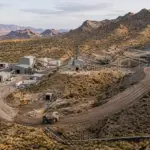
Springpole’s exploration camp sits within the boreal landscape of northwestern Ontario.

First Mining Gold’s Springpole project has moved into a more consequential stage of development after the company signed project agreements with three First Nations in northwestern Ontario.
The agreements with Slate Falls Nation, Cat Lake First Nation and Lac Seul First Nation cover the project’s construction, operations and closure phases. They do not represent a mine-construction decision, but they materially change the project’s development framework by setting out Indigenous participation, environmental oversight, economic benefits and consultation obligations.
The agreements were signed in late August 2026 : on Aug. 25 with Slate Falls Nation and Aug. 27 with Cat Lake and Lac Seul : rather than in September. Their significance, however, will be closely assessed by the mining industry and investors through September as Springpole advances toward provincial approval, feasibility work and potential financing.
Springpole is one of Canada’s largest undeveloped open-pit gold projects. First Mining reports a probable reserve of 3.1 million ounces of gold contained in 102 million tonnes grading 0.94 grams per tonne, alongside 16.1 million ounces of silver.
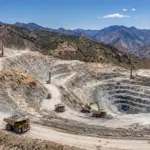
Why the agreements matter
For large mining projects in Canada, permitting and technical studies are only part of the development equation. Long-term agreements with affected First Nations can influence project design, regulatory confidence, workforce planning, procurement and the durability of a mine’s social licence.

The Slate Falls Nation agreement includes provisions for environmental management and monitoring, adaptive management, training, employment, business opportunities, cultural safety and financial benefits.
Slate Falls is particularly relevant to the project’s environmental context because its community is located downstream from Springpole within the Cat River watershed. In the company’s announcement, Slate Falls Chief Lorraine Crane said the Nation had secured stronger environmental protections, meaningful monitoring roles and opportunities for training, employment and community benefits.
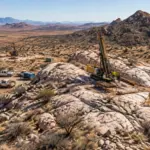
The agreement with Cat Lake First Nation and Lac Seul First Nation followed an Anishinaabe-led Impact Assessment conducted by the two Nations. It includes participation in environmental monitoring, adaptive management, preferential training and employment measures, business opportunities, financial benefits and potential participation in the project’s economic upside.
That process is important because it moves consultation beyond a series of regulatory meetings. The agreements establish a framework for ongoing participation across the life of the mine, including closure.
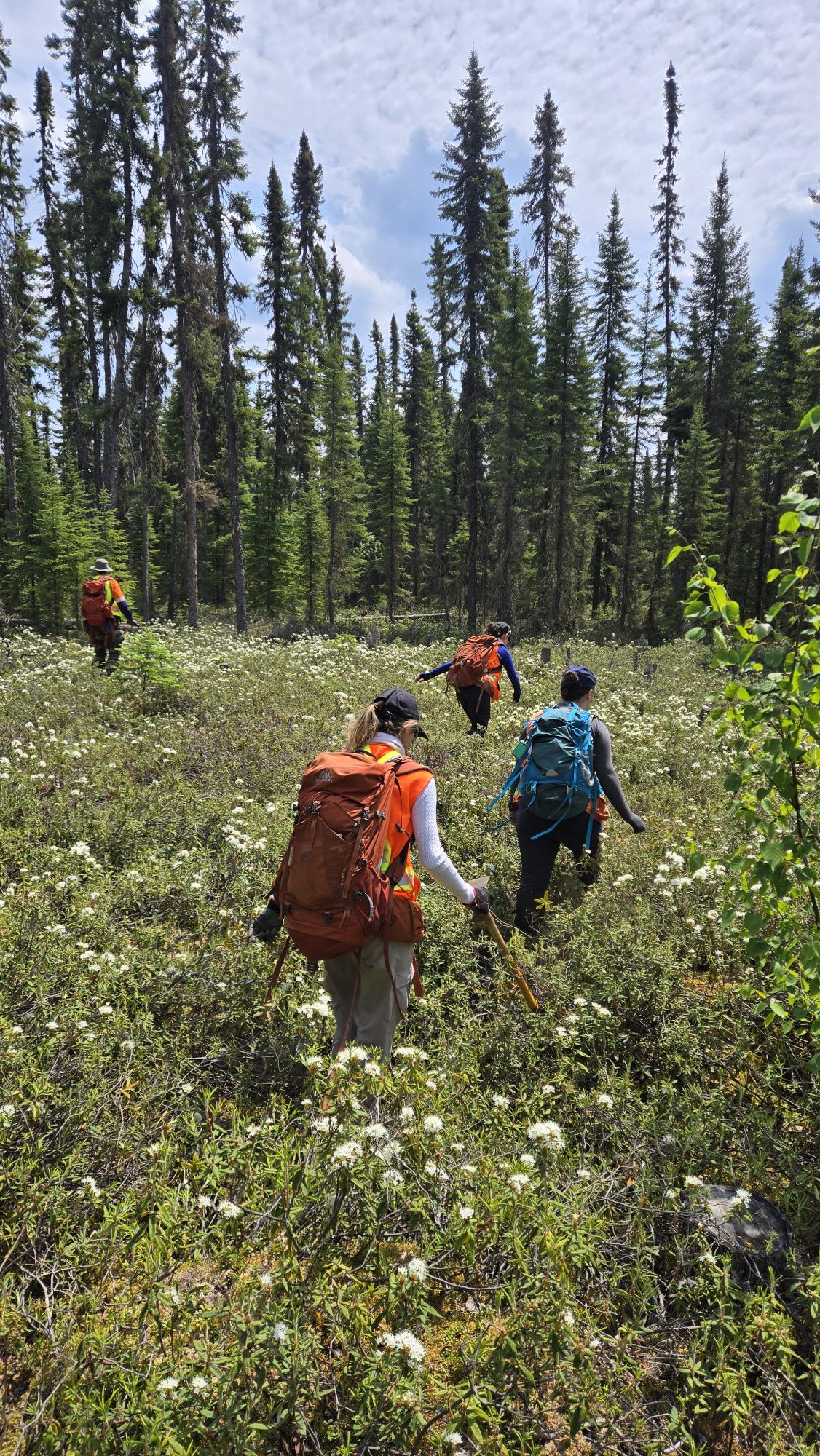
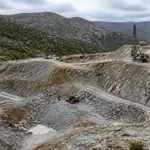
Environmental fieldwork reflects the importance of water, land and cultural monitoring around Springpole.
Springpole’s development case
First Mining’s Springpole project overview places the deposit about 110 kilometres northeast of Red Lake, Ontario, in the Birch-Uchi Greenstone Belt.
The company’s 2025 pre-feasibility study evaluated a 30,000-tonne-per-day open-pit mine and processing operation. The study outlined average annual payable gold production of approximately 330,000 ounces during the first five years and 281,000 ounces over the life of the mine.
The PFS estimated:
| Metric | Springpole PFS figure |
|---|---|
| Probable gold reserve | 3.1 Moz |
| Probable reserve tonnes | 102 Mt |
| Reserve grade | 0.94 g/t gold |
| Contained silver | 16.1 Moz |
| Average gold production, years 1–5 | 330 koz/year |
| Average gold production, life of mine | 281 koz/year |
| Mine life | 9.4 years |
| Initial capital | US$1.104 billion |
| Life-of-mine AISC | US$938/oz |
These are study estimates rather than operating results. They remain subject to changes in mine design, construction costs, metallurgical performance, permitting conditions, financing and commodity prices.
The project also has a larger mineral resource than its current reserve. First Mining reports an indicated resource of 4.8 million ounces of gold and an inferred resource of 800,000 ounces, both reported within a conceptual open-pit shell. Mineral resources are not mineral reserves and do not have demonstrated economic viability.
That distinction will matter as the company moves from a PFS toward a feasibility study. The next technical phase must test whether the proposed mine plan, processing flowsheet, water-management system, infrastructure and capital estimates can withstand more detailed engineering and commercial scrutiny.
Springpole milestone framework
| Milestone | Status or current expectation | Why it matters |
|---|---|---|
| Updated resource and reserve | Completed through the 2025 technical work | Establishes the 3.1 Moz probable reserve base |
| Federal environmental assessment | Approved June 30, 2026 | Removes a major federal regulatory barrier |
| Provincial environmental assessment | In the final decision phase based on public information available in 2026 | Required for the project’s provincial authorization path |
| First Nations project agreements | Signed Aug. 25 and Aug. 27, 2026 | Establish long-term participation and benefit structures |
| Feasibility study | Advancing; timing has been described variously as late 2026 to mid-2027 | Refines capital, operating, engineering and execution assumptions |
| Financing discussions | Expected to develop as technical and regulatory work advances | Determines how construction could be funded |
| Construction decision | Not yet made | Requires further approvals, financing and board-level decisions |
The federal assessment decision was issued by the Impact Assessment Agency of Canada on June 30. Ontario’s provincial process has been moving separately, with the final provincial decision still the key near-term regulatory milestone.
The difference between federal approval and full project readiness is important. A federal environmental decision does not eliminate the need for provincial permits, detailed engineering, financing, community commitments and construction execution.
What Kaiser Reef’s Henty update adds to the analysis
Kaiser Reef’s Henty operation in Tasmania provides a useful contrast to Springpole because Henty is an operating underground mine rather than a large undeveloped open-pit project.
In its January 2026 ASX update, Kaiser reported a Henty Mineral Resource of 4.11 million tonnes grading 3.32 g/t gold for 438,000 ounces. Its Ore Reserve increased by 29% to 1.89 million tonnes grading 3.28 g/t for 199,000 ounces.
| Henty metric | Updated figure |
|---|---|
| Mineral Resource | 438 koz gold |
| Resource tonnes | 4.11 Mt |
| Resource grade | 3.32 g/t |
| Ore Reserve | 199 koz gold |
| Reserve tonnes | 1.89 Mt |
| Reserve grade | 3.28 g/t |
| Reported mine life | More than six years |
| Production target | Above 30 koz/year |
Kaiser’s Henty update illustrates how reserve growth at an operating mine can come from drilling, resource modelling, mine planning and infrastructure investment. It also demonstrates the difference in risk between an existing producer and a project such as Springpole, which still requires significant capital and construction.
Henty’s underground resource is higher grade but much smaller in contained ounces. Springpole has a substantially larger reserve and production profile, but its development risk includes a large initial capital requirement, open-pit construction, water management, remote infrastructure and a multi-stage regulatory process.

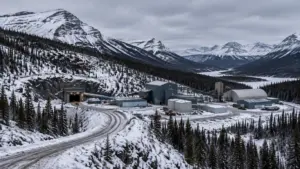
Open-pit development requires detailed planning across mine design, water management and infrastructure.
Key risks for operators and investors
1. Provincial approval
The most immediate regulatory question is the final Ontario environmental decision. Federal approval is a significant milestone, but the provincial process remains important for project authorization.
2. Water and environmental management
Springpole’s location within a lake-rich boreal watershed makes water protection central to project execution. The First Nations agreements’ emphasis on monitoring and adaptive management suggests that water quality, tailings, mine-rock management and closure planning will remain closely examined.
3. Capital intensity
The PFS estimated initial capital of approximately US$1.1 billion. Inflation in construction materials, labour, energy and equipment could affect the final feasibility estimate. Financing conditions will also influence the project’s ability to move from study to construction.
4. Technical conversion
The current reserve is based on an open-pit design and specified assumptions for gold and silver prices, recovery, operating costs and pit geometry. A feasibility study must demonstrate that the design is technically executable and economically resilient under more detailed assumptions.
5. Schedule risk
Springpole has already experienced a long regulatory process. The project agreements reduce one category of uncertainty, but they do not eliminate potential delays involving permits, engineering, financing, procurement or construction.
What to watch next
Springpole’s next phase will be judged less by the size of its resource than by its ability to convert that resource into a permitted, financed and socially durable mine.
The most important indicators will be:
- The final Ontario environmental decision.
- Progress on the feasibility study and detailed engineering.
- Evidence that the First Nations agreements are being incorporated into monitoring, procurement, training and project governance.
- Updated capital and operating-cost estimates.
- Financing discussions and the company’s funding strategy.
- Further clarity on road, power, water-management and processing infrastructure.
The agreements with Slate Falls, Cat Lake and Lac Seul give First Mining a stronger platform for those next steps. They do not guarantee construction or production, but they establish a more defined relationship between the project, its host communities and the environmental obligations that will shape its future.
For the broader gold sector, Springpole is a useful case study in how large development projects are increasingly assessed: not only by ounces and economics, but also by the quality of Indigenous participation, regulatory alignment and execution planning.
LinkedIn snippet
Springpole has advanced beyond a resource story. First Mining’s 3.1 Moz probable reserve project now has agreements covering Indigenous participation, environmental monitoring, economic benefits and mine closure. The next test is whether those commitments can be translated into provincial approval, a robust feasibility study and a financeable construction plan.
X snippet
Springpole’s 3.1 Moz probable reserve is moving into a more consequential phase. Agreements with Slate Falls, Cat Lake and Lac Seul address participation, monitoring, benefits and closure. Next milestones: Ontario approval, feasibility work, capital discipline and financing.
Sources: First Mining Gold Springpole project overview; Slate Falls Nation project agreement; Cat Lake and Lac Seul project agreement; Impact Assessment Agency of Canada project file; Kaiser Reef Henty resource and reserve update.