By Charles Pitts

KEFI Gold and Copper has suspended development activities at its Tulu Kapi gold project in western Ethiopia after a security incident that caused multiple fatalities, including one company employee.
The incident occurred Friday, Sept. 4, at the project, according to a company announcement released through the London Stock Exchange’s RNS service. KEFI said those killed included security personnel and community members, but it did not disclose further details about the nature of the incident or identify those responsible.
The company said it would not resume work until measures are in place to provide a safe and secure operating environment for employees, contractors and surrounding communities.
The suspension introduces fresh uncertainty for a project that had begun development in March and was previously targeting first gold production in mid-2028. It also highlights the security, jurisdictional and financing risks facing mining developers operating in regions where government support, community relations and project finance are closely connected.

KEFI pauses work pending security review
KEFI said it is engaging with community representatives, Ethiopian government authorities and security stakeholders to establish the conditions for a safe and orderly resumption of activities.

The company described the federal and Oromia regional governments as committed partners in Tulu Kapi and said discussions were continuing on both the immediate response and the project’s longer-term future.
However, KEFI said it could not provide additional operational or security details because the situation remains sensitive and ongoing. That limits the amount of information available to investors, contractors and local stakeholders assessing the duration of the suspension.
More Read

The company also said it was too early to determine whether the stoppage would affect the development timetable.
Before the incident, development work had included the start of a new access road scheduled for completion in December 2026. KEFI also reported progress on an electricity connection expected to be completed before the end of 2027, along with orders for plant and equipment scheduled for delivery throughout 2027.

Remote access and infrastructure work are central to the Tulu Kapi development schedule.
Tulu Kapi’s legal position in Ethiopia
Tulu Kapi is governed by a mining agreement formalized between KEFI and the Ethiopian government in April 2015. According to KEFI’s project information, the agreement provides for a 20-year mining license, a 5% free-carried government interest and permits covering the development and operation of the project.
The project is located in western Ethiopia, approximately 360 kilometers west of Addis Ababa. KEFI says the site is about 12 kilometers from a main road leading to the capital, while the national electricity grid is roughly 40 kilometers away.
Those terms provide a formal legal framework for development, but they do not remove the operational risks associated with security conditions, access, construction and community relations.
The project’s environmental and social impact assessment was initially approved in 2015 by Ethiopia’s Ministry of Mines and Petroleum. KEFI said subsequent updates have been completed, including a 2023 update. The company also reported that phased community resettlement and compensation programs were under way in line with applicable International Finance Corp. Performance Standards.
According to the company, project-affected people have been consulted and, where applicable, are receiving compensation, replacement housing, land and livelihood restoration support.
The security incident places those programs in a more complicated operating environment. Any prolonged disruption could affect contractor mobilization, resettlement schedules, road construction, equipment deliveries and community engagement.
Project scale and planned production
Tulu Kapi is KEFI’s flagship Ethiopian asset. The company reports a Probable Ore Reserve of 1.05 million ounces of gold and total Mineral Resources of 1.72 million ounces.
KEFI’s project page says the open-pit operation was designed to produce an average of approximately 140,000 ounces of gold per year over seven years of mining. The company has estimated all-in sustaining costs in the range of roughly $900 to $1,100 per ounce in its latest project description.
Those figures describe the project’s planned operating profile, not current production. Tulu Kapi remains under development and has not yet reached commissioning or commercial output.
The project’s value to KEFI therefore depends on moving from a permitted and technically advanced development plan to a built and operating mine. The latest suspension interrupts that transition at a point when infrastructure, contractors and equipment procurement were being coordinated.
| Key Tulu Kapi detail | Status or company-reported figure |
|---|---|
| Location | Western Ethiopia, about 360 km west of Addis Ababa |
| Mining agreement | Formalized in April 2015 |
| Mining license | 20-year term |
| Ethiopian government interest | 5% free-carried interest |
| Probable Ore Reserve | 1.05 million ounces of gold |
| Total Mineral Resources | 1.72 million ounces of gold |
| Planned average production | About 140,000 ounces per year |
| Previous production target | Mid-2028 |
| Current status | Development suspended pending security measures |
Financing is now a second risk
KEFI said it would carefully manage expenditure during the suspension and defer further drawdown or deployment of project financing until the circumstances have been assessed and appropriate measures are in place.
The company added that it has sufficient capital reserves and committed standby facilities to support anticipated requirements during the suspension period. It did not provide a duration for the pause or quantify the cost of the delay.
That distinction is important. Having access to reserves and standby facilities may help KEFI manage near-term obligations, but a longer stoppage could still affect the overall financing structure.
Development finance is typically tied to milestones such as construction progress, equipment delivery, contractor performance and the achievement of agreed conditions precedent. A suspension can delay those milestones and increase the time before the project begins generating revenue.
It can also raise indirect costs, including:
- Additional security and insurance requirements.
- Extended contractor and equipment commitments.
- Higher interest during construction.
- Revised engineering and construction budgets.
- Delays to resettlement and infrastructure programs.
- Potential changes to debt drawdown schedules.
- Additional equity or working-capital requirements if the timetable moves.
KEFI’s statement that further financing deployment will be deferred suggests the company is seeking to avoid committing additional project capital before the operating environment is reassessed. That is a risk-control measure, but it also means construction progress may remain limited until lenders, contractors and government stakeholders are satisfied that work can resume.

Mining developments in remote jurisdictions depend on coordinated security, logistics and contractor planning.
Security history adds context
The current incident is not the first security-related disruption associated with Tulu Kapi.
In 2021, four project employees or contractors were abducted and later released unharmed, according to contemporaneous reports. KEFI also previously raised security levels at the project following political and security developments elsewhere in Ethiopia.
Those earlier events do not establish the cause of the latest incident, and KEFI has not said whether the incidents are connected. They do, however, show why security is a recurring factor in the project’s development history.
The latest announcement is careful not to assign responsibility or describe the event beyond the terms “serious security incident” and “multiple fatalities.” Any assessment of the incident’s broader implications will depend on information from KEFI, Ethiopian authorities and local stakeholders.
For the company, the immediate priority is the safety of personnel and nearby communities. For financiers and contractors, the next question will be whether a credible and durable security framework can be established across the project area, access routes and surrounding communities.
What investors and operators will watch next
Several indicators will help determine whether the suspension becomes a short-term pause or a material change to the project’s development path.
First will be KEFI’s assessment of the security environment and the measures required for a restart. The company has not set a date for resuming development.
Second will be the status of the access road, electricity connection, plant orders and contractor arrangements. Delays in any of these areas could affect the previously stated mid-2028 production objective.
Third will be the treatment of project finance. KEFI has said that further drawdown or deployment will be deferred, while relying on existing reserves and standby facilities. Future updates may clarify whether lenders have imposed additional conditions or whether the financing package remains available without major restructuring.
Fourth will be the continuation of resettlement, compensation and livelihood restoration programs. These activities are central to the project’s social license and may be affected by the suspension, particularly if access to project-affected communities becomes difficult.
Finally, the federal and Oromia regional governments’ role will remain significant. Tulu Kapi’s legal framework is national, while its security and community environment is local and regional. A restart will require coordination across those levels of government as well as with KEFI, contractors and community representatives.

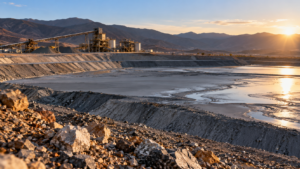
The project’s remote setting makes access, infrastructure and security central to development planning.
A wider supply-chain warning
Tulu Kapi is a gold project rather than a conventional critical-minerals asset, but its suspension carries a broader lesson for mineral supply chains in frontier and emerging jurisdictions.
A resource estimate and mining license are only part of the path to production. Developers must also maintain secure access, stable government relations, community agreements, reliable infrastructure and financing that can withstand delays.
For Ethiopia, the project is an example of the challenge involved in attracting large-scale mining investment while managing security and social risks. For KEFI, the immediate objective is to establish the conditions for a safe restart without compromising the project’s financing or development plan.
Until the company provides a further update, Tulu Kapi’s production timetable remains uncertain. The project’s reserves and legal status remain in place, but construction momentum, financing deployment and the route to mid-2028 production are now subject to the outcome of the security review.
Source: KEFI Gold and Copper Tulu Kapi update; Tulu Kapi project overview.