Gold doré produced during commissioning at a Brazilian mine.

By Penny Langford
Cabral Gold has poured its first gold at the Phase 1 Cuiú Cuiú mine in Pará state, Brazil, producing approximately 1,130 ounces during commissioning of the operation’s wet processing circuit.
The milestone came about six weeks ahead of schedule and makes Cuiú Cuiú Brazil’s newest producing gold mine, according to the company. Cabral is now shifting its focus from construction and commissioning to mining, ore stacking and the ramp-up toward commercial production.
The first pour is not yet commercial production. Cabral said it is targeting commercial operations in the fourth quarter, initially at about 60% of design throughput. The company expects to issue formal production guidance for 2027 once the ramp-up phase is complete.
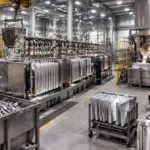
Cuiú Cuiú reaches first-production milestone
The Phase 1 operation is designed to process near-surface gold-in-oxide material through a heap leach circuit. Cabral completed commissioning of the dry circuit, which includes ore preparation, agglomeration and stacking, in July.

Commissioning of the wet circuit is now nearing completion. The circuit includes irrigation of the heap leach pads, carbon adsorption, desorption and recovery, and the production of gold doré through the plant’s ADR system.
Cabral announced the first pour after successfully moving ore through the commissioning process. The company said the initial production represents the first step in establishing a producing operation at Cuiú Cuiú and creating a platform for future development across the wider district.
More Read

The company’s announcement is available through its first-gold release.
| Item | Current status |
|---|---|
| Project | Phase 1 Cuiú Cuiú mine |
| Location | Pará state, northern Brazil |
| Processing route | Gold-in-oxide heap leach |
| First gold poured | Approximately 1,130 ounces |
| Schedule | About six weeks ahead of plan |
| Target commercial production | Fourth quarter |
| Target initial throughput | About 60% of design capacity |
| Planned stacking rate | 3,000 tonnes per day |
| 2027 guidance | Expected after ramp-up |
The project is located in the Tapajós Gold Province, a region with a long history of artisanal and commercial gold production. Cabral holds a 100% interest in the Cuiú Cuiú district, which includes several defined deposits and additional exploration targets.
Licensing remains the next operating milestone
Cabral received an Operating License from Pará’s environmental authority, SEMAS/PA, in August. The license allowed the company to mine gold-in-oxide ore, stack material on the first heap leach pad and use cyanide in the leaching process, subject to the applicable regulatory conditions.
The company is now targeting an upgrade to a Full Mining License within roughly two months. That approval would provide the regulatory framework for the next stage of operations as Cuiú Cuiú moves beyond commissioning and into a more established production phase.
The licensing process remains an important execution point for investors and operators. First gold confirms that the plant and recovery circuit have produced doré, but sustained output will depend on the company’s ability to maintain mining, stacking, irrigation, recovery and site logistics at the required rates.
Cabral has also disclosed that the project recorded its first lost-time incident during construction. The company said the contractor injury was noncritical and that the worker was recovering. In its August update, Cabral reported 592,380 combined hours worked by its owners’ team and contractors, with approximately 67% of the site workforce from Pará.

Heap leach infrastructure supporting commissioning and ramp-up.
Ramp-up will test the operating model
Cabral’s immediate target is to increase mining and ore stacking toward 3,000 tonnes per day. The company expects to reach commercial production during the fourth quarter, but has not yet issued a full-year 2027 production forecast.
That guidance is expected after the operation has moved through the ramp-up period and management has better visibility on recoveries, throughput, operating costs and the timing of sustained production.
The distinction is important because commissioning ounces can differ materially from steady-state output. Early production typically reflects the staged introduction of ore, process water, reagents and recovery equipment. Cabral has said it will use the ramp-up period to improve process efficiency, optimize recoveries and train operators.
Cuiú Cuiú’s processing route is comparatively simple for the near-surface material targeted in Phase 1. The company’s technical studies indicate that the oxide ore does not require conventional crushing and grinding before heap leaching. Metallurgical testing reported recoveries in the low-90% range for selected oxide material, while the feasibility work used a lower average recovery assumption for the project.
The project’s ability to sustain those recoveries at commercial scale will be one of the main operating indicators to watch as Cabral moves from first gold to regular production.
Cost exposure and the gold-price backdrop
Cabral has set a life-of-mine all-in sustaining cost target of approximately $1,210 per ounce for Phase 1. That compares with gold trading near $4,300 per ounce, creating a large headline gap between the company’s target cost and the current metal price.
The comparison should not be treated as a direct measure of net profit. Realized prices can differ from spot prices, while royalties, taxes, financing obligations, working capital, sustaining capital and gold-loan repayments affect cash flow.
Still, the cost position gives the project considerable exposure to the current gold market. Cabral’s 2025 prefeasibility study outlined a project with approximately 128,900 ounces of probable oxide reserves, initial production of about 25,000 ounces per year and a planned mine life of roughly 6.2 years.
The study estimated capital expenditure of about $37.7 million and forecast production of approximately 113,155 ounces over the life of the Phase 1 operation. Its economic model used a substantially lower gold-price assumption than current market levels.
Cabral financed construction through a $45 million gold loan completed in late 2025. The financing structure means the company’s future cash generation and operating performance will be important not only for sustaining the mine, but also for meeting its repayment obligations.
The company’s May 2026 corporate presentation provides the underlying project assumptions and resource information.
Phase 1 is intended to support a larger hard-rock project
Cuiú Cuiú’s longer-term development plan extends beyond the oxide starter operation. Cabral is assessing a Phase 2 hard-rock project based on the larger primary mineralization system beneath and around the near-surface oxide zones.
The company is targeting a preliminary economic assessment for Phase 2 during the first half of 2027. The study is expected to examine a larger mining and milling operation and incorporate additional drilling, resource definition and operating data from Phase 1.
Cabral’s reported mineral inventory includes indicated fresh-rock resources of about 12.29 million tonnes grading 1.14 grams of gold per tonne, containing approximately 450,200 ounces. It has also reported additional inferred fresh-rock resources and oxide resources across the district.
The Phase 2 plan will depend on several steps: continued exploration, conversion of resources into mineable reserves, metallurgical work on fresh-rock material, permitting and the ability of Phase 1 to generate sufficient cash flow to support further development.

Carbon columns and recovery equipment form part of the ADR circuit.
A new operating base in the Tapajós
For Cabral, the first pour marks a change in corporate status as well as a construction milestone. The company has moved from exploration and project development into production, although it remains at an early commissioning stage.
The operational base could also give Cabral more direct experience with local procurement, workforce management, environmental compliance, reagent supply and mine-site logistics in the Tapajós region. Those capabilities will be relevant if the company proceeds with the larger hard-rock development.
For the wider market, the key near-term indicators will be whether Cabral can reach its planned stacking rate, maintain recoveries, complete the licensing transition and publish credible 2027 guidance. The company will also need to demonstrate that costs remain aligned with the Phase 1 study as commercial operations begin.
Cuiú Cuiú is now producing gold, but the next phase will determine whether the early schedule success can translate into a stable operation and a credible foundation for the district’s larger resource base.
For further coverage, see Skillings’ gold mining news and analysis and its reporting on gold project timelines, reserves and costs.

Mine infrastructure and heap leach development in the Tapajós region.