By Penny Langford

The nickel market is splitting into two distinct stories in 2026. Class 2 material, including nickel pig iron (NPI) used in stainless steel, remains broadly supplied. Battery-grade nickel, by contrast, is attracting firmer premiums as Indonesian ore quotas, sulfur availability and processing constraints limit the growth of high-purity intermediates.
Publicly available market assessments place battery-grade nickel premiums near the upper end of their recent range. Fastmarkets’ regional nickel sulfate premium assessments have been quoted within a range of up to $1,000 per tonne, while North American battery-grade contracts can carry processing premiums of $0.80–$1.20 per pound of contained nickel above the LME reference price. The exact 24-month high is not fully visible in public data because the most detailed historical series are proprietary, but the direction is clear: specification, conversion and regional supply security are commanding more value than headline nickel prices alone suggest.
For operators, processors and procurement teams, the central question is no longer simply whether nickel is in surplus. It is whether the right grade is available, in the right region, with the chemical specifications required by cathode and precursor producers.
Nickel market snapshot
| Metric | Current or 2026 reference | Market significance |
|---|---|---|
| LME nickel price | About $16,600–$16,800/t in early September | Headline price remains below the 2026 highs but above the 2025 trading range |
| Indonesian 2026 ore quota | About 250–270 million wet metric tonnes | Roughly 30% below the 379 million tonnes approved for 2025 |
| Battery-grade sulfate processing premium | About $0.80–$1.20/lb over LME in North American contracts | Reflects purification, certification and logistics |
| High-purity grade uplift | About 10%–30% over standard grades in reported market estimates | Captures tighter impurity controls and qualification requirements |
| 2026 nickel balance | Forecasts range from a 32,000-tonne deficit to a surplus above 250,000 tonnes | Differences largely reflect grade, inventory and methodology |
| Battery nickel demand | Forecasts range from 470,000 to 560,000 tonnes | Growth continues, but LFP chemistry limits the upside |
Sources: Fastmarkets, Goldman Sachs Research, SMM data reported by Mining.com, and INSG coverage.

Indonesia is tightening the ore pipeline
Indonesia remains the dominant swing factor in global nickel. Goldman Sachs estimates that the country controls more than 60% of global mined supply, while other industry assessments put its share even higher depending on whether the calculation includes different ore and intermediate categories.

The key policy instrument is the annual Rencana Kerja dan Anggaran Biaya, or RKAB, which sets the amount of ore individual mining companies may produce. For 2026, approved or expected quotas have been reported at approximately 250–270 million wet tonnes, compared with 379 million tonnes in 2025.
Goldman Sachs Research expects Indonesia to supply roughly 260 million wet tonnes in the first half of 2026. It raised its average nickel price forecast for the year to $17,200 per tonne, citing tighter Indonesian ore supply and a higher marginal production cost.

The quota system does not automatically create a global shortage. Indonesia continues to produce large volumes of NPI, nickel matte and other intermediates. It does, however, reduce the flexibility of smelters that depend on continuous ore availability. It also raises the risk that a disruption in mining, shipping, sulfur supply or plant utilization will affect battery-grade products more quickly than the broader LME market.

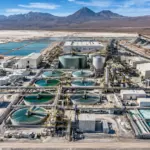
Nickel sulfate refining depends on reliable feedstock, sulfuric acid and tightly controlled process chemistry.
Why battery-grade premiums are strengthening
Battery-grade nickel is not interchangeable with all other nickel units. Nickel sulfate used in nickel-manganese-cobalt cathode production must meet strict limits for impurities, moisture, magnetic material and other contaminants.
That creates several layers of value:
- Class 1 versus Class 2: Refined Class 1 nickel can command a premium over NPI because it is suitable for additional chemical conversion and exchange delivery.
- Nickel sulfate conversion: Producing battery-grade sulfate requires refining, purification, crystallization, quality assurance and logistics.
- Specification: High-purity material with low impurity limits can attract another premium over standard industrial sulfate.
- Regional availability: North American and European consumers may pay more for qualified, traceable supply that reduces exposure to Asian shipping and geopolitical risks.
Fastmarkets’ 2026 market update identified Indonesian ore restrictions and sulfur availability as factors supporting nickel prices and tightening the battery-materials chain. Indonesia’s HPAL plants rely on sulfuric acid to convert limonite ore into mixed hydroxide precipitate, or MHP, which is then used to produce nickel sulfate.
The supply chain therefore has a potential bottleneck between abundant ore and usable battery chemicals. More nickel in the ground does not necessarily mean more qualified sulfate available to a cathode plant.
The market is not uniformly tight
The most important distinction in the 2026 outlook is between total nickel units and specific product grades.
The International Nickel Study Group has been cited as forecasting a modest refined nickel deficit of approximately 32,000 tonnes in 2026, with production of around 3.715 million tonnes against usage of 3.747 million tonnes. Other forecasts remain much more bearish. Sumitomo Metal Mining expects a surplus of roughly 256,000 tonnes, while S&P Global and other commercial forecasters also see a surplus.
These estimates are not necessarily contradictory. They use different definitions of production, demand and inventory, and they assign different assumptions to Indonesian intermediate output, stainless steel demand and battery chemistry.
The most useful interpretation for market participants is:
- NPI and ferronickel: Likely to remain relatively well supplied.
- Stainless steel demand: Still the largest source of nickel consumption, but not sufficient by itself to eliminate the class-2 surplus.
- MHP and nickel sulfate: Growing supply, but exposed to HPAL ramp-up problems, sulfur costs and qualification delays.
- Class 1 nickel: More sensitive to battery demand, refinery availability and exchange deliverability.

Indonesia’s integrated mining and smelting network continues to shape global nickel availability.
Battery demand is growing, but LFP changes the equation
Battery demand remains an important source of incremental nickel consumption. CRU has forecast battery nickel demand of approximately 560,000 tonnes in 2026, representing growth of about 12%. SMM has published a more conservative estimate of roughly 470,000 tonnes.
The difference reflects uncertainty around EV sales, cathode production and chemistry mix. Nickel-rich NMC batteries remain important for vehicles that require higher energy density and longer driving range. However, lithium-iron-phosphate, or LFP, batteries contain no nickel and have gained market share, especially in China and the energy-storage market.
That chemistry shift places a ceiling on the upside from battery demand. It also means that nickel producers cannot assume every increase in EV sales will translate into proportional nickel consumption.
For miners and refiners, the commercial implication is clear: a product that is merely classified as nickel is not enough. The premium belongs to material that can meet a customer’s technical, environmental and traceability requirements.
Base, bull and bear cases
| Scenario | Key assumptions | Nickel market implication |
|---|---|---|
| Base case | Indonesian quotas remain controlled; HPAL output grows gradually; LFP continues gaining share | LME nickel averages roughly $17,000–$19,000/t; battery-grade premiums remain elevated but volatile |
| Bull case | Quotas tighten further; sulfur or shipping disruptions affect HPAL plants; NMC demand exceeds expectations | LME prices test $20,000–$22,500/t; Class 1 and sulfate premiums widen sharply |
| Bear case | Indonesia approves supplementary quotas; HPAL projects ramp successfully; EV or NMC demand weakens | LME returns toward $15,000–$17,000/t; sulfate premiums compress as material becomes easier to source |
The base case is not a call for a sustained nickel shortage. It is a view that the market will remain segmented, with the strongest pricing power concentrated in battery-qualified products and secure regional supply.
What operators and investors should monitor
The next phase of the nickel market will be shaped by a small number of measurable indicators.
First, track Indonesian quota revisions. RKAB approvals can change during the year, and supplementary allocations would quickly weaken the tightening narrative.
Second, watch sulfur and sulfuric acid availability. HPAL economics depend on these inputs. A disruption could affect MHP output even if ore is available.
Third, separate LME stocks from usable battery inventory. Exchange stocks may remain high while qualified sulfate, MHP or Class 1 material is tight in a particular region.
Fourth, follow cathode chemistry. NMC expansion would support nickel demand, while faster adoption of LFP, sodium-ion or other lower-nickel chemistries would reduce the call on battery-grade material.
Finally, measure premiums rather than prices alone. The spread between LME nickel, NPI, MHP and nickel sulfate may provide a more useful signal of physical tightness than the headline benchmark.

Quality-control testing determines whether nickel sulfate can meet battery supply-chain specifications.
Outlook
Nickel’s 2026 outlook is best understood as a contest between Indonesian supply discipline and the market’s ability to absorb new battery-material capacity.
The headline market can remain in surplus while battery-grade premiums stay near a 24-month high. That is not a contradiction. It reflects the cost and scarcity of converting abundant laterite resources into qualified, consistent and regionally available nickel chemicals.
For operators, the priority is process reliability, feedstock security and customer qualification. For investors and analysts, the key is to distinguish between volume growth and value growth. Indonesia may continue to add nickel units, but the market will place a higher premium on producers that can deliver Class 1 material, MHP or nickel sulfate with dependable specifications and transparent supply-chain credentials.
The next decisive signal will come from the interaction between Indonesia’s quota policy, HPAL utilization and battery chemistry demand. Until those variables become clearer, nickel prices may remain range-bound while battery-grade differentials do the more important market work.
LinkedIn snippet
Nickel’s 2026 story is no longer just about surplus versus deficit. Indonesia is still adding major volumes, but ore quotas, sulfur availability and HPAL constraints are tightening the supply of qualified battery-grade material. That is why nickel sulfate and Class 1 premiums can remain near multi-year highs even while headline LME inventories stay elevated. Our deep dive examines the base, bull and bear cases for nickel, Indonesia and the battery supply chain.
X snippet
Nickel is splitting into two markets in 2026: abundant Class 2 units for stainless steel, and tighter battery-grade material facing higher premiums. Indonesia’s ore quotas, HPAL reliability, sulfur supply and the rise of LFP batteries will determine what comes next. #Nickel #Mining #CriticalMinerals #EVs