Federal policy and new technologies could unlock valuable minerals from mining waste. However, poor site data, environmental risks and high processing costs remain major obstacles.

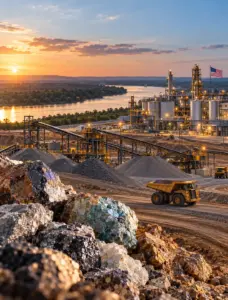
The United States has a vast inventory of mining waste. Some of this material contains valuable metals that earlier operations failed to recover. Today, new processing technologies may make some deposits worth revisiting.
The potential scale is enormous. A 2025 technical assessment by Idaho National Laboratory (INL) estimates that 189 major sites contain about 13.904 billion metric tonnes of mine tailings. The assessment covers ten major commodity types and excludes coal-based resources.
These tailings contain critical minerals, including rare earth elements, cobalt, gallium, germanium, indium and platinum-group elements. However, the total weight of the waste does not equal the amount of recoverable minerals.
That distinction matters. The United States cannot treat every tailings deposit as a viable resource. Instead, companies must identify sites that can produce saleable minerals at competitive costs.
More Read

Federal funding and policy changes may help. Yet technical, legal and environmental challenges will determine whether these projects succeed.

The First Challenge Is Finding Viable Sites
The national inventory provides a starting point. However, the underlying data remain incomplete.
INL reviewed more than 300 datasets from over 100 sources. Fewer than 10% contain enough detail to support immediate investment and project development. This gap makes it difficult to identify the strongest commercial opportunities.
More Read

Companies need more than historical production records. They must collect representative samples and measure mineral concentrations. They also need to understand how target elements occur within the waste.
For example, a metal locked inside a resistant mineral may require expensive processing. Another deposit may allow easier separation. Tailings can also vary across a site because mines often operated for decades under changing conditions.
A useful national database should include several details:
- Tailings location and estimated volume
- Mineral concentrations and mineralogy
- Contamination levels and environmental risks
- Ownership and mineral rights
- Site access and processing history
- Potential recovery methods and costs
Better data would help companies compare deposits before investing in expensive studies. It would also help federal agencies direct funding towards promising sites.
Therefore, the first step is not extraction. It is identifying which deposits deserve further investigation.
Why Old Tailings Could Have New Value
Mining companies historically discarded some minerals because they lacked suitable technology or commercial incentives. Today, changing prices and improved processing methods may create new opportunities.
Potential targets include rare earth elements used in permanent magnets. Other candidates include cobalt for batteries and industrial applications. Additional metals support electronics, energy systems and advanced manufacturing.
The INL assessment identifies several types of mine waste that may contain valuable elements. Copper-gold tailings, for example, can contain residual copper and other metals. Historical lead-zinc operations may also leave valuable elements in their waste.
However, these examples do not prove commercial viability. Each site requires independent testing.
The economics may improve when a process recovers several metals. Revenue from by-products can strengthen a project’s financial case. Nevertheless, by-product recovery can also create challenges.
A project may depend on a small quantity of a valuable metal. Its economics could still rely on a larger commodity recovered from the same material. If demand for that main product weakens, the entire project may struggle.
Strategic importance alone cannot justify extraction. Companies must assess mineral grades, recovery rates, processing costs and buyer requirements.
Consequently, the industry should evaluate tailings deposits individually. A large national inventory does not represent one unified commercial resource.
Mineral Recovery Could Help Clean Up Old Mines
Tailings recovery may offer two benefits. It can produce valuable minerals and help reduce environmental damage.
Some abandoned mines contribute to acid mine drainage, metal contamination and dust pollution. Their waste piles may also create long-term environmental risks.
A well-designed recovery project could remove contaminated material or improve water quality. It might also stabilise waste deposits and reduce exposure to harmful substances.
However, mineral recovery does not automatically deliver environmental benefits.
Excavation and chemical processing can release contaminants. These operations may also create new residues that require secure storage. In some cases, the remaining waste could become harder to manage.
Companies should establish baseline environmental conditions before starting work. They should also set measurable targets for remediation.
These targets could include better water quality, lower contaminant levels or more stable tailings. Monitoring must then confirm whether the project achieves those results.
The financial case also needs careful analysis. Some projects may generate enough mineral revenue to support cleanup. Others may deliver environmental benefits but fail to cover their costs.
This distinction matters for government funding. Commercial mineral production and public-interest remediation can overlap. However, they do not always share the same economic drivers.
Federal Policy Is Encouraging Domestic Recovery
Several federal measures support US critical-mineral supply chains. They also encourage research into unconventional mineral sources.
The Energy Act of 2020 strengthened the statutory basis for federal critical-minerals programmes. The Infrastructure Investment and Jobs Act of 2021 subsequently supported mineral recovery and processing initiatives.
The Fiscal Responsibility Act of 2023 amended the National Environmental Policy Act (NEPA). It established presumptive deadlines of one year for environmental assessments and two years for environmental impact statements.
These deadlines aim to improve permitting predictability. However, they do not remove environmental reviews or guarantee project approval.
In March 2025, Executive Order 14241 directed federal agencies to accelerate domestic mineral production and permitting. Congress also enacted the One Big Beautiful Bill Act in July 2025, changing parts of federal tax and energy policy.
Meanwhile, the Department of the Interior issued Secretarial Order 3436 in July 2025. The order directed attention towards policies for recovering critical minerals from mine waste.
Together, these measures signal stronger federal interest in domestic mineral production. Their practical impact will depend on implementation and project eligibility.
Permitting reform may reduce delays. However, it cannot resolve every obstacle. Companies must still establish ownership, secure site access and demonstrate technical feasibility.
Most importantly, faster permitting cannot make an uneconomic deposit profitable.
The Good Samaritan Act Has a Limited Scope
The Good Samaritan Remediation of Abandoned Hardrock Mines Act of 2024 offers a targeted route for certain legacy-site cleanup projects. President Joe Biden signed the law on December 17, 2024.
The Act allows eligible parties to apply for investigative and remediation permits at qualifying abandoned hardrock mines. It also provides specific liability protections for eligible work carried out under the programme.
However, the law does not create a blanket exemption for commercial mineral recovery. Applicants must meet statutory requirements. Their relationship to the site and its historic contamination also matters.
The programme focuses on qualifying remediation activities. It does not provide general authorisation for mining or exploration.
In September 2026, the US Environmental Protection Agency issued its first permit under the programme. The permit covers the Bodie Mine site in Washington state.
The project, led by Trout Unlimited, involves removing up to 790 tons of contaminated mine tailings and stream sediments along Toroda Creek. This marks an early implementation milestone.
Nevertheless, the permit does not establish a general commercial pathway for every tailings project.
Developers must determine whether their project qualifies for the programme. A cleanup project at an abandoned mine may follow a different legal route from commercial reprocessing at an active mine.
Companies should resolve this question before assuming that special liability protections apply.
Environmental Liability Remains a Major Risk
The Good Samaritan Act addresses only part of the legal challenge.
The Comprehensive Environmental Response, Compensation, and Liability Act (CERCLA), commonly known as Superfund, can impose strict liability on parties within its statutory categories. Courts may also impose joint and several liability when the harm is indivisible.
The facts and applicable legal defences matter. Therefore, companies must assess each site’s legal position individually.
A developer considering old tailings needs to establish who owns the material. It must also identify existing contamination and any cleanup obligations.
The company should assess whether its proposed work could create additional environmental risks. It must also determine which permits and approvals the project requires.
This does not mean every company that disturbs tailings automatically becomes liable for all historic contamination. Liability depends on ownership, operator status, the nature of the activity and other legal factors.
Even so, uncertainty can affect financing and insurance. It can also increase project costs and delay investment decisions.
Before committing capital, companies should conduct detailed environmental due diligence. They should confirm their rights to the material and review potential liabilities with qualified legal advisers.
Contracts and financial protections can help allocate commercial risks. However, they cannot necessarily remove statutory liability.
Clearer regulatory pathways could improve investor confidence. Until then, companies must treat ownership and environmental liability as core project-development issues.
Federal Funding Is Supporting Research
Federal programmes are helping researchers test technologies for mineral recovery. However, companies must distinguish announced funding from final awards and actual payments.
On June 2, 2026, the Department of Energy announced $134 million for two projects selected for award negotiations under its Rare Earth Elements Demonstration Facility programme.
The projects use different feedstocks. One aims to recover rare earth elements from red mud, a waste product of alumina refining. The other aims to produce high-purity rare earth metals from domestic industrial-waste-derived feedstocks.
These projects support the wider waste-recovery sector. However, they should not both be described as mine-tailings projects.
DOE also stated that selection for negotiations does not guarantee funding. The final amounts depend on the award process.
On September 30, 2026, DOE announced $29.5 million for 17 selected National Laboratory projects under its Mine of the Future initiative.
The projects cover mining innovation, mineral processing and recovery technologies. One Argonne National Laboratory project aims to recover copper, nickel and cobalt from domestic mine tailings through a continuous process using induction heating.
A Sandia National Laboratories project is exploring bio-based and electrochemical methods. Its goal is to recover critical minerals and structural materials while treating residual waste.
These projects address important technical challenges. However, research and demonstration results do not prove commercial viability.
Investors should watch for final award agreements and pilot-scale results. Recovery rates, product quality and operating costs will also matter.
Ultimately, companies must show that these processes can operate reliably at commercial scale. Funding can support development, but it cannot guarantee an acceptable return.
Tax Credits Require Careful Analysis
Federal tax incentives may improve the economics of some critical-mineral projects. However, companies should not assume that every mineral recovered from waste qualifies.
Section 45X of the Internal Revenue Code provides production tax credits for eligible components and qualifying critical minerals. The statutory definitions and project details determine eligibility.
The One Big Beautiful Bill Act amended Section 45X. Under the amended rules, the credit for qualifying critical minerals will decline after 2030.
The credit falls to 75% of the otherwise applicable amount in 2031. It falls to 50% in 2032 and 25% in 2033. The credit then ends for production after December 31, 2033, under the amended schedule.
Companies should confirm the applicable rules before including the credit in their financial models.
Timing matters because mine-tailings projects can take years to develop. Site studies, testing, permitting and construction all require time. A project that starts production late in the credit period may have a different financial outlook from one that starts earlier.
Section 30D, which concerns the clean-vehicle credit, has separate requirements. It should not be treated as a general incentive for tailings recovery.
Therefore, developers should model only incentives they can substantiate under current law. They should treat proposed future changes as possible scenarios, not existing benefits.
The Commercial Test: Can the Project Compete?
The national inventory cannot determine whether an individual project will succeed. Each site must pass technical, environmental and commercial tests.
- First, companies need reliable mineral data. Independent sampling must establish the quantity and form of the target elements. Pilot testing must then demonstrate realistic recovery rates.
- Second, the processing costs must make sense. Crushing, grinding, chemicals, energy and water can add substantial expense. Companies must also manage the waste left after processing.
- Third, the product needs a market. Recovered minerals must meet buyer requirements for purity, consistency and volume. Developers should identify potential buyers before committing to large-scale construction.
- Fourth, the company needs secure rights and permits. It must establish ownership, obtain site access and understand its environmental obligations.
- Finally, the financial model must withstand difficult conditions. Companies should test lower commodity prices, weaker recovery rates and higher operating costs. They should also account for permitting delays and unexpected cleanup expenses.
Public funding may help early-stage projects. However, it cannot indefinitely support an uneconomic process.
By-product dependence creates another challenge. A project may rely on a small quantity of a valuable element recovered alongside a larger commodity. In that case, demand for the main commodity may determine the project’s economics.
The strategic value of a minor metal does not necessarily justify the cost of the entire operation.
These tests matter especially at legacy sites. Historical records may be incomplete, and environmental conditions can add costs that conventional mining projects do not face.
What the Industry Should Watch
The next phase of US mine-tailings recovery will depend on measurable progress.
- Better site data: Reliable information will help companies identify deposits with genuine recovery potential.
- Demonstration results: Recovery rates, product quality and operating costs will show whether technologies can move beyond the laboratory.
- Final funding awards: Signed agreements will clarify which projects receive support.
- Clearer legal rules: Predictable ownership, permitting and liability requirements could reduce investment uncertainty.
- Environmental results: Water quality and contamination measurements will help confirm whether projects deliver real remediation benefits.
- Commercial milestones: Offtake agreements and realistic cost estimates will help investors assess long-term viability.
Policymakers should also distinguish commercial recovery from public-interest cleanup.
Some abandoned sites may require remediation even when mineral revenue cannot cover the costs. Other sites may support profitable recovery but deliver limited environmental benefits.
Funding programmes should recognise these differences. Otherwise, public support may fail to reach the projects that need it most.
A Strategic Opportunity, Not a Guaranteed Supply
The United States has a substantial inventory of mine tailings. Some deposits may offer valuable sources of critical minerals.
Improved processing technologies and federal research programmes could help unlock that potential. Policy changes may also create more favourable conditions for selected projects.
However, the 13.9-billion-tonne estimate does not tell us how much mineral companies can recover. It does not predict future production or quantify any reduction in import dependence.
The real challenge is to convert an unevenly documented inventory into viable projects. Companies must prove that they can recover saleable products at competitive costs. They must also manage environmental risks and secure a reliable route to market.
The strongest projects will combine dependable site data, proven processing methods and clear legal rights. They will also demonstrate measurable environmental benefits where remediation forms part of the business case.
For the mining industry, tailings recovery could complement conventional mining and support targeted environmental cleanup. Its long-term value will depend on the sites that pass the technical, legal, environmental and commercial tests.