NEW YORK/BUENOS AIRES — The United States and Argentina have launched the Andes-Atlantic Corridor, an infrastructure initiative designed to connect Argentina’s mineral-producing regions and energy resources with Atlantic ports and Western markets.

The corridor brings together railways, waterways, ports, power infrastructure, pipelines and digital networks. For mining, its focus is on improving the infrastructure needed to move lithium, copper and other strategic minerals from resource areas toward processing and export markets.
The initiative was launched on September 23 during the United Nations General Assembly High-Level Week in New York. The U.S. State Department describes it as the first Partnership for Global Infrastructure and Investment corridor in the Western Hemisphere.
Up to $7 Billion in Financing
The corridor includes a separate U.S.-Argentina financing framework that could mobilize up to $7 billion through 2027 for eligible projects.
The U.S. Export-Import Bank and Argentina signed the Build the Future Framework to support critical minerals development and processing, energy security, grid modernization, digital infrastructure and other strategic sectors.
More Read

The $7 billion is not a single mining investment or an immediate cash commitment. It is a financing framework that can support eligible projects through EXIM financing tools and other forms of cooperation.

EXIM said support for critical minerals could include U.S. equipment, technology, mining expertise and related infrastructure.
A separate EXIM term sheet outlines potential financing of up to $6 billion for Argentina LNG. That project is linked to the Vaca Muerta gas basin and is distinct from individual critical-minerals projects under the corridor.
More Read
For mining investors, the distinction is important. The corridor creates a potential financing channel, but individual mineral projects still need to secure approvals, demonstrate commercial viability and pass their own financing processes.
Connecting Mines to Atlantic Markets
Infrastructure is central to the mining case.
Argentina’s major lithium and copper resources are concentrated far from the Atlantic coastline. Moving material from mines to export markets requires reliable roads, railways, power and port capacity.
The corridor aims to address some of those bottlenecks by improving connections between productive regions, the Hidrovía waterway and Atlantic ports.
The Hidrovía is a major export route for Argentina and neighboring countries. Argentina also awarded a 25-year concession in June to improve the waterway system, with the U.S. government estimating that the concession could generate about $10 billion in investment.
For mining companies, these connections can influence project economics long before a mine reaches production. Transport costs, power availability, rail capacity and access to ports can affect the cost of moving both equipment and mineral output.
For a mine far from the coast, lower transport costs and reliable power can materially affect whether a project can compete in export markets.
Argentina’s Lithium and Copper Base
Argentina brings a substantial mineral resource base to the partnership.
The country is part of the Lithium Triangle, alongside Chile and Bolivia. The region contains a major share of global lithium resources, while Argentina has become an important producer of lithium from Andean salt flats.
Copper is another major part of Argentina’s mining pipeline.
Large copper projects are advancing across provinces including San Juan, Catamarca and Salta. The project pipeline gives Argentina a significant copper development base alongside its growing lithium sector.
The combination of mineral resources and infrastructure development is central to the corridor’s logic. Resource deposits alone do not create export supply chains. Mines need power, transport, processing capacity and access to international markets.
From Mineral Resources to Export Capacity
The Andes-Atlantic Corridor is broader than a mining program.
Its infrastructure framework links mineral development with energy and transportation systems. That could matter for projects that require new roads, rail links, electricity transmission or port capacity before they can reach commercial scale.
For the United States, the initiative provides a mechanism to support critical mineral supply chains while creating opportunities for U.S. equipment, technology and services.
For Argentina, the framework provides another potential source of capital for infrastructure and productive investment.
The commercial impact will depend on how individual projects progress.
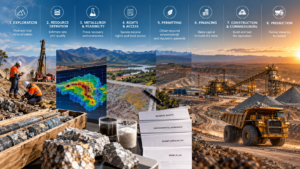
The corridor itself does not put a new lithium or copper mine into production. Individual projects will still need exploration and technical development, permitting, financing and infrastructure before they can generate commercial output.
The next stage will be project selection and financing. The two governments have said they intend to identify opportunities across mining, energy, transportation and digital infrastructure.
For Argentina’s critical minerals sector, the corridor’s importance will ultimately be measured by how effectively it connects mineral resources in the Andes with the infrastructure and capital needed to reach global markets.