The United States and Myanmar’s military-backed government met in Tokyo last week for the second time in a month, according to three people with knowledge of the meeting who spoke to Reuters on condition of anonymity. The quick succession of meetings marks a significant acceleration in engagement between Washington and a government it has formally shunned since the February 2021 coup.

The talks were led again by Michael Vance, US Assistant Secretary of State for Intelligence and Research. More than a dozen US officials attended. Reuters could not establish who represented Myanmar. The State Department did not respond to requests for comment. Myanmar’s military-backed government did not respond either.
Japan’s Foreign Ministry confirmed only that it had been communicating with both sides, declining to comment on the specific diplomatic exchange.
How the Engagement Developed
The current sequence of contacts began earlier this year. A first Tokyo meeting between US and Myanmar officials took place in June, also led by Vance. A second meeting occurred in Naypyitaw on September 15 and 16, where Vance met directly with Myanmar’s coup leader-turned-president, Min Aung Hlaing — the highest-level US contact with Myanmar’s military leadership since the 2021 takeover.
That Naypyitaw meeting focused initially on securing the release of a detained American businessman and on closing scam centres that run romance and investment fraud operations targeting Americans. Those centres have cost US citizens billions of dollars. Researchers say many operate in areas controlled by army-backed militias, with proceeds flowing to the military, raising doubts about enforcement sincerity. Myanmar’s military government says it is participating in a multinational effort to address the problem.
More Read

The September meeting created an opening for broader discussions. The rapidity of the return to the table in Tokyo — the third venue in four months — suggests both sides are motivated to keep the dialogue open.

What Makes Myanmar Strategically Relevant
The civilian dimension of the talks does not fully explain the pace of engagement. Heavy rare earth minerals do.
Kachin State in northern Myanmar contains deposits that account for nearly half the world’s mined supply of heavy rare earths, concentrated in the area north of Bhamo near the Chinese border. Myanmar as a whole supplies approximately 52.8% of China’s rare earth imports, according to S&P Global. IEA data indicates that Myanmar and China together account for around 83% of global mined supply of heavy-magnet rare earths.
More Read
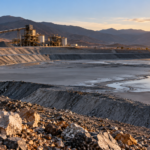
The specific minerals involved are dysprosium and terbium. Both are used in the high-performance permanent magnets that go into electric vehicle motors, wind turbine generators and advanced military hardware. Neither has a straightforward substitute in those applications.
Myanmar’s rare earth exports to China peaked at nearly 42,000 metric tons in 2023, according to the Center for Strategic and International Studies. That export relationship is deeply embedded in Chinese manufacturing supply chains.
Hunter Marston, Southeast Asia director at Australia’s Lowy Institute, described the US approach plainly: Washington is viewing Myanmar through a purely transactionalist lens, and rare earths are the chief strategic asset it is interested in within the country.
The Kachin Problem
The obstacle US officials acknowledge openly is the same one that makes this engagement structurally complicated. The deposits are not under the control of the government the US is talking to.
The Kachin Independence Army seized the main rare earths belt in Kachin State in October 2024, including the Chipwe-Pangwa mining area. After taking control, the KIA raised taxes on miners and throttled production. Terbium prices surged. China’s rare earth imports from Myanmar fell by approximately 50% in the first five months of 2025.
China responded with pressure. Beijing threatened to halt purchases from KIA-controlled areas unless the militia abandoned its push to seize full control of Bhamo. A KIA official told Reuters that China also offered increased cross-border trade as an incentive for the militia to stand down. The KIA, which has over 15,000 personnel and has fought for Kachin autonomy since 1961, has so far defied that pressure.
The junta does not control the mines. Any US arrangement negotiated with Min Aung Hlaing’s government therefore cannot deliver access to the deposits the US most wants.
The Two Proposals and Their Limits
Reuters has reported that the Trump administration has heard two competing proposals for how to proceed.
One calls for the US to act as a peace broker between the military and the KIA, pushing for a bilateral self-governance deal that would stabilise Kachin and allow mining to resume under a negotiated arrangement. The other calls for the US to engage directly with the KIA, bypassing the junta entirely.
A third dimension involves India. Officials have discussed routing Myanmar’s heavy rare earths out through India’s northeastern border for processing, which could provide an export pathway that bypasses China entirely. Analysts note that India has already had independent contact with the KIA on rare earth questions.
However, all three options face the same underlying constraint. Kachin State is remote, mountainous and landlocked relative to any non-Chinese export route. A person familiar with the discussions told Reuters that building a new, major rare earths supply chain from Kachin State into India and onward may simply not be feasible. There is no viable route to sea that the junta controls. Alternative logistics through India would require infrastructure that does not currently exist at the required scale.
The Sanctions Contradiction
The diplomatic engagement is taking place against a backdrop that Washington has not resolved.
Min Aung Hlaing remains under US Treasury OFAC sanctions for his role in the 2021 coup, the violent suppression of the subsequent popular uprising, and for his involvement in the 2016-2017 mass killings and expulsions of Rohingya Muslims that Washington has declared a genocide. The UN says Myanmar’s armed forces have killed thousands of civilians in airstrikes since the coup.
The US last week lifted sanctions on the daughter of a Myanmar businessman accused of supporting the military, which the State Department described as part of a new approach to the country. The department said it was re-examining the range of tools it has historically used to promote core interests in Myanmar and committed to dialogue with all groups involved in the civil war.
That framing is significant. It signals that further sanctions adjustments are possible as a tool of engagement, and that the US is not limiting its contacts to the junta.
The DCI Group, a Washington lobbying firm, warned in June that the US risked being shut out of access to critical minerals in Myanmar if it failed to engage. That warning appears to have influenced the policy trajectory.
Japan’s Position
Tokyo’s role in hosting three rounds of talks is notable. Japan has not imposed sanctions on Myanmar’s junta leaders and was among the country’s largest foreign investors before the coup. Approximately 300 Japanese companies still operate in Myanmar, down from more than 400 in 2020.
Japan’s acting envoy to Myanmar met with the foreign minister of the military-backed government earlier this month in what was described as their first known public engagement. Tokyo does not formally recognise the administration. A Japanese ruling party lawmaker, Hiromichi Watanabe, visited Naypyitaw in September and said the trip aimed at restarting bilateral cooperation and resuming development aid.
Whether Japan has strategic interests beyond hosting the talks, or whether it is facilitating US-Myanmar contact as a function of its own re-engagement process, has not been established.
What the Industry and Investors Should Watch
The KIA, not the junta, holds the deposits. Any US-Myanmar deal that does not include a settlement between the military and the Kachin Independence Army cannot deliver access to the rare earths that are driving the engagement. The status of the Bhamo front and broader KIA-junta conflict is the most consequential variable.
The logistics question is unresolved. The Kachin deposits are remote. An alternative supply chain through India would require new infrastructure and cooperative arrangements that do not currently exist. Investors should not assume diplomatic progress translates automatically into deliverable supply.
Sanctions remain an active constraint. Min Aung Hlaing is still sanctioned. Any US company considering involvement in Myanmar’s rare earth sector must assess its OFAC exposure carefully, regardless of the diplomatic signals being sent at the State Department level.
China is not a passive observer. Beijing is the established buyer, the processing hub and the dominant geopolitical actor in the region. Any US role that redirects Myanmar’s rare earth exports would be viewed by China as a direct challenge. China has already demonstrated its willingness to use its buyer position as leverage against the KIA.
Terbium and dysprosium prices reflect supply disruption. The KIA’s October 2024 takeover of the main mining belt caused terbium prices to spike. That price signal reflects the genuine tightness in the heavy rare earth market and the degree to which Kachin production matters to global supply. Those price conditions are what is drawing US attention to Myanmar in the first place.
A Transactional Opening With Structural Obstacles
Washington is clearly willing to re-engage with a government it sanctioned and isolated for five years. The minerals calculus is driving that willingness. Three rounds of talks in four months represents a deliberate and accelerating effort.
However, engagement with the junta is not the same as access to the deposits. The KIA controls the mines. The terrain limits export options. China controls the processing. And Min Aung Hlaing’s government remains under US sanctions for documented atrocities.
The talks in Tokyo are a real development. So are the obstacles. Neither cancels the other out. What the next round of meetings produces — and whether they eventually include the Kachin Independence Army — will determine whether this diplomatic opening translates into anything that reaches a processing facility outside China.
Sources:
- Reuters via WHBL — US Holds More Secret Talks With Myanmar’s Military-Backed Rulers in Tokyo (Original: reuters.com)
- The Diplomat — US Has Opened Direct Talks With Myanmar Government
- CSIS — The Dangerous Allure of Myanmar’s Rare Earths
- S&P Global — Myanmar’s Rare Earths as Strategic Hedge
- Reuters/Mining.com — China Risks Global Heavy Rare Earth Supply to Stop Myanmar Rebel Victory
- Geopolitical Monitor — What Makes Kachin’s Rare Earths Valuable