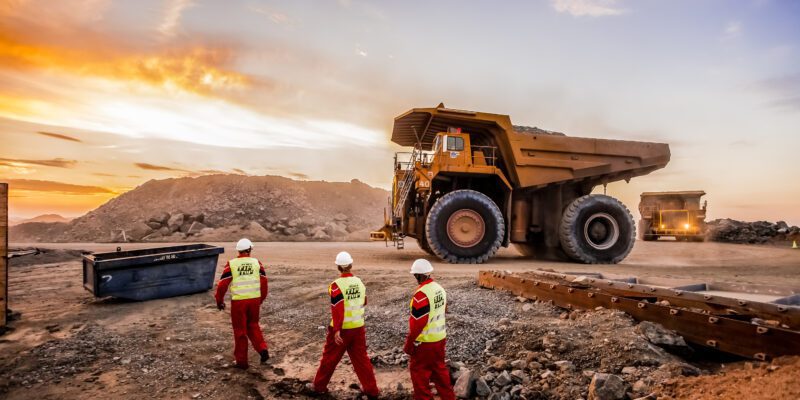
The mining industry in numerous conflict*affected countries continue to encounter substantial obstacles as 2024 progresses. The ongoing violence and instability in these regions, which are rich in valuable minerals, present a challenge in balancing resource extraction.

Ukraine: A Complex Mix of Resistance and Obstacles
The ongoing conflict with Russia has severely disrupted Ukraine’s mining sector, which has been a historically significant component of its economy. Logistics and supply chains have been complicated by the conflict, in addition to causing infrastructure damage. Ukraine continues to be a substantial factor in the global mining market, particularly in the production of coal, iron, and steel, despite the obstacles it faces.
The most recent developments indicate a muddled outlook. Although certain mining operations continue, the sector’s overall performance has been impacted by wage arrears and labor disputes, particularly in the state*owned coal mines. Efforts to attract foreign investment are concentrated on critical minerals such as lithium, copper, and graphite, which are indispensable for Europe’s energy transition. In addition, the industry’s revitalization is significantly advanced by the reopening of the Muzhievo gold mine after a 15*year hiatus.
Related News
- Revolutionizing Quartz Mining: TOMRA’s Sensor-Based Sorting Unlocks Full Value Potential
- The Untold History: Enslaved Africans and their Role in the U.S. Mining Industry
- Mysteries of Stonehenge: The Significance of Minerals in the Historic Structure
- Immigration: The Mining Industry’s Lifeline
Sudan: Conflict in the Context of Gold Mining
Gold mining is essential to Sudan’s economy; however, it has been significantly impacted by ongoing conflicts. There are security challenges that impede mining operations in regions like Darfur and Kordofan, which are wealthy in gold deposits. The country’s economic difficulties have been exacerbated by the instability, which has discouraged foreign investment and disrupted production.
Gaza (Palestinian Territories): Mining Activities Are Limited
Due to its diminutive size and the severe economic constraints imposed by the conflict with Israel, the Gaza Strip has minimal mining activities. The economy of the region is predominantly based on agriculture and small*scale industries, as there is no significant mining sector.
Myanmar: Conflict*ridden, Although Rich in Resources
Myanmar’s jade and ruby mining sectors are among the largest in the world; however, they are currently experiencing significant disruptions as a result of internal conflict. The mining operations in the northern regions of Kachin and Shan states have been significantly affected by the military revolt in 2021 and the subsequent clashes with various armed groups.

South Sudan: Untapped Potential
South Sudan’s mining sector is underdeveloped, despite its abundance of mineral resources, including gold. Significant exploration and development have been impeded by persistent conflict and economic instability. The primary resource of the nation is its hydrocarbon reserves, but other minerals are largely untapped as a result of security concerns.Sources nine and ten are provided.
Burkina Faso: Gold Mining Under Siege
Armed groups are increasingly threatening the gold mining industry in Burkina Faso, which is a critical economic activity. Mining operations have become perilous as a result of violence, which has resulted in a decrease in investment and production. Until now, the industry has not been stabilized by government interventions or security measures.
Ethiopia: Challenges and Recovery
The Tigray conflict has caused significant disruptions in Ethiopia’s mining industry, particularly in the areas of gold and tantalum. Although a peace agreement has provided some stability, mining operations continue to encounter challenges as a result of regional tensions. The government is currently working to modernize the sector and attract foreign investment.
Yemen is a country that is both underdeveloped and struggling.
Yemen’s mining sector continues to be underdeveloped as a result of the ongoing conflict. The exploration and development of the country’s prospective mineral resources, such as gold and copper, are impeded by ongoing violence and a lack of infrastructure. Efforts to develop the mining industry are overshadowed by immediate security concerns.
Syria: A War*Torn Industry
The civil conflict has had a catastrophic impact on Syria’s phosphate mining sector. Operations are hazardous and logistically difficult due to the fact that numerous mining sites are situated in conflict zones. The mining sector’s potential for recovery is restricted by the overall security situation, which remains volatile, despite a slight decrease in violence.
Colombia: Ongoing Obstacles
Internal conflicts persist as obstacles to Colombia’s diverse mining sector, which generates substantial quantities of coal, gold, and emeralds. Investments are discouraged and operations are exacerbated by security concerns and illicit mining activities. The government is currently engaged in ongoing efforts to stabilize and expand the sector.
Nigeria: Ongoing Violence, Abundant Resources
Nigeria’s mining sector, which is abundant in a variety of minerals, including oil, natural gas, coal, and limestone, is susceptible to disruptions associated with conflicts like the Boko Haram insurgency. The sector’s development is impeded by these conflicts, which disrupt mining activities and present substantial safety risks.
Afghanistan: Potential in the Face of Turmoil
The development of Afghanistan’s extensive mineral resources has been impeded by ongoing conflict and instability. The Taliban’s control has resulted in a complex mining environment, characterized by a paucity of infrastructure and substantial security concerns. Despite the volatility of the situation, international investment remains cautious.
The mining industry in these conflict*affected countries continues to be a complex and challenging sector. Security concerns, infrastructural damage, economic instability, and labor disputes are among the distinctive challenges that each region encounters. The future development of these regions’ mining industries is contingent upon the successful stabilization of these regions and the attraction of investment. The opportunity for recovery and development in these sectors remains substantial, albeit potentially daunting, as the global demand for minerals continues to increase.