The China-New Zealand EV dialogue has entered its second round, giving Beijing and Wellington another forum to discuss cooperation in the new-energy vehicle sector. The September 22 meeting in Beijing produced no announced mineral offtake agreement, battery project, EV manufacturing investment or technology partnership.

That does not make the meeting irrelevant to the mining industry.
China’s strength in electric vehicles is built on a much broader industrial base. It links raw materials and processing with batteries, components, electric motors and vehicle manufacturing. New Zealand, meanwhile, is developing a minerals strategy aimed at increasing the value of its resources and building stronger international supply-chain relationships.
The meeting brings these two positions into the same conversation. China has an established EV industrial ecosystem. New Zealand is trying to build a larger role in global mineral supply chains.
China’s EV Ecosystem Goes Beyond Vehicle Production
China’s position in electric vehicles is not limited to assembling finished cars. The country has built major capabilities across several stages of the supply chain.
More Read
Rare earths are one part of that system.

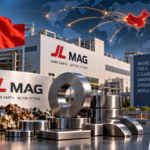
The International Energy Agency estimates that China accounted for around 60% of global mined production of magnet rare earths in 2024. Its share was approximately 91% of refined production and 94% of sintered permanent-magnet manufacturing.
Those figures matter to the EV industry. Permanent magnets containing rare earth elements such as neodymium and praseodymium are used in many high-performance electric motors.
More Read
But mining is only the starting point.
The supply chain also includes beneficiation, separation, refining, alloy production and magnet manufacturing. These downstream stages determine how much value a country captures from its mineral resources. They also influence how dependent manufacturers are on external suppliers.
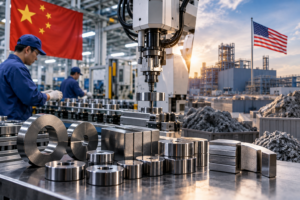
Rare-earth magnets are therefore one example of China’s wider industrial position. They are not the sole reason for China’s EV strength. Batteries, battery materials, components, motors and vehicle manufacturing are all part of the larger ecosystem.
No New Critical-Minerals Deal
The September meeting also needs to be kept in perspective.
China’s Ministry of Industry and Information Technology said the dialogue was intended to implement understandings reached between the two governments and strengthen cooperation in the new-energy vehicle sector. New Zealand has likewise described the mechanism as a platform for policy exchange and continued cooperation.
There was no announcement of a new rare-earth supply agreement, mineral offtake, Chinese EV manufacturing project, battery plant or specific processing investment.
That distinction matters.
A government dialogue can create channels for future cooperation. It does not, by itself, show that minerals, capital or industrial capacity will move between the two countries.
The evidence will have to come from what follows: investment commitments, processing projects, supply agreements, technology partnerships or other commercial activity.
New Zealand Wants More Value From Its Minerals
The EV discussions are taking place as New Zealand develops its own position in critical minerals.
New Zealand launched A Minerals Strategy for New Zealand to 2040 in January 2025. The strategy aims to double the value of the country’s mineral exports to NZ$3 billion by 2035.
Its Critical Minerals List includes rare earth elements, along with cobalt, graphite, nickel, manganese, copper and tungsten.
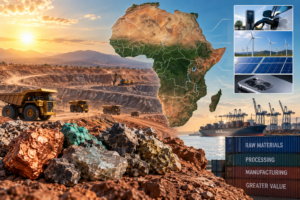
The strategy is not focused only on extracting ore. New Zealand has identified opportunities to create more value across the supply chain, including processing, refining and recycling. It also highlights international partnerships as part of efforts to build more resilient and diversified mineral supply chains.
The EV discussions are therefore happening alongside a broader effort to develop New Zealand’s minerals sector.
New Zealand is looking to expand that sector and build international partnerships while China remains a major player in processing and manufacturing across several critical-mineral supply chains.
Diversification Requires More Than New Mines
For companies and governments seeking to diversify critical-mineral supply, China’s position in rare-earth magnets shows the scale of the challenge.
The IEA estimates that China remains dominant in several stages of the rare-earth supply chain. It also projects that announced capacity outside China will remain insufficient to meet expected demand for refined rare earths and permanent magnets by 2035.
Building alternative supply chains requires more than finding new deposits.
Countries need mines, processing plants, separation and refining capacity, component manufacturing and recycling infrastructure. They also need customers willing to support those supply chains commercially.
This is where New Zealand’s minerals strategy becomes relevant.
New Zealand does not have China’s industrial scale. Nor does its minerals strategy suggest that it will replace China’s position in the global EV supply chain.
Its potential role is different.
It can develop domestic mineral resources, attract investment, build processing capacity and work with multiple international partners. That could create additional supply-chain options without reducing every relationship to a China-versus-West contest.
What the Mining Industry Should Watch
The second EV dialogue is best understood as a continuation of government engagement, not as evidence of a new China-New Zealand minerals partnership.
For mining companies, the more important developments will come later.
Will New Zealand’s critical-minerals strategy lead to new exploration and mine development? Will processing and refining projects emerge? Will international partnerships result in actual supply agreements? And will EV-related cooperation develop into commercial projects?
Those developments will show whether the dialogue has a material effect on mineral supply chains.
For now, the evidence points to something narrower but still relevant. China and New Zealand are maintaining an institutional channel for EV cooperation while New Zealand is building a policy framework for greater participation in critical-minerals markets.
The meeting was not a minerals deal. Its significance lies in the supply-chain question behind the dialogue: how China’s established EV industrial ecosystem intersects with New Zealand’s effort to build new capacity and relationships in the global minerals market.