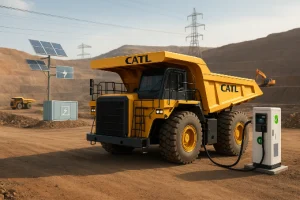
The mining industry landscape is undergoing a significant transformation due to the advent of digital technology.

The mining industry is experiencing a notable shift towards digitalization, as companies are embracing cutting-edge technologies to improve operational efficiency, prioritize safety, and achieve sustainability objectives. This shift in the industry is occurring due to various challenges that it is currently facing. These challenges include decreasing ore grades, increasing production costs, and the need to minimize environmental impact.
A recent report by PwC emphasizes the pressing need for mining companies to prioritize investments in cost-saving technologies. In the last five years, there has been a significant increase in mining production costs, despite a decline in commodity prices. The current economic situation has led the Top 40 mining companies to prioritize productivity enhancements by embracing digital innovation.
Related news
- Chile to Evaluate 81 Private Lithium Proposals, Aiming for Four Projects by 2026
- The Rise of Open Source Geological Modelling Tools: Loop and GemPy Leading the Way
- Boosting Mine Safety and Efficiency & The Power of AI and Big Data
- Mining Industry Revolutionizes Water Management
Microsoft’s recent analysis highlights the importance of digital transformation in building a mining industry that is both resilient and sustainable. The company highlights the significance of establishing a solid data foundation and achieving digital maturity in order to meet corporate environmental, social, and governance (ESG) targets. This is in line with the increasing interest from investors in sustainable practices and greater accountability in the mining industry.
The adoption of artificial intelligence (AI) is revolutionizing the industry. AI applications have a wide range of uses, including mineral exploration, site selection, operations management, and enhancing safety measures. According to forecasts from the World Economic Forum, the integration of AI with Internet of Things (IoT) technologies is projected to generate billions of dollars in value by 2030.
Nevertheless, the path towards digital transformation is not without its fair share of obstacles. The mining industry is grappling with a persistent labor shortage, as a significant majority of mining executives have expressed challenges in finding and keeping the skilled workers they need. The existence of a skills gap highlights the importance of implementing thorough training programs and initiatives to attract professionals with a strong understanding of technology to the sector.

As the industry progresses, the value of collaboration and ecosystem partnerships is growing more significant. Mining companies are forging partnerships that transcend traditional boundaries in order to gain crucial technical expertise and collaborate with governments to foster an environment conducive to innovation.