
This epoch is characterized by significant human impact on Earth’s geology and ecosystems, marking a departure from the current Holocene epoch, which began approximately 11,700 years ago.
The Discovery at Crawford Lake
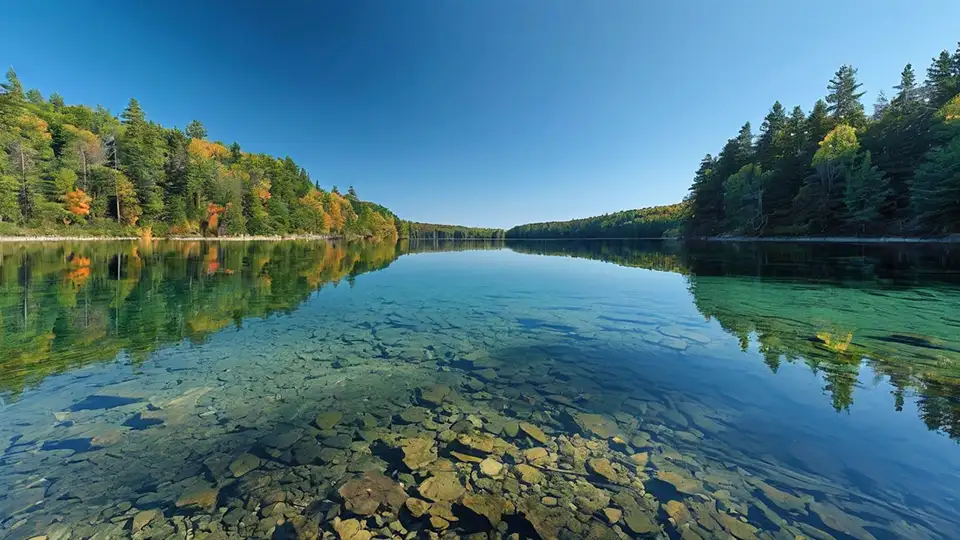
Crawford Lake was selected by the Anthropocene Working Group (AWG) as the ideal site to mark the beginning of the Anthropocene due to its well-preserved sediment layers. These layers contain distinct markers of human activity, such as microplastics, industrial pollutants, and radioactive plutonium from nuclear bomb testing in the 1950s. The lake’s unique stratification allows for precise chronological recording, making it a prime candidate for the “golden spike” that could officially denote the start of the Anthropocene.
The Great Acceleration
The mid-20th century, particularly the period from 1950 to 1953, is proposed as the onset of the Anthropocene. This era, known as the Great Acceleration, saw a dramatic increase in human activities such as Industrialization, Globalization, and population growth, which have significantly altered Earth’s natural processes. The presence of plutonium in Crawford Lake’s sediments, a byproduct of nuclear testing, serves as a clear marker of this period.
You might be interested In
- Kuya Silver cuts 12,200 g/t silver, 0.17% cobalt at Silver Kings project near Cobalt, Ont.
- March: Updates on critical mining in northern Ontario
- Novo Resources’ (TSX:NVO) Becher Project: De Grey Mining Kicks Off Major Drilling Campaign
- Nine Mile Metals exercises option to acquire three Canada projects
Implications and Controversy
The potential recognition of the Anthropocene as a new epoch has sparked debate within the scientific community. While some argue that human impact is significant enough to warrant a new epoch, others suggest that these changes could be classified as an event rather than a full epoch. The decision to officially recognize the Anthropocene will require approval from several scientific bodies, including the International Commission on Stratigraphy.
Broader Context
The designation of a new epoch underscores the profound impact humans have had on the planet, influencing climate change, biodiversity, and geological processes. It highlights the urgent need for global awareness and action to mitigate these effects. The Anthropocene concept also challenges traditional views of geological time, emphasizing the interconnectedness of human and natural systems.