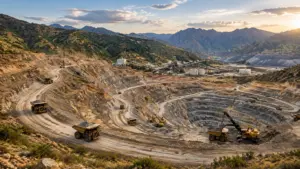

Copper supply gap concerns are reshaping the mining industry, igniting a surge in mergers and acquisitions (M&A) as companies vie to secure critical resources for renewable energy and electric vehicles. With renewable energy copper demand expected to double by 2040, mining firms like BHP and Anglo American are competing for control of key assets.
A High-Stakes Strategy to Address the Copper Supply Gap
The gap in copper supply has placed immense pressure on mining companies to boost production. As the backbone of the energy transition metals market, copper is indispensable for green technologies, particularly in power grids and electric vehicles. Industry giants are increasingly turning to acquisitions to address this challenge, bypassing the slow process of developing new mines.
One prominent example is BHP’s $39 billion bid for Anglo American. This potential merger underscores the industry’s push to secure renewable energy copper demand, positioning BHP to dominate global copper markets. Anglo American, with its prized copper mines in Chile and Peru, remains a critical target. However, the deal has been met with resistance, with Anglo executives arguing that the offer undervalues their portfolio—a reflection of the fierce competition for high-quality copper resources.
Explosive Growth in Copper Mining M&A Deals
M&A activity in the mining sector is surging, reflecting broader efforts to alleviate the supply gap. In 2024 alone, 358 mining M&A deals worth $10.4 billion were recorded globally. This trend highlights the strategic urgency to address renewable energy copper demand and secure vital resources for the energy transition.
More Read

Smaller players like Solaris Resources are becoming prime acquisition targets. Solaris’s Warintza Project in Ecuador recently reported standout drilling results, revealing 87 meters at 1.23% copper equivalent (CuEq). With these high-grade discoveries expanding the company’s 2.3 billion-ton resource base, Solaris is a key player in the energy transition metals space. Its appeal lies in offering larger firms a fast-track solution to bolster production capacity.

“The supply gap has made Solaris an attractive asset for major mining companies,” says Susan Carrington, a mining industry analyst. “Their ability to meet growing renewable energy copper demand makes them a prime takeover candidate.”
Consolidation Trends and Strategic Advantages
As the race to bridge the supply gap intensifies, acquisitions offer strategic benefits. M&A deals provide mining companies access to established infrastructure, reducing costs and accelerating production timelines. The high capital expenditure associated with new mining projects makes this approach more feasible.

For instance, BHP’s acquisition of OZ Minerals earlier this year has expanded its portfolio of energy transition metals, further positioning the company as a leader in the renewable energy copper demand sector. These moves are critical as copper remains a linchpin in global decarbonization efforts.
However, this consolidation is not without risks. Critics warn that the dominance of large players in the energy transition metals market could stifle innovation and deter investments in new projects, worsening the supply gap long term.
Challenges to M&A in Copper Mining
While addressing the copper supply gap through M&A offers short-term solutions, it raises concerns about market concentration. A successful BHP-Anglo American merger could give the combined entity outsized control over copper markets, particularly in South America.
Regulatory scrutiny is expected to intensify as governments assess the environmental and competitive implications of such deals. Local communities also remain skeptical, citing the ecological footprint of increased mining activity.
Additionally, valuation disputes present significant hurdles. Anglo American’s resistance to BHP’s offer highlights the challenges of agreeing on fair valuations in a market dominated by renewable energy copper demand.
Copper Supply Gap Drives Industry Transformation
The supply gap is reshaping the global mining sector, pushing companies toward strategic M&A to ensure resilience in the face of growing renewable energy copper demand. While this trend offers pathways to mitigate supply constraints and enhance production, it also underscores the complex dynamics of the energy transition metals market.
With billions at stake and regulatory challenges looming, the future of copper mining remains uncertain. Yet, one thing is clear: the industry’s ability to adapt will play a crucial role in enabling a sustainable, electrified future.