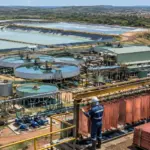
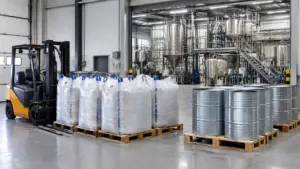
Copper tailings recovery infrastructure at a hydrometallurgical processing facility.

By Charles Pitts
Konkola Copper Mines has signed a $498 million engineering, procurement and construction contract with China Nerin Engineering to build a hydrometallurgical tailings leach plant in Chingola, Zambia, according to metals intelligence provider SMM and company announcements.
The facility is designed to recover approximately 70,000 tonnes of copper per year from existing mine tailings. The project will operate alongside KCM’s established tailings-processing infrastructure at Nchanga and forms part of Vedanta’s broader plan to lift KCM’s overall copper production toward 300,000 tonnes per year.
The 300,000-tonne figure applies to KCM’s wider production and expansion ambitions, not the capacity of the new plant itself. The Chingola facility is expected to contribute about 70,000 tonnes annually once completed.

China Nerin’s contract scope includes engineering design, procurement, construction and installation, as well as commissioning, performance testing and workforce training, SMM reported. The company confirmed the contract in a statement describing the project as a major overseas nonferrous-metals development.

Contract links KCM expansion to tailings recovery
The project will process previously mined material rather than rely exclusively on new ore extraction. Hydrometallurgical tailings recovery generally uses chemical leaching to dissolve copper from residual mineral material before recovering it in downstream processing circuits.
That approach can provide additional feedstock without opening a new pit or developing an entirely separate mining operation. It does, however, require detailed sampling of tailings chemistry, reliable water and reagent systems, stable residue management and integration with existing copper production infrastructure.

SMM described the new plant as a tailings leach facility that will use hydrometallurgical technology to recover copper from KCM’s existing mine waste. KCM and China Nerin have said the project is expected to become Africa’s largest facility of its type once completed.

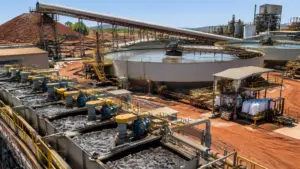
Leach tanks and process piping in a copper hydrometallurgical plant.
KCM Deputy Chief Executive Officer Satish Kumar said the project would support Zambia’s national ambition to produce 3 million tonnes of copper annually. China Nerin Chairman and President Wu Runhua said the company would support construction, commissioning and stable operation of the plant.
Neither company has provided a publicly reported completion date in the contract announcements reviewed by Skillings.
Key project data
| Item | Detail |
|---|---|
| Owner and operator | Konkola Copper Mines |
| Parent company | Vedanta Resources |
| EPC contractor | China Nerin Engineering Co., Ltd. |
| Location | Chingola, Zambia |
| Project type | Hydrometallurgical tailings leach plant |
| Contract value | $498 million |
| Planned additional copper output | Approximately 70,000 tonnes per year |
| Strategic production target | KCM overall output toward 300,000 tonnes per year |
| Feedstock | Existing mine tailings |
| Contract scope | Engineering, procurement, construction, installation, commissioning, testing and training |
The contract also gives China Nerin a larger role in Zambia’s copper-processing expansion. The company’s published project portfolio includes mining, metallurgy, environmental engineering and digital systems for the nonferrous-metals industry.
China Nerin has previously worked on large copper and metals projects in Africa and elsewhere. Its own announcement on the KCM contract said the project would draw on its experience in overseas nonferrous-metals engineering and construction.
Why Zambia is targeting more copper
Zambia is seeking to expand copper production as demand grows for the metal in power grids, electric vehicles, renewable-energy infrastructure and industrial equipment. The country remains one of Africa’s leading copper producers, but output has been affected by aging infrastructure, operational disruptions, power constraints and investment delays.
The government’s 3 million-tonne annual production ambition depends on a combination of new mines, expansions at existing operations, improved recoveries and greater processing capacity.
KCM is central to that strategy. The company operates the Konkola and Nchanga mining complexes in the Copperbelt, as well as processing and refining assets. Vedanta has been pursuing a wider investment programme intended to restore and expand production at KCM after years of operational and ownership uncertainty.
The new tailings plant could help advance that programme by adding copper units from material already stored at the site. It may also reduce the time and geological risk associated with developing a new mining area, although the project remains exposed to construction, commissioning, water, power and metallurgy risks.
Supply-chain implications
The announcement comes as copper concentrates remain under pressure across global supply chains. Recent market reporting has highlighted low treatment charges and stronger competition among smelters for available feedstock.
A 70,000-tonne annual addition would be material for Zambia and relevant to regional supply chains, even though it would represent only a small share of global refined copper production. Additional units from Zambia could support cathode availability for African, Asian and international customers, depending on the plant’s final operating configuration and logistics.
The project may also strengthen Zambia’s position as a producer of processed copper rather than only mined material. Processing more material within the country can increase local industrial activity, create demand for engineering and maintenance services and improve the utilisation of existing transport and power infrastructure.
The supply-chain benefit will depend on whether KCM can maintain consistent plant feed, secure reliable electricity and move finished copper efficiently to export markets. Zambia’s landlocked geography means that rail and road corridors remain important to the competitiveness of its copper industry.
Tailings recovery brings environmental obligations
Reprocessing tailings can improve mineral recovery and reduce the volume of material that remains in long-term storage. It does not eliminate environmental risk.
A new leach plant will create fresh operational requirements around water balance, reagent handling, seepage control, residue stability, worker safety and closure planning. Operators must also account for the possibility that reprocessing changes the physical and chemical characteristics of remaining tailings.
The project’s environmental performance will therefore depend on more than its ability to recover copper. Regulators and local communities will likely focus on water quality, tailings-storage integrity, dust, transport, land disturbance and emergency-response systems.
Skillings has previously examined how tailings are becoming a source of critical-mineral feedstock. The KCM project reflects that broader shift: legacy mine waste is increasingly being assessed both as an environmental liability and as a potential source of additional supply.
For operators, the commercial case for tailings recovery must be matched by a clear plan for the material left after processing. That includes monitoring, rehabilitation and long-term responsibility for storage facilities.

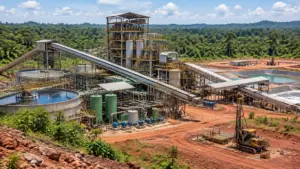
Engineered tailings areas connected to copper processing infrastructure.
What the project means for KCM
For KCM, the contract provides a defined project vehicle for adding copper production while using existing mine infrastructure. The plant could contribute to higher throughput across the company’s processing network and support Vedanta’s plan to rebuild KCM as a larger integrated copper producer.
The project also creates a test of execution. KCM will need to coordinate China Nerin’s design and construction work with existing operations, tailings facilities, power systems, water supply and downstream copper circuits.
Commissioning and performance testing will be particularly important. Tailings can vary in grade, mineralogy and physical characteristics across a storage area. The plant’s ability to achieve its planned output will depend on how accurately those characteristics were assessed during design and how effectively the operating team manages changes in feed quality.
Workforce training included in the EPC scope may help transfer operating knowledge to KCM personnel. Long-term performance, however, will depend on local maintenance capability, spare-parts availability, process control and the reliability of supporting infrastructure.
A broader signal for copper development
The deal illustrates how copper producers are looking beyond conventional mine expansion to meet rising demand. Existing tailings, stockpiles and lower-grade resources are becoming more important as new projects face longer permitting periods, higher capital costs and increasing scrutiny over land and water use.
For Zambia, the project supports the government’s ambition to increase national copper output and expand the domestic mining-services economy. For KCM, it offers a route to additional production within an established mining district. For China Nerin, it adds another international copper-engineering project to its growing portfolio.
The central question will be execution. The $498 million contract establishes the capital framework and technical responsibility, but the project’s contribution to Zambia’s copper ambitions will ultimately depend on construction progress, permitting, commissioning and sustained operating performance.
The new plant is not itself a 300,000-tonne-per-year operation. Rather, its planned 70,000 tonnes of annual copper output is one component of KCM’s broader path toward that target: and a potentially significant addition to Zambia’s effort to build a larger, more resilient copper supply chain.
Sources: SMM reporting on the KCM contract; China Nerin contract announcement; China Nerin engineering and project information; Skillings copper market analysis.