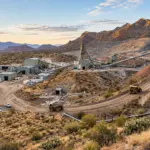
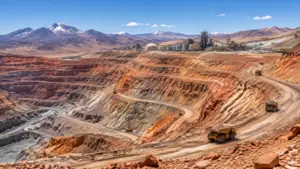
Editorial view of a Turkish copper-gold mine and processing corridor.

By Penny Langford
ACG Metals is paying up to US$7.85 million for a Turkish mining licence containing the Keşkek gold project, a deal designed to keep its nearby Gediktepe processing infrastructure active while the operation shifts toward copper and zinc concentrates.
The transaction is small by mining M&A standards, but strategically important. ACG expects Keşkek’s oxide ore to support continued gold production through Gediktepe’s existing heap-leach facility and potentially double annual output on a copper-equivalent basis, from approximately 20,000 tonnes to 40,000 tonnes.
The deal comes as ACG reports first copper concentrate production at Gediktepe and begins ramping up its sulphide flotation circuit. Keşkek would therefore act as a satellite gold feed source alongside Gediktepe’s emerging copper and zinc business, rather than as a standalone mine development.
ACG’s Keşkek deal at a glance
ACG has entered into a binding agreement with Meta Nikel Kobalt Madencilik Sanayi ve Ticaret A.Ş., known as META, to acquire 100% of mining licence 60926 and the associated rights.

The licence covers approximately 666 hectares in western Türkiye, around 70 kilometres from Gediktepe. Existing roads, haulage routes and contractor arrangements are expected to reduce the infrastructure requirements compared with a greenfield project.
| Item | Disclosed terms | Strategic relevance |
|---|---|---|
| Buyer | ACG Metals | Adds satellite oxide feed to the Gediktepe platform |
| Asset | Keşkek gold project and mining licence 60926 | Nearby source of oxide gold ore |
| Licence area | 666 hectares | Provides defined pit and exploration ground |
| Initial payment | US$4 million | Payable after definitive documentation and licence-transfer approval |
| Deferred payment | US$3.85 million | Linked to environmental permitting and expected production start |
| Total potential consideration | US$7.85 million | Excludes broader development and closure expenditure |
| Seller royalty | 1% of gross gold revenue | Ongoing economic obligation |
| Initial pit | 300,000 tonnes at 0.90 g/t gold | Near-term planned oxide feed source |
| Internal resource estimate | 1.5 million tonnes at 0.65 g/t gold | Provides broader project inventory |
| Target production start | Mid-2027, subject to permitting | Intended to follow residual leaching at Gediktepe |
| Estimated 10-year project expenditure | Approximately US$15 million | Includes acquisition, exploration and closure costs |
The first US$4 million payment is conditional on execution of definitive documentation and approval of the licence transfer by Türkiye’s General Directorate of Mining and Petroleum Affairs. The deferred US$3.85 million is tied to the environmental permitting process and the expected start of production.

META would also receive a 1% gross revenue royalty on gold produced from the licence area. ACG has agreed to pay an additional US$60 per ounce for gold discovered outside the defined Keşkek pit and converted into reserves.
The infrastructure thesis matters more than the headline price
Keşkek’s value lies less in its standalone resource size than in its proximity to an operating processing platform.
ACG intends to send higher-grade oxide ore to Gediktepe’s heap-leach facility. Lower-grade material could be stockpiled for later treatment through the company’s Enriched Ore plant. This approach avoids the need to construct a separate processing facility at Keşkek, although the project will still require mining, haulage, permitting and site-management expenditure.
ACG’s testwork indicates gold recoveries of approximately 75% to 80% through column leaching. Recoveries increased to about 85% when the company applied Gediktepe’s proprietary recovery process.
Those results are central to the project’s economic case, but they remain testwork outcomes rather than guaranteed commercial performance. Recovery rates can change with ore variability, moisture conditions, blending, throughput and operating discipline once mining begins.

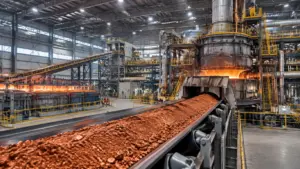
Editorial view of flotation and concentrate-handling infrastructure.
The logistics case is also important. ACG says Keşkek ore can be moved to Gediktepe through existing paved and gravel roads. Its mining contractor, Uluova, is already established at the META site, which could reduce mobilisation time and operational complexity.
That does not eliminate haulage risk. Fuel prices, road maintenance, weather, traffic management and truck availability will influence the delivered cost of ore. The distance is manageable for a satellite operation, but the economics still depend on maintaining a reliable feed corridor between the two sites.
Why Keşkek changes the Gediktepe transition
Gediktepe is moving through a significant operating transition. ACG has been producing gold doré and is now commissioning a flotation plant to produce copper and zinc concentrates from sulphide ore.
The company announced first copper concentrate production at the mine on Aug. 31 and is targeting a ramp-up toward full production. That transition creates a potential gap for the existing gold circuit: once Gediktepe’s own oxide ore is depleted or largely processed, the heap-leach facility could have less feed available.
Keşkek is intended to address that issue.
ACG’s chief executive, Artem Volynets, said the acquisition would allow the company to continue primary gold production while producing copper and zinc concentrates from Gediktepe’s sulphide ores.
The result, according to ACG, could be annual copper-equivalent production of approximately 40,000 tonnes, compared with around 20,000 tonnes without the additional gold production profile. The copper-equivalent figure is a combined measure and should not be interpreted as 20,000 tonnes of additional physical copper output from Keşkek.
That distinction is important for supply analysis. Keşkek itself is a gold project. Its contribution to copper-equivalent output comes from allowing ACG to maintain gold production alongside the copper and zinc concentrate ramp-up at Gediktepe.
The structure reflects a wider trend in mining M&A: producers are acquiring small, nearby deposits that can use existing plants, roads, contractors and technical teams. These transactions can be more capital-efficient than new mine construction, but their success depends on operational integration rather than purchase price alone.
Skillings has examined similar themes in its analysis of copper M&A and district consolidation, where the strategic value of an acquisition rests on infrastructure access, regional control and future development options.
Resource scale and exploration upside
ACG’s technical team estimates that the Keşkek licence contains an indicated mineral resource of approximately 1.5 million tonnes grading 0.65 grams per tonne gold.
The initial defined pit contains around 300,000 tonnes at 0.90 g/t gold, with an estimated waste-to-ore strip ratio of 1:1. This provides the near-term basis for mine planning, subject to permitting and further technical work.
ACG has also identified exploration potential for an additional 5 million to 10 million tonnes grading between 0.7 g/t and 1.0 g/t gold. That target could materially extend the project’s feed profile if drilling confirms continuity and economic conditions support conversion into resources and reserves.
However, the exploration target is not a resource or reserve. ACG has cautioned that further exploration may not produce additional mineral resources. For operators and investors, the defined pit should therefore remain the primary basis for assessing the transaction, while the broader target represents optionality rather than committed production.

Ore haulage will connect the Keşkek pit with Gediktepe’s processing facilities.
Base, bull and bear framework
The transaction’s outcome will depend on a small number of operational milestones. The following framework separates the principal scenarios without treating them as company guidance.
| Scenario | Operating outcome | Main drivers | Implication for copper-equivalent strategy |
|---|---|---|---|
| Bear case | Licence transfer or environmental permitting is delayed; recoveries or haulage costs are weaker than expected | Regulatory timing, road conditions, ore variability, higher project costs | Gold feed arrives late or at lower margins, limiting the expected uplift while Gediktepe’s copper ramp-up carries more of the burden |
| Base case | Transfer approval and environmental permitting progress toward the production target; initial pit feeds the heap-leach circuit | Existing infrastructure, contractor availability, recoveries near testwork results | Keşkek extends gold production for several years and supports ACG’s stated 40,000-tonne copper-equivalent ambition |
| Bull case | Keşkek starts on schedule and drilling converts additional mineralisation into mineable feed | Exploration success, stable haulage, strong recovery performance, available plant capacity | Longer gold-circuit life, higher infrastructure utilisation and greater flexibility during the copper and zinc ramp-up |
The key test is whether Keşkek can provide dependable, economic feed without disrupting Gediktepe’s copper and zinc commissioning schedule.
What operators and investors should watch next
The immediate milestones are administrative and technical:
- Completion of definitive transaction documentation.
- Approval of the licence transfer by the relevant Turkish mining authority.
- Progress through the environmental permitting process.
- Confirmation of the mining and haulage plan between Keşkek and Gediktepe.
- Additional drilling to test the wider resource and exploration target.
- Evidence of stable heap-leach performance as the new ore feed is introduced.
- Continued ramp-up of Gediktepe’s copper and zinc flotation circuit.
The risk profile is familiar but material. Keşkek remains subject to licence-transfer approval, environmental permitting, geological conversion, metallurgical performance and logistics. The 1% gross revenue royalty and additional-resource payment also reduce the economic benefit of future expansion compared with an unencumbered project.
Still, the structure limits ACG’s immediate cash exposure. The company is paying US$4 million initially, with the remaining US$3.85 million linked to later project milestones. That shifts part of the development risk toward the point at which permitting and production visibility improve.
For ACG, the transaction is a targeted infrastructure deal. It does not add a major new copper mine, but it may help the company manage the transition from a gold-led operation to a broader copper, zinc and gold production platform.
The central question is whether Keşkek can deliver enough oxide ore, at acceptable recoveries and haulage costs, to keep Gediktepe’s gold circuit productive while the mine builds its copper profile. If it can, the acquisition demonstrates how modest satellite transactions can influence output, asset utilisation and the economics of a much larger operating complex.
For the broader copper M&A market, the deal reinforces a clear pattern: control of nearby feed, processing capacity and operating continuity is becoming as important as the headline size of the resource.
Shareable analysis
LinkedIn: ACG Metals’ Keşkek acquisition shows how small satellite deals can shape larger copper strategies. The US$7.85 million transaction adds nearby oxide-gold feed to Gediktepe, helping ACG maintain gold production while ramping up copper and zinc concentrates.
X: ACG Metals is buying Türkiye’s Keşkek licence for up to US$7.85M. The nearby oxide-gold project could extend Gediktepe’s heap-leach circuit and support ACG’s stated rise from ~20,000 to ~40,000 tonnes of annual copper-equivalent output.
Sources: ACG Metals’ Keşkek licence announcement; Canadian Mining Journal coverage; Skillings’ earlier analysis of the transaction; Skillings analysis of mining M&A and valuation.
Scenario ranges and operating implications are editorial analysis based on disclosed transaction terms and company statements. They are not company guidance or investment recommendations.