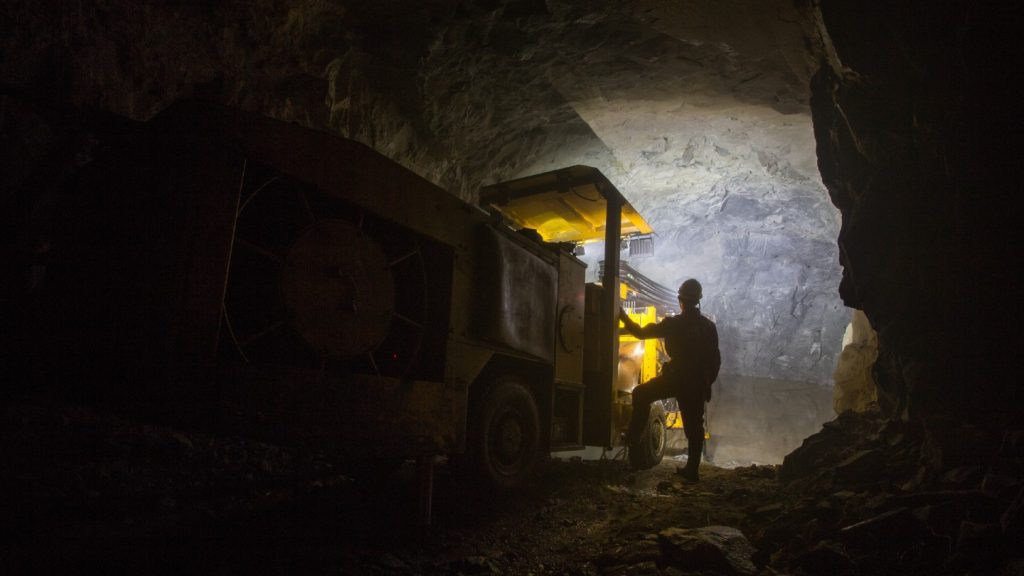
The mining industry is undergoing a transformative shift as underground mining transition becomes a more significant contributor to global operations. According to GlobalData, there are at least 2,294 underground mines worldwide—a number expected to rise as tighter regulations and the critical minerals needed for the energy transition prompt deeper explorations. With open-pit mines nearing the end of their productive lifespans, companies are investing heavily in transitioning to underground operations—a complex process requiring years of planning and comprehensive workforce retraining.

A Natural Progression for Aging Mines
The shift from open-pit to underground mining is driven by the depletion of accessible surface minerals. Transitioning operations, such as Debswana’s Jwaneng Underground Project, are capital-intensive and meticulously planned. The Botswana-based diamond mine, operational since the 1980s, has invested $1 billion in its underground exploration phase. Beyond extending the mine’s life, the project introduces advanced technologies and develops new skills for the workforce.
Debswana’s transition highlights the extensive groundwork required for such moves, including feasibility studies, engineering designs, and stakeholder investments. However, the physical and cultural demands of underground mining transition present significant challenges.
Related News
- Conflict Minerals: A High-Stakes Legal Battle Between DRC and Apple
- Mining Trends in 2024: Transformative Forces Shaping the Industry
- U.S. Graphite Mining Industry Pushes for 920% Tariff on Chinese Competitors
A “Cultural Shift” in Mining
The transition to underground operations necessitates a cultural shift among workers. Danko Morales Garrido, underground director at Enaex Chile, emphasizes the need for extensive retraining in areas unique to underground mining. These include geotechnical skills for tunnel design, advanced ventilation systems to manage toxic gases, and specialized drilling and blasting techniques.
“Open-pit and underground mining are fundamentally different,” Morales Garrido says. “The rock mass reacts differently underground, requiring adjustments in engineering and operational approaches.”
Safety is paramount, necessitating training in personal protective equipment, fire prevention, and flood management. Retraining also extends to the operation and maintenance of specialized machinery and the integration of advanced technologies.

Continuous Training: A Strategic Imperative
The reskilling process does not end with initial training. The dynamic nature of underground mining transition and rapid technological advancements call for continuous education. According to AMC Consulting, underground mining demands unique occupational health and safety standards, while Unison Mining Consulting stresses the importance of comprehensive workforce training to ensure safety and operational success.
Pairing experienced underground miners with open-pit workers transitioning into their new roles can facilitate on-the-job learning. This approach, combined with ongoing training programs, ensures workers remain equipped to handle evolving underground challenges.
Technology as a Training Tool
Technological innovations, such as underground mining simulators, play a pivotal role in workforce development. These simulators provide a risk-free environment to replicate real underground conditions, accelerating skill acquisition.
Immersive Technologies, a leader in this field, has developed platforms like the IM360+, delivering high levels of sensory immersion. “Demand for training is rising due to global skills shortages and increasing operational complexity,” the company notes.
By simulating realistic scenarios, these tools enable miners to master critical tasks, from equipment operation to emergency protocols, without exposing them to real-world hazards.
Addressing the Skills Shortage
The mining industry faces a pressing skills shortage exacerbated by an aging workforce, technological advancements, and the need for local labor in mining communities. Morales Garrido highlights collaboration with technical high schools to build a skilled pipeline, emphasizing early education in mining technologies and safety practices.
The industry’s talent pool is stretched thin as underground mining transition demands specialized expertise. Companies are now recruiting from adjacent industries and doubling down on digital training infrastructure to meet these needs.
Preparing for the Future of Mining
As the mining industry pivots to underground operations, the importance of workforce preparation cannot be overstated. From advanced training to leveraging simulation technologies, a holistic approach is essential to navigate the challenges ahead.
“The transition to underground mining is inevitable as we seek deeper mineral deposits,” Morales Garrido concludes. “With comprehensive training and investment in technology, the industry can ensure its workforce is competent, safe, and efficient in this new era.”
The move underground is more than a logistical necessity—it represents a paradigm shift in mining operations. Companies that prioritize preparation and reskilling will be well-positioned to thrive in an increasingly competitive and technologically driven landscape.