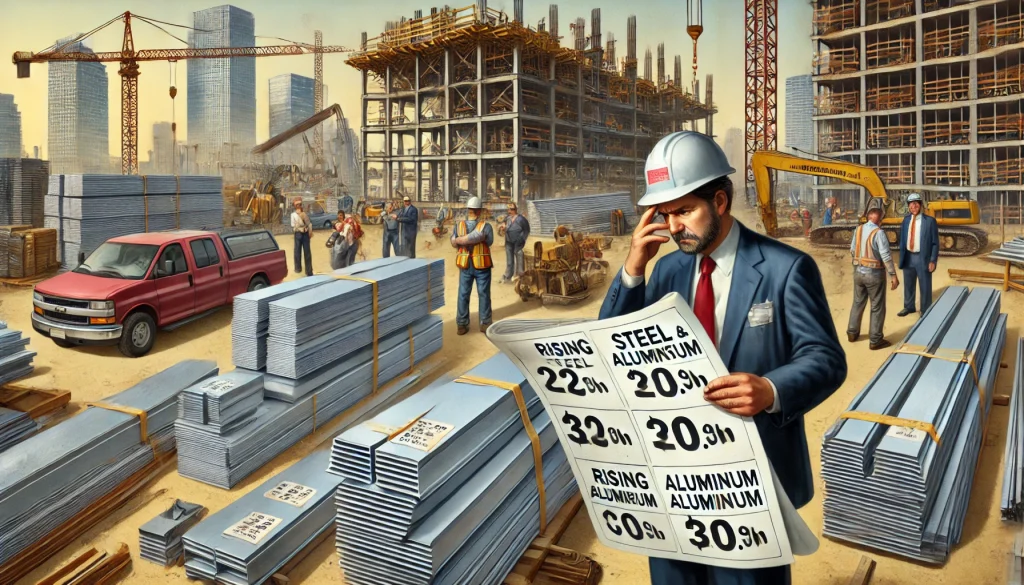
The U.S. construction industry is confronting escalating challenges as recent tariffs on steel and aluminum imports threaten to inflate material costs and disrupt project timelines. President Donald Trump’s administration has imposed a 25% tariff on these essential metals, aiming to bolster domestic production but raising concerns among builders and contractors nationwide.

Impact of Steel and Aluminum Tariffs on U.S. Construction
The newly implemented tariffs are expected to significantly affect the U.S. construction sector, which relies heavily on imported steel and aluminum for various applications, including structural frameworks, roofing, and interior finishes. Industry experts anticipate that these measures will lead to increased costs for materials, thereby elevating overall project expenses. This surge in costs could result in narrower profit margins for developers and potentially deter new construction ventures.
Moreover, the tariffs are likely to exacerbate existing supply chain challenges, making it more difficult for contractors to source necessary materials promptly. This disruption could lead to project delays and further inflate costs, as contractors may need to seek alternative suppliers or materials.
Related News
- Tshiamiso Trust Reaches Major Milestone with R2 Billion Payout to Ex-Gold Mineworkers
- Greenland Mining Industry Faces Challenges Despite Vast Potential
- MINEXCHANGE 2025 Conference Highlights Mining’s Shift Toward Sustainability and Innovation
- Thiess Prioritizes Abatement Over Offsets in Fleet Decarbonization Strategy
- PDAC 2025 Sparks Global Momentum for Critical Minerals and Mining Investment
Strategies for Mitigating Tariff Impacts
In response to these challenges, some builders are adopting proactive measures to mitigate the impact of tariffs. Strategies include stockpiling essential materials before price increases take full effect and exploring alternative materials that are not subject to tariffs. However, these approaches come with their own risks, such as potential overstocking and the suitability of substitute materials for specific projects.
Additionally, industry leaders are advocating for policy interventions to alleviate the financial burden on the construction sector. Proposals include seeking exemptions for certain materials and negotiating trade agreements to reduce tariff rates. Engaging in such advocacy efforts could help stabilize material costs and ensure the continued viability of construction projects across the country.
Outlook for the U.S. Construction Industry
Despite these headwinds, the U.S. construction industry continues to demonstrate resilience. Technological advancements, such as the adoption of robotics and artificial intelligence, are helping to streamline operations and offset some cost increases. Furthermore, a sustained focus on sustainability and innovation is driving the development of new building methods and materials, which could mitigate the long-term impact of tariffs.

However, the full extent of the tariffs’ impact remains uncertain, and industry stakeholders are advised to monitor developments closely. Collaborative efforts between the government and the private sector will be crucial in navigating these challenges and ensuring the continued growth and stability of the U.S. construction industry.