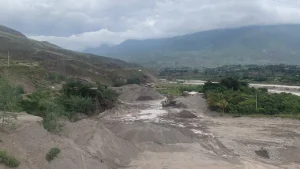
The Peruvian government has suspended all mining operations in the Pataz district for 30 days following a brutal Pataz gold mining massacre that left 13 workers dead. The killings, attributed to armed criminal groups tied to illegal mining operations, mark one of the deadliest assaults in Peru’s modern mining history.

Authorities discovered the bodies on May 5 near the La Poderosa gold mine, located in the mountainous region of northern Peru. The victims—contracted by a local firm working for La Poderosa—were abducted on April 26, reportedly tortured, and executed by perpetrators linked to illegal mining syndicates. Security officials suggest the murders were recorded on video in a gruesome show of territorial dominance.
Related News
- Fury Gold Mines Acquisition Puts Sakami Gold Project in the Spotlight
- Adapt or Decline: The Future of Mining Organizations Is Being Forged Now
- Gold Fields Ghana Secures Damang Mine Lease Extension Amid Push for Local Ownership
- Critical Study Warns of Deep Sea Mining Risks, Highlights Environmental Impact of DSM
- New Cobalt Alternative Alloy Developed by U.S. Lab to Curb Reliance on China
Military Response to the Pataz Gold Mining Massacre
In a rare national address, President Dina Boluarte condemned the Pataz gold mining massacre and ordered the deployment of military forces to the district. A new military base will be established in the area, and a curfew from 6 p.m. to 6 a.m. has been imposed to suppress further violence.
“The state cannot yield to mafias that profit from blood,” said Boluarte, vowing to “reclaim control over our mining corridors from criminal hands.”
Peru’s Armed Forces will oversee the region during the mining suspension period. This militarization underscores the high stakes surrounding illegal mining activity, which has surged across northern Peru.
Pataz: Ground Zero for Illegal Gold Mining in Peru
The Pataz gold mining massacre illustrates the escalating violence tied to unregulated gold extraction. Peru is one of the world’s top gold producers, but its industry is increasingly plagued by illicit actors exploiting legal loopholes and weak enforcement. La Poderosa, one of the country’s most prominent mining firms, has reported nearly 40 worker deaths over the past few years due to clashes with illegal miners.

The region’s rugged geography, combined with high gold yields, has made Pataz a prime target for organized crime groups. These groups often disguise themselves as small-scale miners while engaging in extortion, kidnapping, and armed conflict.
Legal Loopholes Enable Criminal Operations
Peru’s formalization effort, notably the REINFO registry, was meant to integrate artisanal miners into the legal economy. Instead, it has been criticized for legitimizing illegal operations without enforcing environmental or safety standards.
“The REINFO registry has become a backdoor for criminal infiltration,” said Mariela Quispe, an analyst at the Peruvian Institute of Mining and Energy. “It’s a policy failure that contributed to the tragedy in Pataz.”
The Pataz gold mining massacre has renewed calls for comprehensive reform of Peru’s mining laws and enforcement systems. Critics argue that without meaningful oversight, formalization programs risk fueling the very violence they aim to prevent.
Economic Fallout from the Shutdown
The 30-day shutdown of mining activities in Pataz is expected to impact Peru’s gold output and global supply chains. The La Poderosa mine alone accounts for a significant portion of regional production. International gold prices rose slightly following news of the massacre and subsequent government response.
While the suspension may offer a short-term reprieve from violence, industry leaders warn that without deeper structural reforms, such measures will only delay future confrontations.
A Defining Moment for Peru’s Mining Policy
The Pataz gold mining massacre has pushed Peru’s security and economic priorities into sharp relief. President Boluarte’s response signals a more hardline stance, but its success hinges on dismantling criminal networks that have embedded themselves within the mining sector.
For now, the fate of Pataz remains uncertain. What is clear is that Peru can no longer ignore the dangerous overlap of gold and guns in its most profitable, yet perilous, industry.