The Democratic Republic of Congo is advancing a slate of new mining reforms intended to bolster regulatory clarity, increase contract oversight, and attract climate-resilient energy investments to one of the world’s most resource-rich but politically volatile nations.

This legislative shift, formalized through updated mining codes and new governance mandates, seeks to restore investor confidence and capitalize on the global pivot toward greener industrial inputs. However, renewed violence and fragmentation in the eastern provinces cast a long shadow over the initiative.
Related News
- Sanatana Resources Secures Gold Strike Two in Yukon Mining Project Expansion
- Peru Suspends Mining After Pataz Gold Mining Massacre Leaves 13 Dead
- Fury Gold Mines Acquisition Puts Sakami Gold Project in the Spotlight
- Adapt or Decline: The Future of Mining Organizations Is Being Forged Now
H2: Updated Mining Code Aims to Restore Confidence
The centerpiece of the reform package is a revised mining code, which mandates greater transparency in ownership structures and contractual obligations. Foreign companies are now required to partner with Congolese stakeholders holding a minimum 10% equity stake. Additionally, all mining contracts will be subjected to an independent audit and registered publicly.
These rules, Congolese officials argue, are necessary to combat a history of opaque dealings and revenue loss. “For years, the DRC’s mineral wealth enriched everyone but its people,” said a senior official in the Ministry of Mines, requesting anonymity due to the sensitivity of reform negotiations.
The reforms are being promoted as a magnet for climate-resilient energy investors, especially those in the battery metals and critical minerals sectors. Congo is the world’s largest source of cobalt — a key component in electric vehicle batteries — and holds vast reserves of lithium, copper, and rare earth elements essential to clean energy infrastructure.
H2: Green Investment Ambitions Meet Ground Realities
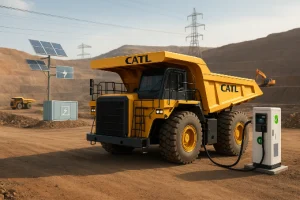
The Ministry of Mines has indicated that a primary goal of the reforms is to enable low-emissions mining operations, fueled by renewable energy. Solar-powered extraction facilities and wind-integrated logistics are being pitched as part of a sustainable mining blueprint for the 2020s.

Yet these ambitions are colliding with the reality on the ground. In eastern DRC, armed groups such as the M23 rebels have resumed hostilities, occupying swathes of mineral-rich terrain. In May 2025, Twangiza Mining, a South Kivu-based gold miner, was ordered to halt operations by M23 forces citing tax disputes—an action viewed by analysts as an illegal assertion of control over local mining revenue.
“Investors are seeing two DRCs,” said Anouk Muller, a resource economist at the African Energy Institute. “One is a global green mining powerhouse; the other is a region under siege where rule of law is suspended.”
H2: Mixed Response from International Stakeholders
While international development banks have praised the reform package, private capital remains cautious. The U.S. International Development Finance Corporation (DFC) and European Investment Bank (EIB) have expressed tentative interest in backing climate-aligned mining ventures, but only in zones deemed secure and legally stable.
Transparency advocacy groups have also raised red flags. The Extractive Industries Transparency Initiative (EITI) welcomed the reforms but cautioned that effective implementation, particularly around public contract disclosure, remains uneven.
“Institutional reform is promising, but success hinges on enforcement,” said EITI Africa Director Fatou Diop. “If rebel groups are allowed to act as de facto mining regulators in the east, this effort will fail.”
H2: Strategic Stakes in the Global Green Transition
The timing of the reforms reflects the DRC’s strategic value in the global energy transition. As Western economies seek to reduce dependence on Chinese critical minerals, the DRC presents an indispensable—if volatile—alternative.
Washington and Brussels have both signaled strong interest in supporting climate-resilient supply chains through African partnerships. The U.S. Department of State’s 2024 Investment Climate Statement labeled the DRC’s reforms “a positive turn,” but emphasized the need for credible anti-corruption and security protocols to support long-term investment.
For Kinshasa, the opportunity is as much political as it is economic. By branding itself as a responsible supplier of green metals, the DRC hopes to reset a narrative long dominated by conflict minerals and exploitation..