Key Takeaways
- Mexico remains a top global source of mercury, despite a 2017 treaty aimed at phasing out production.
- Criminal cartels have seized control of mercury mines in protected biospheres, fueling Latin America’s illegal gold trade.
- Regulatory blind spots and falsified exports enable a black market that threatens ecosystems and human health.
- Environmental groups call for a coordinated crackdown before Mexico’s mercury trade further destabilizes the region.
Mexico’s mercury trade is fueling a hidden environmental crisis, as cartel-controlled mines inside protected biospheres supply Latin America’s illegal gold operations.

Despite ratifying the Minamata Convention in 2017, Mexico has become one of the world’s top suppliers of mercury used in unregulated gold mining. The country’s unchecked mercury trade is now a cornerstone of illegal extraction economies in Peru, Colombia and Bolivia, according to the Environmental Investigation Agency (EIA).
Criminal Networks Fuel the Mexico Mercury Trade
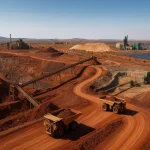
Querétaro has emerged as the epicenter of the Mexico mercury trade, with mining activity expanding inside protected areas. The Jalisco New Generation Cartel (CJNG) is alleged to control multiple operations within Sierra Gorda, exploiting mercury’s $330/kg market value.
The Environmental Investigation Agency reports at least a dozen active sites in the region, with an annual output capacity exceeding 100 metric tons. Smuggling tactics involve mislabeling mercury-rich gravel as “construction material,” shipped via the ports of Manzanillo and Veracruz.
Treaty Bypass and Environmental Fallout
Though Mexico reported zero mercury production after 2018, watchdogs flagged discrepancies. Between 2019 and 2025, over 200 metric tons were quietly exported—primarily to gold mining hotspots in the Andes—fuelling the Mexico mercury trade‘s global spread.
More Read

A recent Peruvian seizure of mercury-rich cargo from Mexico revealed potential for 4 metric tons of liquid mercury—a volume sufficient to contaminate vast ecosystems for decades.

Mercury, among the WHO’s top 10 toxic chemicals, poses acute risks to Indigenous populations and aquatic biodiversity. Artisanal miners often burn or dump mercury into rivers, magnifying the crisis.
UN and NGOs Demand Clampdown on Mexico Mercury Trade
“The Mexico mercury trade has become a convergence point for environmental crime, human trafficking and transnational corruption,” said Marcos Orellana, UN special rapporteur on toxic substances.
More Read

The EIA calls on Mexico to retake control of mining zones, dismantle trafficking rings, and transition mining-dependent communities. A 2025 deadline is proposed for full phase-out.
Without coordinated enforcement, observers warn that the Mexico mercury trade could collapse the Minamata Convention itself, rendering it symbolic at best.