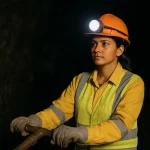
Kazakhstan’s efforts to modernize its mineral sector took a strategic turn this week as the Ministry of Science and Higher Education and Kazakhmys Corporation LLP signed a cooperation memorandum to establish a purpose-built institution in the Ulytau region. Named Ulytau University, the project positions itself at the center of the Kazakhstan mining education strategy, bringing together science, industry, technology, and workforce development in a single framework. For a country long defined by raw mineral exports, the move signals a shift toward a knowledge-based, globally competitive mining economy.

Kazakhstan Mining Education Strategy Moves from Policy to Infrastructure
Unlike previous academic initiatives, Ulytau University is being built specifically to serve the mining and metallurgical sectors, with direct coordination from one of the nation’s largest industrial players—Kazakhmys Corporation. The partnership with the Colorado School of Mines in the United States, widely recognized as one of the world’s top mining universities, elevates the ambition beyond national reform. The collaboration will facilitate joint research, exchange programs, field-based learning, safety and automation training, and commercial pathways for applied technologies. Satbayev University, Kazakhstan’s leading technical institution, is also expected to play a critical role in localizing international expertise to Ulytau’s geological and environmental conditions.
The model mirrors the applied learning structures seen at leading mining institutions in Germany and Australia, which integrate academic rigor with real-time industry problem solving. Within the Kazakhstan mining education strategy, this is being positioned not merely as a teaching institution but as an engine for research commercialization, mining efficiency improvement, and processing innovation across copper, gold, and battery mineral projects.
A Purpose-Built University for Applied Mining Innovation
The campus design reflects the government’s intention to prioritize applied research rather than traditional coursework. Infrastructure includes an academic building, sports complex, student dormitory for up to 150 residents, and a specialized R&D center focused on mineral extraction technologies and metallurgical optimization. Early planning documents highlight research areas such as ore beneficiation, digital mine simulations, water recovery technologies, real-time sensing for safety monitoring, and ore grade prediction using data-driven models. These elements directly connect with the broader Kazakhstan mining education strategy, which aims to align domestic mineral extraction with internationally competitive standards.

Officials involved in the project note that Ulytau University is designed to anchor a regional economic revival. Ulytau, rich in copper and polymetallic deposits, has historically lacked a research-driven industrial center. By merging academia with operations, the government expects to attract youth to the region, create high-skill jobs, and reduce the workforce and technology gap currently impacting Kazakhstan’s mining sector.
Why Workforce Development Is Driving the Strategy Now
Kazakhstan faces a mounting shortage of trained mining specialists. Industry analysts estimate that between 20,000 and 25,000 new professionals will be required by 2030, particularly in safety management, automation, digital mine planning, and processing efficiency. The average age of a mining engineer in the country is now above 50. Competition for skill-based talent is intensifying as Canada, Australia, and the United States ramp up recruitment programs for mining and metallurgical roles. Within this context, the Kazakhstan mining education strategy is being framed as both an academic priority and a national workforce security imperative.
Government officials have also signaled an economic shift. The next phase of Kazakhstan’s mineral sector growth will not depend solely on commodity prices, but on value-added processing, intellectual property, and internationally compliant ESG frameworks. Ulytau University will therefore serve as a testing ground for new regulatory alignment, R&D financing instruments, and equipment modernization pilots that can later be replicated across state and private sector operations.
Skillings Analysis – What This Means for the Sector
This development marks a turning point for Kazakhstan’s mining policy. If Ulytau University successfully integrates industry-ready training with commercially viable research, it could reshape regional mining investment flows. Recruiting experts from Colorado School of Mines indicates an intent to participate in—not just follow—global mining innovation cycles. The Kazakhstan mining education strategy could become the foundational layer for future automation corridors, ESG-led financing models, and proprietary mineral processing technologies developed within Kazakhstan instead of imported from abroad. The industry will now watch closely to see if major operators join as co-investors in laboratory facilities and applied research programs.
Looking Ahead
Academic programs are scheduled to begin in the next academic year, but strategic moves may begin earlier. Budget allocations, co-financing models from mining companies, and faculty recruitment will determine whether the Kazakhstan mining education strategy evolves into a scalable model for Central Asia or remains a regional pilot. As the Christmas-to-Q1 investment window approaches, industry observers expect early signals on how this institution will influence mineral policy and technology integration in 2026. If successful, Ulytau University could become the first step in turning Kazakhstan’s mineral wealth into an intellectual and technological asset — and that would redefine the future of mining education across the region.