China coal job losses are rising as the country moves to reduce excess coal capacity, placing mounting pressure on employment in mining-dependent regions even as coal continues to play a central role in power generation.

China’s coal industry, the largest in the world, is undergoing a slow but structural transformation as authorities push to curb emissions, improve efficiency, and rein in overcapacity. While the transition has been deliberately gradual, its impact on employment is becoming increasingly visible. Mine closures, consolidation, and reduced investment are steadily shrinking the coal workforce across several provinces.
Coal mining has long provided stable jobs for millions, particularly in inland regions where alternative industries are scarce. As reforms deepen, employment security in the sector has emerged as one of the most sensitive challenges facing policymakers.
China Coal Job Losses Concentrated in Mining Provinces
The impact of China coal job losses is most severe in major mining regions such as Shanxi, Inner Mongolia, Shaanxi, and Henan. These provinces rely heavily on coal for employment, fiscal revenues, and local economic activity, making workforce reductions especially disruptive.
The closure of inefficient and high-cost mines has resulted in thousands of workers being laid off or pushed into early retirement schemes. Local governments are under growing pressure to manage unemployment while ensuring social stability and maintaining livelihoods in communities built around mining.

Economists warn that prolonged job losses could further weaken regional demand, creating a feedback loop in which declining employment accelerates economic slowdown in coal-dependent areas.

Mine Closures and Consolidation Reduce Workforce Demand
Ongoing mine closures and the consolidation of smaller operators into larger state-owned mining groups have sharply reduced labor demand. Automation, mechanisation, and productivity improvements at surviving mines have further limited employment opportunities.
Even at operational sites, hiring has largely stalled. Expansion projects that once absorbed large numbers of workers have been delayed or cancelled, leaving limited options for displaced miners and workers across the coal supply chain.
More Read
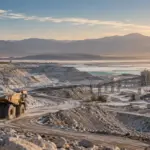
Industry observers note that new job creation in the sector is no longer sufficient to offset losses from closures, resulting in a sustained net decline in coal employment.
Retraining Efforts Struggle to Absorb Displaced Workers
Chinese authorities have introduced retraining, relocation, and compensation programs to ease the impact of coal job cuts. However, the scale of the transition has exposed limitations in these efforts.
Many coal workers possess highly specialised skills that are difficult to transfer to manufacturing or service sectors. In regions lacking diversified industrial bases, retrained workers often struggle to secure stable employment outside mining.
As a result, China coal job losses risk becoming structural rather than temporary, particularly among older workers and in remote mining communities with limited economic alternatives.
Energy Security Remains the Main Reason for Slower Workforce Reduction
Despite its climate commitments, China continues to rely heavily on coal to safeguard energy security. Recent power shortages have reinforced official caution around rapidly downsizing coal production.
This dependence has slowed mine closures but has not halted workforce reductions. Authorities are attempting to balance stability by keeping production sufficient while modernising operations and gradually reducing labor intensity.
Concerns over social unrest remain a key factor shaping policy, prompting a phased approach to employment cuts rather than abrupt layoffs.
Rising Costs Add Pressure on Coal Employers
Coal producers are also facing rising costs linked to restructuring, including severance payments, pension obligations, environmental rehabilitation, and debt servicing for closed mines.
State-owned enterprises must balance employment responsibilities with profitability in a sector facing long-term decline. Smaller and financially weaker operators are more vulnerable, increasing the risk of sudden layoffs.
In many cases, local governments absorb part of the financial burden, complicating fiscal management and workforce transition planning.
Policy Focus Shifts Toward Employment Stability
Employment has become a central issue in China’s coal policy debate. Policymakers are increasingly weighing the social costs of China coal job losses alongside environmental and economic objectives.
Future measures are expected to focus on slowing workforce reductions, expanding retraining programs, and supporting alternative industries in coal regions to cushion the transition.
As China confronts the challenge of dismantling the world’s largest coal sector, managing job losses may prove just as critical as achieving emissions targets.