By Penny Laneford | January 23, 2026

Silicon Valley has a power problem. And it’s about to make uranium investors very, very happy.
Here’s the thing nobody in the tech press wants to fully admit: artificial intelligence is an absolute electricity hog. We’re talking data centers that chew through megawatts like a teenager at an all-you-can-eat buffet. And the traditional grid? It simply cannot keep up. So the big boys: Meta, Microsoft, Amazon, Oracle, Nvidia: have done what any reasonable multi-billion dollar operation would do when faced with an existential infrastructure bottleneck. They’ve gone nuclear.
This isn’t some fringe play anymore. Global electricity consumption from data centers is projected to triple by 2030 as AI workloads fundamentally reshape the global power grid. And that projection keeps getting revised upward. Every new AI model, every generative chatbot, every autonomous vehicle training dataset needs processing power. Processing power needs electricity. Electricity needs reliable, 24/7, carbon-friendly baseload generation.
Enter uranium.
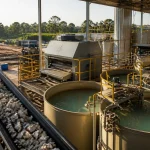
Why Big Tech Is Betting the Farm on Nuclear
Meta’s recent moves have been particularly telling. The company has inked significant agreements with nuclear energy providers specifically to power its AI “superclusters”: those massive compute facilities that train the next generation of large language models. This isn’t greenwashing. This is operational necessity dressed up as environmental responsibility.


The math is brutally simple. A single hyperscale data center can consume anywhere from 50 to 200 megawatts of power. Some of the AI-focused facilities being planned will push well beyond that. Solar and wind are great for PR, but they’re intermittent. Natural gas works, but it comes with carbon baggage and price volatility. Nuclear? It runs around the clock, produces zero direct emissions, and: crucially: scales.

Microsoft’s deal with Constellation Energy to restart Three Mile Island’s Unit 1 reactor wasn’t nostalgia. Amazon’s agreement to purchase nuclear-powered electricity for its Virginia data centers wasn’t charity. These are hard-nosed business decisions driven by one inescapable reality: the uranium supply chain has become the bottleneck in generating sufficient nuclear energy to support AI development.
The Supply Deficit Nobody Saw Coming
Here’s where things get spicy for anyone watching the uranium market.
Despite spot prices sitting comfortably above US$80/lb: which should, in theory, incentivize every miner with a functioning deposit to ramp up production: global uranium producers have consistently under-delivered against their own guidance. This isn’t a temporary hiccup. The supply constraints are structural.
The United States currently produces roughly 1 million pounds of uranium annually. That’s it. Meanwhile, U.S. electricity demand is surging specifically because of AI data center expansion. The numbers don’t add up, and they won’t add up for years.

As of late October 2025, global uranium procurement had reached only about 40 million pounds annually: roughly 50% of replacement rates. Utilities aren’t buying enough to cover what they’re burning. That deferred purchasing has to come home to roost eventually, and analysts expect the acceleration to hit hard through 2026.
Sprott’s Uranium Watch team has been banging this drum for months now, and their bullish forecast is looking increasingly prescient. The thesis isn’t complicated: demand is rising structurally while supply remains constrained structurally. Something has to give, and history suggests that “something” is price.
Long-Term Contracts: The New North Star
One of the more interesting shifts in the uranium market over the past eighteen months has been the return of long-term contracting as the primary investment signal.
Forget watching the spot price tick up and down. The real action is happening in the term market, where utilities are locking in multi-year supply agreements at premium prices. Long-term contract prices have climbed to US$86/lb, and that number reflects genuine procurement urgency rather than speculative froth.
“This is not about traders making short-term bets,” one industry analyst noted recently. “This is about utilities facing requirements into the late 2020s who are increasingly worried they won’t be able to secure physical pounds.”
Utilities with nuclear fleets planned or under construction can’t afford to wait and see. The lead times on uranium procurement, conversion, and enrichment are measured in years, not months. When you’re planning to power a reactor in 2029, you need to be contracting today.
Washington Gets Serious
Policy tailwinds are adding fuel to an already hot fire.
The Trump administration has moved aggressively to support domestic nuclear expansion, signing four executive orders aimed at removing regulatory barriers and: this is the big one: invoking the Defense Production Act to secure domestic uranium supply. The stated goal? Quadrupling U.S. nuclear power capacity over the next 25 years.

Whether you think that timeline is realistic or not, the policy direction is unmistakable. Nuclear has been repositioned from a traditional utility baseload solution into strategic critical infrastructure aligned with national security priorities. Proposals for a strategic uranium reserve have been floated, which would add another layer of demand to an already tight market.
For uranium producers with U.S. or Canadian assets, this is about as favorable a regulatory environment as anyone could have hoped for five years ago.
What This Means for Investors in 2026
Capital allocation in the uranium space has shifted decisively toward execution capability and jurisdictional certainty.
The days of throwing money at explorers with optionality and hoping for the best are fading. Serious investors are increasingly favoring companies with:
- Permitted or permitting-advanced assets that can actually produce pounds in a reasonable timeframe
- Transparent cost structures that can survive if prices soften
- Jurisdictional alignment with nuclear policy objectives in the U.S. and Canada
The “story stocks” that dominated the last uranium bull cycle aren’t going to cut it this time around. The market wants execution. It wants clarity. It wants operators who can deliver into a supply-constrained environment where utilities are desperate for physical material.
The investment thesis boils down to this: uranium’s 2026 case is no longer defined by spot price momentum, but by execution capability, jurisdictional certainty, and alignment with long-term power demand growth from AI infrastructure.
The Bottom Line
We’re witnessing a fundamental repricing of nuclear energy’s role in the global economy. What was once viewed as a legacy technology: politically toxic, economically marginal: has become essential infrastructure for the AI revolution.
The big tech companies have already placed their bets. Government policy is aligning behind nuclear expansion. And the physical uranium market is tightening in ways that suggest meaningful price appreciation ahead.
For mining investors who’ve been waiting for a structural demand story to justify uranium exposure, this is it. The AI-nuclear connection isn’t a speculative narrative. It’s playing out in real-time through contracts, executive orders, and corporate balance sheets.
The question isn’t whether uranium demand will rise. The question is whether supply can keep up.
Right now, the answer appears to be no.
Stay tuned to Skillings Mining Review for continued coverage of uranium market developments and mining industry analysis.