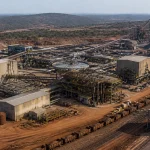
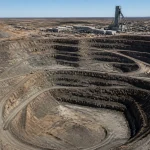
Illustrative bauxite plateau landscape in Odisha.

By Charles Pitts
Bharat Aluminium Company Ltd (BALCO), a subsidiary of Vedanta Ltd, has been declared the preferred bidder for the Karlapat bauxite block in Odisha after quoting a record 175% premium in the state’s mineral auction.
The bid is the highest premium reported for a bauxite mineral auction in India and gives Vedanta a major potential source of captive raw material for its aluminium operations in Odisha. The block, located in Kalahandi district, contains estimated mineral reserves of about 248 million tonnes, including roughly 165 million tonnes of metallurgical-grade bauxite suitable for aluminium production.
The Directorate of Mines and Geology, Government of Odisha, issued the preferred-bidder notification on August 7, according to Vedanta Aluminium Metal’s regulatory filing.
More Read

BALCO’s preferred-bidder status does not by itself mark the start of mining. The company will still need to complete the statutory, environmental, forest and operating approvals required before production can begin.

Karlapat auction draws major industrial bidders
The Odisha government invited bids for the mining lease through a notice issued on May 29. BALCO qualified during the initial bid stage and subsequently participated in the live e-auction.
The company’s final offer of 175% was the highest bid for the block. The New Indian Express reported that several major companies competed for the deposit, reflecting the strategic value of secure bauxite supply for India’s aluminium producers.
More Read

Bauxite is the primary ore used to produce alumina, which is then refined into aluminium. Access to captive or long-term domestic ore can reduce exposure to imported material, spot-market volatility and logistical disruptions.
The premium quoted in an Indian mineral auction is generally structured as a revenue-linked payment to the state rather than as an upfront purchase price for the deposit. The 175% figure therefore represents a substantial future obligation tied to mineral value and will need to be assessed alongside mining costs, logistics, approvals, ore recovery and alumina prices.
Karlapat bauxite block: key facts
| Metric | Detail |
|---|---|
| Preferred bidder | Bharat Aluminium Company Ltd (BALCO) |
| Parent company | Vedanta Ltd |
| Location | Kalahandi district, Odisha |
| Block area | 1,822.61 hectares |
| Estimated mineral reserves | Approximately 248 million tonnes |
| Metallurgical-grade bauxite | Approximately 165 million tonnes |
| Auction premium | 175% |
| Exploration status | G2 |
| Preferred-bidder notification | August 7 |
Source: Vedanta Aluminium Metal regulatory filing and reports by The New Indian Express and Odisha TV.
A strategic raw-material move for Vedanta
Vedanta said in its filing that the Karlapat block fits into the company’s strategy of backward integration.
The group operates a large aluminium value chain in Odisha, including the alumina refinery at Lanjigarh in Kalahandi and the aluminium smelter at Jharsuguda. The company has also outlined further investment plans in the state, including additional alumina refining capacity, a proposed aluminium smelter and downstream manufacturing facilities.
A nearby and substantial bauxite source could improve the long-term alignment between Vedanta’s mining, refining and smelting operations. It may also give the group greater control over ore quality, transport planning and supply continuity as its Odisha footprint expands.
With Karlapat, Vedanta will have two bauxite mining interests in Odisha. The other is the Sijimali bauxite block in Rayagada district.
The scale of the Karlapat resource is significant. The approximately 165 million tonnes of metallurgical-grade ore represents about two-thirds of the block’s estimated total reserves. That distinction matters because ore quality affects alumina recovery, refinery performance, residue generation and the cost of processing.

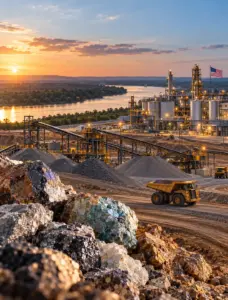
Bauxite-bearing laterite and mineralised rock in an Odisha setting.
Forest land and permitting remain key issues
The Karlapat block covers 1,822.61 hectares on the Karlapat Plateau, a rugged area characterised by forest cover and seasonal streams.
Reports on the auction outcome said approximately 531.94 hectares of the concession area is forest land, while about 3.9% is privately owned. Those characteristics mean that the development timeline will depend not only on mine planning and infrastructure but also on forest diversion procedures, environmental approvals, land access and community engagement.
The requirement for statutory approvals is particularly important because a preferred bidder does not receive an unconditional right to immediately extract ore. The successful bidder must secure the permissions required under India’s mining, environmental and forest regulations before construction and production activities can proceed.
The permitting process will likely require detailed work on biodiversity, water management, traffic, rehabilitation and mine closure. Seasonal drainage across the plateau could also influence the design of haul roads, waste dumps, sediment-control systems and water-storage infrastructure.
Skillings has tracked how changing environmental and reporting requirements are affecting mine development and operating decisions in its analysis of mining ESG compliance and mandatory reporting frameworks.

Forested plateau terrain in an Odisha bauxite-mining region.
The economics of a 175% premium
The size of BALCO’s bid highlights the value placed on domestic bauxite security, but it also raises questions about project economics.
A high premium can be justified by several factors, including the size of the resource, the proportion of metallurgical-grade ore, proximity to existing refineries and the strategic cost of relying on third-party or imported feedstock. For Vedanta, the potential to connect Karlapat with its established Odisha aluminium network may improve the value of the block compared with a standalone mining project.
However, the premium will increase the variable cost of each tonne of ore produced. The eventual economics will depend on the grade and recoverability of the deposit, mine design, stripping requirements, road and conveyor infrastructure, rail access, rehabilitation costs and the timing of approvals.
Aluminium market conditions will also remain important. Alumina and aluminium prices, energy costs, refinery utilisation and regional demand will determine how much value the group can capture from additional bauxite supply.
The auction result therefore signals strong competition for strategic mineral resources, but it is not a final assessment of Karlapat’s profitability. That assessment will become clearer as the project advances through exploration, mine planning, approvals and development.
What comes next for Karlapat
The immediate next step is the formal progression from preferred bidder to mining lease holder, subject to the terms of the auction and applicable regulations. BALCO will then need to advance technical studies, secure clearances and develop an operating plan for the block.
Key milestones for investors, policymakers and local stakeholders will include:
- Completion of the mining lease award process.
- Submission and approval of environmental and forest-related applications.
- Confirmation of mineable reserves and ore quality through further technical work.
- Development of transport, water, power and material-handling infrastructure.
- A clear rehabilitation and mine-closure framework.
- Consultation with communities affected by land access or infrastructure development.
The project’s location in Kalahandi also places it within a wider regional development debate. Mining could create demand for contractors, transport services and local employment, while the use of forest land and potential changes to water and land access will require careful management.
For Vedanta, Karlapat offers the possibility of strengthening raw-material security across an expanding aluminium platform. For Odisha, the auction demonstrates the state’s ability to attract aggressive bidding for large mineral assets. The next test will be whether the record bid can be converted into an approved, financially viable and socially workable mining operation.
Sources: Vedanta Aluminium Metal regulatory filing, The New Indian Express report, and Odisha TV coverage.