Gunnison Copper just dropped an updated Preliminary Economic Assessment (PEA) that effectively resets the narrative for domestic base metal development. While most of the industry is focused on why M&A mania won’t solve the copper supply crisis, Gunnison is quietly carving out a path to production in Arizona that actually makes financial sense.

The numbers are staggering: an after-tax Net Present Value (NPV8) of $2.0 billion.
That’s not a typo. At a consensus copper price of $4.60 per pound, the Gunnison Copper Project is no longer just another “potential” asset. It is a Tier-1 contender in a jurisdiction that actually understands how to move dirt. For an industry staring down a massive 800kt supply gap in 2026, this project represents a significant portion of the domestic answer to a global problem.
The Brutal Economics of $2 Billion NPV
The mining sector is littered with projects that look great at $10 copper but fall apart at $3. Gunnison’s latest PEA, completed by M3 Engineering & Technology Corporation and effective February 22, 2026, suggests a project with genuine resilience.
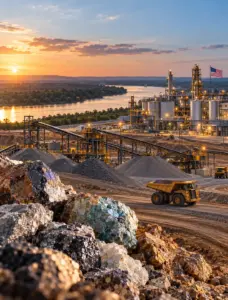
The study outlines an open-pit mining operation utilizing heap leach technology. This isn’t the complex, high-capex concentrated circuitry that often bogs down junior miners. It’s a proven, lower-intensity method designed to extract 3.2 billion pounds of copper over the life of the mine.
More Read

Key PEA Financial Highlights:

| Metric | Value (Post-Tax) |
|---|---|
| NPV (8% discount) | $2.0 Billion |
| Internal Rate of Return (IRR) | 23% |
| Payback Period | 3.9 Years |
| Life of Mine (LOM) Production | 3.2 Billion lbs Copper |
| Total Mineral Resource | 846.1 Million Tons |
| Average Copper Grade | 0.33% |
At a 23% IRR, the project clears the internal hurdle rates of almost every major diversified miner. If you’ve been following the luxury of discipline at companies like BHP, you know that projects with sub-4-year paybacks are exactly what the majors are hunting for: when they aren’t busy overpaying for existing production.

More Read

The Cement Multiplier: Turning Waste into Cash
Here is the kicker: Gunnison isn’t just a copper mine. It’s a cement plant in disguise.
The project includes a cement co-product component that adds roughly $130 million to the NPV. In most open-pit operations, limestone overburden is a cost: a waste product that has to be moved, stacked, and managed. Gunnison plans to turn that high-purity limestone into cement for the regional Arizona market.
Current market studies indicate a regional deficit of over 1 million tons of cement. By building a 1 million-ton annual capacity cement plant: at an initial capital cost of $326 million: Gunnison effectively offsets its copper production costs. It’s a circular economy play that actually works on a balance sheet. In an era where mining ESG reporting is changing capital access, being able to say you’ve eliminated a massive waste stream while solving a regional supply shortage is a powerful lever for institutional investors.
Geology, Tech, and the Arizona Advantage
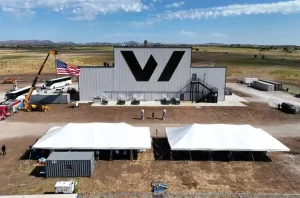
The project is located in Cochise County, about 65 miles east of Tucson. If you know anything about Arizona mining, you know this is “Elephant Country.” But even in mining-friendly jurisdictions, the permitting gauntlet is usually where projects go to die.
Gunnison seems to have threaded the needle. The company reports that the open pit has no federal permitting nexus. There are no identified endangered species on site, no archaeological roadblocks, and no Native American artifacts. That doesn’t mean it’s a “slam dunk”: nothing in mining is: but it removes the most common “nasty” surprises that usually stall projects for decades.
The technical setup is also worth noting. Heap leaching is the “workhorse” of the Arizona copper industry. By sticking to an open-pit/heap leach model, the team is avoiding the technical risks associated with deeper, more complex underground operations. It’s about execution, not reinvention.

2026: The Year the Deficit Becomes Real
Why is this $2 billion milestone happening now? Because the copper market is hitting a wall.
As we’ve discussed previously, the Glencore pivot toward copper and the general lack of new discoveries have created a vacuum. 2026 is the year the structural deficit stops being a “forecast” and starts being a “reality.”
For Gunnison, the timing is impeccable. They are sitting on a resource that can produce at scale just as the world realizes there isn’t enough copper to power the “shiny AI revolution” or the EV transition.
Economic Impact by the Numbers:
- Total Jobs Created: Over 53,000 (direct and indirect)
- Federal Taxes: $1.37 Billion
- State & Local Taxes: $544 Million
- Total Economic Output: $14.6 Billion
These aren’t just feel-good stats for a press release. They represent the political capital necessary to get a project built in 2026. When you can promise $14.6 billion in economic output to a state, the permitting process tends to get the attention it deserves from local officials.
Timeline and Financing Risks
While the PEA is a massive de-risking event, we have to look at the “grim” side of the ledger. A $2 billion NPV is great, but getting to first pour requires capital. The initial capital for the cement plant alone is over $320 million, and that doesn’t include the mining fleet or the leach pads.
In the current high-interest-rate environment, financing remains the primary hurdle for junior developers. Will they go the royalty or streaming route, or will they be forced into a dilutive equity raise? Or, more likely, does a major like Rio Tinto or Freeport-McMoRan look at these PEA numbers and decide it’s cheaper to buy Gunnison than to find their own 3-billion-pound deposit?

The Bottom Line
The Gunnison Copper Project is a rare beast: a domestic project with a clear permitting path, a massive resource, and a creative co-product strategy that buffers against commodity price volatility.
$2 billion in post-tax NPV is a landmark achievement. It puts the project in the top tier of North American development assets. But the market is cynical for a reason. Investors have heard “low-cost, high-margin” stories before. The difference here is the jurisdiction and the simple, proven technology of heap leaching.
As the copper supply crisis deepens, watch for Gunnison to become a central figure in the domestic supply chain discussion. They aren’t just selling copper; they are selling a solution to a regional industrial shortage.
The clock is ticking on the global copper supply. Gunnison just proved they have the scale to matter. Whether they can navigate the final financing hurdles before the majors come knocking is the $2 billion question.
Welcome to the new reality of Arizona mining. It’s bigger, greener, and significantly more profitable than the skeptics thought.