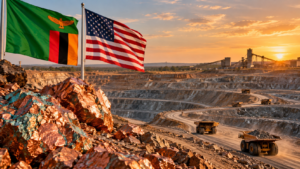
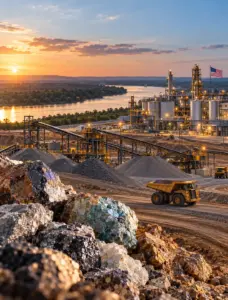
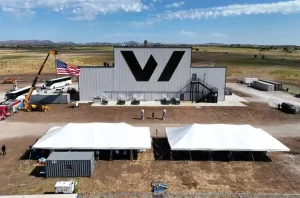
The United States is currently staring down the barrel of a critical minerals crisis that most politicians are too polite to name. We like to talk about “energy independence” and “semiconductor sovereignty,” but the reality on the ground is much grimmer. For decades, the West outsourced its dirty work: and its processing capacity: to China. Now, the bill has come due.

On February 27, 2026, Blue Moon Metals (TSXV: MOON) made a move that suggests someone is finally paying attention to the math. By acquiring the past-producing Apex gallium-germanium mine in Utah from Teck Resources, Blue Moon isn’t just buying a hole in the ground. They are securing a strategic asset that was once a primary producer of the very metals China is now using as geopolitical leverage.
This isn’t a speculative exploration play. It’s a tactical land grab in a market that is rapidly running out of options.
The Apex Asset: A High-Grade Anomaly
Let’s talk about grades. In the mining world, people love to throw around percentages. But when it comes to gallium and germanium, the conversation usually shifts to “parts per million” or “trace byproducts.”
The Apex mine is different. Historically, Apex was a primary producer. During its peak operation in the 1980s and 90s, the grades coming out of the St. George, Utah, facility weren’t just competitive: they were astronomical. We are talking about concentrations 10 to 100 times higher than the typical byproduct recovery found in most zinc or bauxite deposits.
More Read

Per ton. That’s not a typo.

In a world where the Critical Minerals Watchlist 2026 highlights a desperate need for domestic supply, Apex represents a “unicorn” deposit. Most gallium globally is scraped off the top of aluminum production. Germanium is usually a secondary thought in zinc smelting. At Apex, these metals are the main event.
The Deal: Teck Moves Out, Blue Moon Moves In
The transaction itself is a masterclass in strategic alignment. Blue Moon is issuing approximately 7 million common shares to Teck American: roughly 8% of its outstanding shares.
More Read

Teck isn’t just dumping an asset; they are becoming a key stakeholder. They are also retaining a 0.5% net smelter returns (NSR) royalty and a capped royalty of $1 million. For Teck, it’s a way to clean up the balance sheet while maintaining a “carried interest” in a project that fits into the broader North American supply chain.
For Blue Moon, it’s a steal. They get 100% ownership of 26 patented and 9 unpatented claims covering 250 hectares of high-grade territory.

The Geopolitical Stranglehold
Why does this matter now? Because China has effectively weaponized the periodic table.
In late 2023 and throughout 2024, Beijing began tightening the screws on gallium and germanium exports. These aren’t “nice-to-have” metals. They are the backbone of high-speed semiconductors, fiber optics, night-vision goggles, and satellite solar cells. If you want a modern military or a functional 5G network, you need these minerals.
Currently, China controls upwards of 90% of global gallium production. They have a stranglehold on the market, and they aren’t afraid to use it. The US government knows this, which is why we’ve seen the rollout of a $12 billion critical metals stockpile initiative.
Blue Moon’s acquisition is designed to plug directly into this national security framework. By partnering with Hartree Partners LP: who are actively working with the US government on these stockpiles: Blue Moon is positioning the Apex mine as a primary source for “Made in America” critical minerals.
The Hub-and-Spoke Strategy
You can’t look at the Apex acquisition in isolation. It’s part of a much larger, more ambitious “hub-and-spoke” model that Blue Moon is hammering out across the Western US and Canada.
The strategy looks like this:
- Blue Moon Mine (California): High-grade zinc, silver, and gold.
- Apex Mine (Utah): High-grade gallium and germanium.
- Springer Complex (Nevada): A past-producing tungsten mine and mill that Blue Moon plans to restart as a regional processing hub.
- Trail Operations (British Columbia): Teck’s massive smelting complex.
The synergy here is brutal in its efficiency. Zinc concentrates from Blue Moon’s California operations can be sent to Teck’s Trail smelter. Meanwhile, the Apex mine provides the high-value specialty metals that can be processed through the Springer hub.
This isn’t just mining; it’s integrated manufacturing. In a market where 2026 Mining M&A Trends show companies overpaying for growth, Blue Moon is building a functional ecosystem from the ground up.
The 2026 Outlook: Drilling and De-risking
The clock is already ticking. Blue Moon expects to finalize the deal in March 2026, and they aren’t planning to sit on their hands.
The 2026 work program is focused on two things: technical studies and the drill bit. They need to update the historical resource model to modern NI 43-101 standards. This involves assessing the underground conditions of the Apex mine, which has been dormant for decades.
But there’s an “alpha” play here, too. The historical records for Apex focused almost exclusively on copper, gallium, and germanium. Blue Moon intends to assay for molybdenum, copper, silver, and gold. If they find significant credits for these metals, the economics of the project shift from “good” to “extraordinary.”

Why the Industry is Watching
Investors often ask if we are seeing a repeat of the 2011 rare earth bubble. The answer is no. This is different. In 2011, there was a lot of hype and very little infrastructure. In 2026, we have a clear Copper Forecast 2026 showing supply risks across the board, and a policy environment that is actively subsidizing domestic production.
The US government isn’t just asking for these metals; they are writing checks. The $12 billion stockpile is a massive “buy” signal for any company that can actually produce on American soil.
While giants like BHP are shunning M&A mania to focus on their own internal pipelines, smaller, more agile players like Blue Moon are picking up the strategic scraps that the majors have overlooked.
The Risks: Execution is Everything
Let’s be real. Restarting a past-producing mine is never as easy as the PowerPoint slides suggest. There are regulatory hurdles, community engagement requirements, and the physical reality of dewatering and stabilizing old underground workings.
Moreover, the processing of gallium and germanium is notoriously complex. It requires specialized metallurgical expertise. Blue Moon’s relationship with Teck and Hartree is their “get out of jail free” card here. They have access to the technical brains at Trail and the financial muscle of Hartree. Without those partners, Apex would just be another interesting geological anomaly. With them, it’s a cornerstone of US strategic supply.
Conclusion: The New Reality of Mining
The acquisition of the Apex mine marks an inflection point for Blue Moon Metals. They have transitioned from a single-asset zinc play into a diversified critical minerals vehicle.
The strategic calculus here isn’t subtle:
- China is squeezing the market.
- The US is desperate for supply.
- Apex has the highest grades in the country.
2026 will be the year we see if Blue Moon can execute on the “hub-and-spoke” vision. If they can, they won’t just be another junior mining company. They will be a primary cog in the machine that keeps the Western tech industry running.
This isn’t just about digging rocks. It’s about who controls the future of the semiconductor industry. And right now, Blue Moon just put a very important piece of the puzzle on the table.

Key Data Points for Decision Makers:
- Transaction Date: Feb 27, 2026.
- Asset: 100% of Apex Mine (Utah).
- Counterparty: Teck Resources.
- Consideration: ~7M MOON shares + 0.5% NSR.
- Primary Targets: Gallium (Ga) and Germanium (Ge).
- Strategic Context: Integration with Teck Trail Smelter and US Critical Metals Stockpile.