By Sonny Jimerson

LONDON : Here is the uncomfortable truth nobody in the electronics supply chain wants to admit: We are running out of the glue that holds the digital world together.
While the mining industry has spent the last two years obsessed with a looming copper deficit, a quieter, more concentrated crisis has boiled over in the tin market. As of February 2026, the global tin market has officially shifted into a structural deficit that is no longer a “forecast”: it is a daily operational reality.
According to a new report from Coface, refined tin production is expected to grow by only 3% this year. That sounds fine on paper until you look at the other side of the ledger. Demand is surging at 3.5%, driven by an insatiable appetite for artificial intelligence infrastructure and data center expansion.
That 0.5% gap might look like a rounding error. It isn’t. It is a crisis.
More Read
The $53,000 Wake-Up Call
The market received its first shock in January 2026 when the London Metal Exchange three-month contract hit an all-time nominal high of $53,462 per tonne.

Per tonne. That is not a typo.
For context, BMI: a unit of Fitch Solutions: recently revised its 2026 annual average price forecast upward to $35,000 per tonne, up from a previous estimate of $32,000. But even those numbers feel conservative when compared to the volatility we are seeing on the ground. Some analysts are now modeling “black swan” scenarios where prices could double to $100,000 if supply disruptions in Southeast Asia and Africa aren’t resolved by the end of the second quarter.
More Read
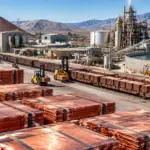

The reality is that tin is the primary component in solder. It is the literal connection point for every semiconductor, every circuit board, and every AI chip currently being manufactured. You can’t build a “shiny AI revolution” without it.
And right now, there isn’t enough to go around.
The AI Appetite: Not Just a Tech Story
The explosion of AI computing has changed the fundamental math of tin demand. In previous cycles, tin was a play on consumer electronics: smartphones, laptops, and home appliances. Those markets are still there, but they’ve been eclipsed by the structural demand from data centers and photovoltaic (PV) installations.
AI servers require significantly more power and processing capability than traditional servers, which translates to a higher density of soldered connections. As the world races to build out sovereign AI capabilities, the demand for high-purity tin has decoupled from the broader economic cycle.
Ironically, the very technology promised to optimize mining and logistics is driving the shortage that could throttle its own growth. We’ve seen similar trends in other critical minerals, where innovation struggles to solve supply deficits faster than mergers or acquisitions.
Geopolitical Strangleholds: Myanmar and Indonesia
If you want to understand why 2026 is the inflection point, you have to look at the “Big Three” supply sources: Myanmar, Indonesia, and the Democratic Republic of Congo (DRC). All three are currently hitting a wall.
Myanmar, which holds roughly 15% of global reserves, remains the industry’s biggest headache. Mining in the Wa province was suspended in August 2023. While authorities teased a resumption in March 2025 with new licensing requirements, the reality has been a series of false starts.
A major earthquake in April 2025 further crippled the discussion, leaving the world’s third-largest producer in a state of paralysis. Those who expected a quick return to “normal” were delusional. You can’t just flip a switch on a mine that has been sitting idle under a complex military-political regime.

Then there is Indonesia. The government’s crackdown on illegal mining and a tightening of export permits have created a “start-stop” rhythm that is hammering smelters. While exports recovered slightly in mid-2025, reaching roughly 37,551 tonnes, the fourth quarter saw a sharp decline.
The strategic calculus here isn’t subtle: Indonesia wants to move up the value chain, much like they did with nickel. But tin isn’t nickel, and the global market doesn’t have the luxury of waiting for Indonesia to build out a downstream processing empire.
The African Bottleneck
In the DRC, the situation is even more volatile. While production volumes have been resilient, the infrastructure to get that tin to market is crumbling. Tanzania’s closure of the Dar es Salaam port: a critical export route for African concentrates: has forced miners to seek alternative, longer, and more expensive paths to the coast.
These logistical hurdles are creating a massive processing bottleneck. China-based smelters in Yunnan and Jiangxi, which the world relies on to turn ore into refined metal, operated at 50% capacity for much of 2025. They have the furnaces; they just don’t have the concentrate.
As supply chains tighten, we are seeing a shift in how these projects are funded. Traditional equity is being replaced by more creative structures as investors look for ways to hedge against this volatility. Many are asking whether royalty or streaming deals are the only way to secure long-term supply in such a high-risk environment.
Why 2026 is Different
What makes the 2026 crunch particularly nasty is the lack of a safety net. Global tin stocks are at historic lows. Usually, a price spike of this magnitude would trigger a wave of secondary supply: recycling. But the “thrifting” of tin in previous years (making solder joints smaller) means there is less metal to recover from old electronics.
Furthermore, the mining industry has been hesitant to greenlight new large-scale tin projects. It’s a specialized market with a history of price manipulation and extreme volatility. Most majors prefer to chase copper or iron ore, leaving tin to mid-tier players who often lack the capital to weather a five-year development cycle.
We’ve seen this play out with companies like BHP, which has famously shunned M&A mania to focus on internal pipelines. But in the tin space, there is no “internal pipeline” of size waiting to save the day.

The Road Ahead: Navigating the Deficit
So, where does this leave us for the remainder of 2026?
- Elevated Floors: Even if Myanmar resumes full production tomorrow: which it won’t: the “new normal” for tin prices has likely moved permanently higher. The cost of ESG compliance, particularly in the DRC and Indonesia, has added a structural layer of expense that wasn’t there five years ago.
- Substitution Limits: While engineers are desperately looking for alternatives to tin-based solder, there are no easy wins. Lead is toxic and largely banned in electronics; other alloys either have higher melting points (which damage chips) or lower conductivity.
- Regional Price Spreads: Just as we saw with gallium and germanium export controls, we expect to see a growing gap between LME prices and local premiums as Western manufacturers scramble to secure “non-conflict” and “reliable” supply.
A Stark Assessment
The global tin market is no longer a niche concern for a few smelters in Asia. It has become a strategic chokepoint for the 21st-century economy.
The Coface report confirms what the price action has been screaming: The supply-demand imbalance is not a temporary glitch. It is a fundamental realignment. Between the paralysis in Myanmar, the regulatory crackdowns in Indonesia, and the relentless demand from the AI sector, the market is trapped in a pincer movement.
Investors and operators who are waiting for a return to $20,000 tin are chasing a ghost. 2026 is the year the market finally realized that you can’t build a digital future on a foundation of crumbling supply.
The crunch isn’t coming. It’s already here.