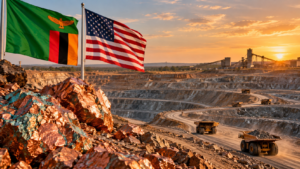
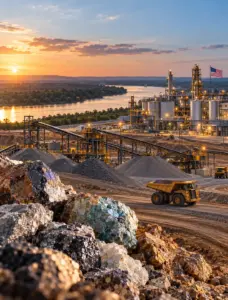
The United States is currently staring at a supply chain map that should make any defense contractor or EV manufacturer lose sleep. China doesn’t just lead the rare earth magnet market; it owns it. We are talking about a near-total stranglehold on the high-performance neodymium-iron-boron (NdFeB) magnets that move everything from F-35 fighter jets to the motor in your Tesla.

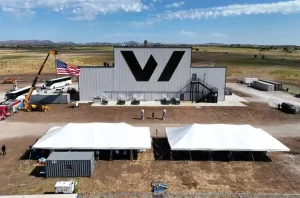
But the narrative is shifting. MP Materials just greenlit its $1.25 billion “10X” manufacturing campus in Northlake, Texas.
This isn’t a pilot plant or a symbolic gesture. It is a massive, 120-acre industrial statement of intent aimed directly at breaking the Chinese monopoly. When this facility hits its stride in 2028, the strategic calculus of global manufacturing changes overnight.
Here is the reality check: for decades, the West outsourced the “dirty” work of rare earth processing and magnet fabrication. We took the easy path of cheap imports and ignored the massive strategic vulnerability we were building. Those chickens are finally coming home to roost, and the 10X facility is the first real attempt to build a wall against that dependency.
The 10,000-Ton Reality Check
The numbers coming out of the Northlake announcement are staggering. MP Materials is targeting an annual capacity of 10,000 metric tons of NdFeB magnets.
More Read

To put that in perspective: that is enough to power approximately 5 million electric vehicle motors every single year.

This isn’t just about scaling up; it’s about vertical integration. The magnets produced in Northlake won’t rely on overseas precursors. The raw materials: the neodymium-praseodymium (NdPr): will come directly from MP’s Mountain Pass facility in California.

More Read

The logistics are clean: mine in California, refine in California, and manufacture in Texas. It creates a closed-loop domestic supply chain that is insulated from geopolitical whims and shipping lane disruptions. In a world where copper supply risks and critical mineral shortages are the new normal, this level of control is the ultimate competitive advantage.
A Pentagon-Backed Fortress
The most telling detail of the Northlake expansion isn’t the price tag: it’s the partner. This project is a formal public-private partnership with the U.S. Department of War (DoD).
In July 2025, the DoD stepped in with a long-term demand certainty agreement. This includes a 10-year Pentagon offtake commitment. That is the kind of backstop most mining and manufacturing companies would kill for. It effectively de-risks the $1.25 billion capital expenditure.
The strategic calculus here isn’t subtle: the U.S. government has decided that it can no longer rely on a “just-in-time” delivery model from a geopolitical rival for its most sensitive military hardware.
The 10X facility is, for all intents and purposes, a national security asset disguised as a commercial factory. It’s a move we’ve seen echoed in other sectors, such as the record-high central bank gold reserves seen earlier this year as nations scramble for tangible security.
Breaking the Technical Stranglehold
Manufacturing NdFeB magnets is easy. Manufacturing them efficiently without relying on heavy rare earth elements (HREEs) controlled by China is the hard part.
China has historically used its dominance in heavy rare earths like dysprosium and terbium to maintain leverage. If you want high-performance magnets that can withstand the heat of an EV motor or a wind turbine, you traditionally needed those heavy elements.
MP Materials is betting on its “Grain Boundary Diffusion” (GBD) technology to break that link.
GBD allows the manufacturer to apply heavy rare earths only where they are most needed: at the edges of the magnet’s crystalline structure: rather than saturating the entire alloy. This process significantly reduces the amount of heavy rare earths required while maintaining high thermal stability.
It’s a technical “cheat code” that allows MP to stretch its limited supply of HREEs further than its competitors. Per facility. That’s not a typo. By optimizing the material science, they are making the Chinese supply advantage less relevant.
The Texas Incentive Play
Why Northlake? Why now?
Texas is becoming the de facto capital of the “new” American industrial base. The state’s incentive package for MP Materials totals approximately $200 million over the next decade. This includes $66 million in direct grants from the Texas Enterprise Fund and the Texas Semiconductor Innovation Fund.
But it’s not just about the cash. It’s about the labor and the energy.
The Northlake site is located less than 10 miles from MP’s existing Independence facility in Fort Worth. This creates a regional hub of expertise. The project will create more than 1,500 direct manufacturing and engineering jobs.
In an era where ESG reporting is changing how companies access capital, building in a jurisdiction like Texas: which has streamlined permitting and a massive talent pool: is a move toward operational efficiency that can’t be ignored.

Commercial Offtake: The Big Three and Beyond
While the Department of War provides the floor, the ceiling for the 10X facility is set by the private sector.
MP Materials isn’t building this on a “hope and a prayer.” They have secured long-term commercial commitments from General Motors (GM) and Apple.
For GM, this is about surviving the transition to electrification. You can’t build a fleet of EVs if your motor supply chain is subject to Chinese export bans. For Apple, it’s about securing the magnets used in everything from haptic engines to MacBook speakers, all while meeting increasingly stringent “green” supply chain audits.
The recycling component is also critical. The Northlake campus will feature a dedicated recycling circuit. Scrap generated during the magnet fabrication process won’t be sold off; it will be fed back into the system in Texas and California. This circularity is no longer a “nice-to-have” feature; it is a requirement for companies trying to shield themselves from the M&A mania and price volatility currently hitting the critical metals sector.
Timeline and Key Risks: The 2028 Horizon
The ground is breaking imminently. Engineering is done. Equipment procurement is already underway. But 2028 is the year everything hinges on.
That is the targeted date for full commissioning. Between now and then, several risks loom:
- Commissioning Delays: Industrial projects of this scale rarely go perfectly. Any delay in the “10X” ramp-up keeps the U.S. dependent on Chinese imports for longer than the Pentagon is comfortable with.
- Commodity Price Wars: China has historically responded to foreign competition by flooding the market to crash prices, making domestic production in the West look uneconomical. While the DoD offtake helps, MP will still need to compete on the open market for its commercial contracts.
- Technological Leapfrogging: While NdFeB is the gold standard today, the industry is constantly looking for rare-earth-free alternatives. If a breakthrough in iron-nitride or other magnet technologies occurs before 2028, the “10X” facility could face a shifting demand landscape.
However, the “10X” name isn’t just marketing fluff. It represents a ten-fold increase in MP’s potential magnetics output. They aren’t just building a factory; they are building a hedge against a future where critical minerals are used as weapons of economic warfare.

The Bottom Line
The MP Materials expansion in Northlake is a pivot point for the North American mining and manufacturing industry. It proves that with enough capital, government backing, and technical ingenuity, the “unbreakable” grip of foreign monopolies can be challenged.
It’s the same spirit we see in Hecla’s $55M exploration blitz or the aggressive moves in copper consolidation. The industry is waking up to the fact that waiting for a better price environment is a losing strategy. You either build the supply chain now, or you get left behind.
By 2028, the “10X” facility won’t just be a line item on a balance sheet. It will be the heartbeat of a new, domestic rare earth economy. Whether it can survive the inevitable Chinese counter-response is the $1.25 billion question.
For now, the strategic calculus is clear: the U.S. is finally playing the long game. And in the world of critical minerals, the long game is the only one that matters.