The United States hasn’t built a primary aluminum smelter since the Ford administration. That isn’t just a historical footnote; it is a strategic failure of the highest order. For five decades, the American industrial machine has watched its domestic smelting capacity wither, choosing instead to outsource the very backbone of its infrastructure to the global market.

Now, the drought is ending.
Emirates Global Aluminium (EGA) and Century Aluminum have officially greenlit a joint venture to construct a massive 750,000-tonne primary aluminum smelter in Inola, Oklahoma. At a projected cost of $1.25 billion, this isn’t a modest expansion or a facility “refresh.” It is a massive, high-stakes bet on the re-industrialization of the American heartland.
The 85% Problem: A Supply Chain Crisis
Here’s the reality nobody in Washington wants to admit: the U.S. is currently addicted to imported aluminum. Approximately 85% of domestic demand is met by foreign producers. We are essentially renting our industrial security from abroad. This level of dependence is dangerous, especially as aluminum becomes a critical mineral for the energy transition, defense, and the “shiny AI revolution” that requires massive amounts of electrical infrastructure.
The Inola project represents the first major attempt to break this stranglehold. By adding 750,000 tonnes of annual capacity, this single plant will more than double current U.S. primary production. That is not a rounding error. That is a total recalibration of the domestic supply chain.
More Read


The Strategic Calculus: EGA Meets Century
The partnership structure here isn’t subtle. It’s a marriage of technical dominance and local operational muscle. EGA, the world’s largest “premium aluminum” producer, will hold a 60% stake in the joint venture. They are bringing the brains: specifically their state-of-the-art EX smelting technology. This is arguably the most advanced smelting tech ever deployed on American soil, focusing on energy efficiency and higher-purity output.
Century Aluminum, holding the remaining 40%, brings the boots-on-the-ground experience of navigating the U.S. regulatory and labor landscape. This isn’t their first rodeo, but it is certainly their biggest. The project is scheduled to break ground by the end of 2026, with the first liquid metal expected to pour by the end of the decade.
More Read
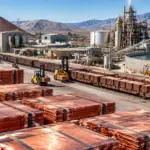
The timeline is aggressive, but the market can’t wait. As we’ve seen in other sectors, like the copper crunch currently hammering global markets, waiting until a shortage is critical is a recipe for fiscal disaster.
The Economic Multiplier in Inola
When a project of this scale lands in a town like Inola, the numbers get big, fast. We are talking about 1,000 permanent, direct jobs at the smelter itself. These aren’t temporary gig-economy roles; these are high-paying, technical positions that form the basis of a local economy. During the construction phase, that number swells to 4,000 workers.
But the real story is the multiplier effect. Century Aluminum CEO Jesse Gary has been vocal about how domestic production attracts adjacent industries. We’re already seeing it. U.S. Aluminum Company: an Oklahoma firm owned by the Plotkin family: has already signed an agreement to explore a fabrication plant right next door.
The logic is simple: why ship liquid aluminum across the country when you can build a fabrication plant at the source? This “fence-line” development model reduces transport costs, slashes carbon footprints, and creates a localized industrial hub for the aerospace, automotive, and defense sectors.
Technology: The “EX” Advantage
For decades, the knock on U.S. smelting was that it was “old and cold”: running on outdated, inefficient technology that couldn’t compete with the subsidized, modern plants in the Middle East or China.
EGA’s EX technology changes that narrative. By utilizing higher amperage and more efficient cell designs, the Inola plant aims to produce more metal with less electricity. In an era where ESG reporting and carbon footprints determine access to capital, being the “greenest” smelter on the block isn’t just a PR win: it’s a financial necessity.
| Feature | Oklahoma Smelter (EGA/Century) | Traditional US Smelter (Legacy) |
|---|---|---|
| Annual Capacity | 750,000 Tonnes | 150,000 – 250,000 Tonnes |
| Technology | EGA EX (Advanced) | Pre-1980s Design |
| Primary Markets | Aerospace, Defense, EVs | General Construction, Foil |
| Projected Jobs | 1,000 Permanent | Declining/At Risk |
| Investment | $1.25 Billion | Maintenance Only |
M&A and the 2026 Outlook
The timing of this announcement isn’t accidental. The mining and metals industry is currently in the middle of a massive consolidation wave. We are seeing M&A mania as companies overpay for growth in a desperate bid to secure supply chains. Instead of buying an existing, decaying asset, EGA and Century are building the future from scratch.
This move signals a shift in how global players view the U.S. market. It’s no longer just a place to sell metal; it’s a place to produce it. The combination of local energy availability in Oklahoma and the desire for “near-shoring” critical materials has made the U.S. attractive for major capital expenditure again.

The Risks: Power and Policy
Of course, no $1.25 billion project is without its “grim” realities. The biggest hurdle for any aluminum smelter is power. Smelting is essentially the process of turning electricity into solid metal. If Oklahoma’s grid cannot provide stable, affordable, and increasingly “green” power, the economics of this project could sour quickly.
Then there’s the regulatory side. Building a new smelter in the U.S. involves a gauntlet of environmental permits that can sink even the best-funded projects. While the state of Oklahoma has been incredibly supportive, the federal landscape is always shifting. Investors should watch the permitting process through 2026 as a bellwether for the project’s success. If they hit a snag here, the “end of the decade” production target will start to look like wishful thinking.
Why This Matters for Investors
If you are an investor in the base metals space, you need to understand that the “globalized” model of the 2000s is dead. We are entering an era of regionalization. This Oklahoma project is the first major domino to fall in the US aluminum sector, much like how Hecla is doubling down on exploration to secure domestic silver reserves.
Securing the supply chain is the new gold rush.
The $1.25 billion EGA and Century are putting into the ground in Inola isn’t just for 750,000 tonnes of metal. It’s for the right to control a piece of the American industrial future. The 85% import figure is a glaring vulnerability that the market is finally moving to correct.
The Bottom Line
2026 will be the inflection point. When construction begins in Inola, it will mark the end of a 50-year retreat for American smelting. It is a massive undertaking, fraught with technical and regulatory risks, but the alternative: continued total dependence on foreign imports: is no longer an option.
The strategic calculus is clear: you can’t have a modern economy without aluminum. And you can’t have a secure economy if you don’t make it yourself. EGA and Century Aluminum are betting $1.25 billion that the U.S. is ready to get back into the game.
They’re right. And the rest of the industry is finally waking up to that uncomfortable truth. The clock is ticking on the end-of-decade production goal. This isn’t just a plant; it’s a test case for whether the U.S. can still build the big things that matter.

Key Project Data Points:
- Total Investment: $1.25 Billion.
- Target Capacity: 750,000 tonnes/year.
- Location: Inola, Oklahoma.
- JV Split: EGA (60%), Century Aluminum (40%).
- Timeline: Construction start 2026; Production 2029-2030.
- Jobs: 1,000 direct, 4,000 construction.
- Impact: Doubling current U.S. primary production capacity.
The mining and metals landscape is shifting beneath our feet. From autonomous haulage lessons to massive greenfield smelters, the industry is forced to evolve or fade away. Oklahoma is now the front line of that evolution.