The U.S. government is finally admitting what the mining industry has known for a decade: you cannot fight a modern war with a hollowed-out supply chain.

For years, the domestic critical minerals conversation focused on lithium and rare earths. Meanwhile, a quieter crisis was brewing in the shadows of the munitions industry. Now, the bill has come due. The Department of War, the historically accurate moniker the DoD is increasingly operating under, has just cut a $27 million check to United States Antimony Corporation (UAMY).
This isn't just another government grant. It is a desperate, calculated move to resuscitate a domestic antimony industry that has been on life support while Beijing and Moscow tightened their grip on the global throat.
$27 million. In the world of federal defense spending, that is a rounding error. But in the context of U.S. mineral independence, it is the most significant investment in domestic antimony refining in half a century.
The Antimony Stranglehold: A 75% Problem
Here is the uncomfortable truth nobody wants to admit: the U.S. military is currently dependent on its two primary geopolitical rivals for the very material needed to fire its weapons.
More Read

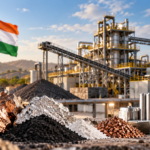
China and Russia control roughly half of the world's antimony reserves. More importantly, they control the processing. China alone accounts for nearly 60% of global production. When Beijing announced export restrictions on antimony in late 2024, the market didn't just flinch, it broke. Prices surged past $40,000 per metric ton, a massive jump from the $22,000 levels seen just a year prior.

That is a 180% increase in the cost of a primary defense input.
Antimony is the "Great Hardener." It is essential for lead-acid batteries, but its role in the defense sector is where the panic starts. It is used in everything from armor-piercing bullets and night vision goggles to infrared sensors and nuclear weapon components. Without it, the "Arsenal of Democracy" is just an empty warehouse.

US Antimony: The Last Smelter Standing
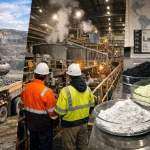
The $27 million Defense Production Act (DPA) funding is laser-focused on United States Antimony Corporation. Why? Because UAMY operates the only primary antimony smelter in the United States.
Located in Montana, this facility is the lone bottleneck through which any domestic antimony strategy must pass. The DPA Title III funding is designed to expand this Montana smelter and, more critically, to secure the feedstock required to keep it running.
The investment strategy follows two distinct paths:
- Extraction and Refining: Expanding the throughput at the Montana site to handle domestic and North American ores.
- Exploration: Funding exploration efforts in Alaska to identify new, high-grade stibnite deposits (the primary ore of antimony).
The goal is simple: decouple the processing. Currently, even antimony mined in friendly jurisdictions often takes a detour through Chinese refineries. As we’ve seen with the global battery revolution, owning the mine is only half the battle. If you don't own the smelter, you don't own the mineral.
The Munitions Crisis Meets the Grid
While the Department of War is driving this investment for the sake of tactical superiority, there is a secondary driver: the energy transition.
Antimony is becoming a critical player in the next generation of grid-scale storage. Liquid metal batteries, which use an antimony-calcium chemistry, are being touted as the long-duration storage solution the green energy grid desperately needs. These batteries are cheaper, safer, and longer-lasting than lithium-ion equivalents for stationary storage.
But you can't build a green grid with Russian ore.
The U.S. is facing a dual-front war for this material. On one side, the Pentagon needs it for projectiles. On the other, the Department of Energy needs it for decarbonization. They are both competing for a supply that, until this month, was largely controlled by the Kremlin and the CCP.

Skillings Intelligence: A Late Start in a Long Race
Is $27 million enough?
To put it bluntly: No. It’s a start, but it’s decades late.
The Department of War's investment in UAMY is part of a broader $1 billion push to rebuild domestic stockpiles, but the infrastructure deficit is staggering. While the U.S. is just now breaking ground on its first new aluminum smelter in 50 years, China has spent twenty years perfecting its vertical integration of the antimony, tungsten, and rare earth markets.
The UAMY injection is a tactical move, but the strategic victory requires more than just one company in Montana. It requires a fundamental shift in how the U.S. permits and supports mining. You cannot have mineral security while maintaining a 10-year permitting timeline.
Industry leaders at recent industry conferences have flagged this as the "critical moment" for mining’s transformation. The UAMY funding suggests the message is finally reaching the Pentagon, but the execution risk remains high.
The Alaska Gambit
The most intriguing part of the UAMY announcement is the focus on Alaska. Historically, Alaska has been a treasure trove of critical minerals, but the logistical hurdles are legendary.
By targeting Alaska for exploration, the U.S. is looking for a "Tier 1" asset that can feed the Montana smelter for decades. This isn't just about finding a little bit of ore; it's about establishing a domestic supply chain that is immune to South China Sea blockades or Russian export bans.
However, exploration is a slow game. Even with federal tailwinds, moving from a discovery in the Alaskan wilderness to refined antimony in a Montana warehouse is a multi-year journey. The clock is already ticking.

The Bottom Line for Investors and Operators
For the mining industry, the UAMY deal signals that the "security premium" is now a permanent fixture of the market.
If you are producing critical minerals in a NATO-aligned jurisdiction, the Department of War is now your most important potential customer. We are moving away from a "lowest cost" procurement model toward a "lowest risk" model.
The strategic calculus isn't subtle:
- Price Volatility: Expect antimony prices to remain high and volatile as China uses its export quotas as a geopolitical lever.
- Government Intervention: The DPA is back in a big way. Expect more direct equity-like investments into domestic refiners.
- Consolidation: The U.S. cannot afford a fragmented supply chain. Companies like UAMY are becoming strategic assets that the government will not allow to fail.
What Happens Next?
The $27 million will go toward immediate capacity upgrades. Watch for UAMY's quarterly reports to see how quickly they can scale the Montana facility. If they can prove that domestic refining is viable at scale, expect a much larger round of funding: likely in the hundreds of millions: to follow.
The war for antimony is just the opening salvo. As the U.S. tries to claw back its industrial base, the friction between geology, policy, and geopolitics will only intensify.
The "Department of War" has made its move. Now, the industry has to deliver.
Social Media Snippet (LinkedIn/X):
The U.S. is fighting back against the China-Russia antimony monopoly. The DoD just injected $27M into United States Antimony (UAMY) to revive domestic smelting and exploration. Is it enough to secure the munitions supply chain? Read our full analysis on the "Great Hardener" and the new DPA strategy. #Antimony #MiningNews #CriticalMinerals #UAMY #DefenseProductionAct