The global race to secure critical minerals is increasing the importance of mining, but funding for the governance systems overseeing mineral development is coming under pressure. A March 2026 assessment by the Trust, Accountability and Inclusion Collaborative (TAI) identifies a potential mismatch between rising governance needs and tightening financial support, raising questions about how mineral resources are managed and mining’s benefits distributed.

The report, Thinking Strategically About Mineral Governance Funding: Perspectives on Current and Future Priorities, examines where funding flows, which organisations receive it and what activities it supports. Its findings point to shifting donor priorities that could leave some longstanding areas of transparency, accountability and public participation with less support.
A funding gap beyond mine development
Investment in mines and processing facilities is only one part of developing critical minerals supply chains. Mineral governance funding supports different functions, including institutional capacity, regulatory oversight, transparency initiatives, civil society participation and public accountability.
These functions influence how producing countries manage mineral wealth and address the social, environmental, economic and political consequences of extraction. Mining can create opportunities for economic development, but those benefits are not guaranteed.
TAI identifies contracting official development assistance and the anticipated scaling back of support by some established philanthropic funders as pressures on mineral governance funding. The concern is that resources for governance may become more constrained just as the demands on governance systems increase.
More Read
The report does not calculate a dollar-denominated gap between mining investment and governance spending. Its findings instead highlight a funding challenge within the institutions and organisations responsible for overseeing mineral development.

What the funding scan found
The assessment compiled a database of 380 active mineral governance activities covering July to October 2025. Researchers also interviewed 22 representatives or consultants from 21 funding entities and 16 representatives from 15 implementing organisations. Surveys received three responses from funders and 11 from implementing organisations.
The findings indicate growing interest in critical energy transition minerals and greater attention to producer-country governments. Some funders also anticipate directing more resources towards national civil society organisations and local actors.
More Read
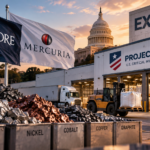
However, the report identifies concerns about declining support for longstanding work on transparency, accountability and participatory governance. Interviewees also raised the possibility of a shift from core funding towards restricted, project-based grants, alongside reduced support for global standards.
The dataset reveals a concentration in private-foundation activity. Of 91 recorded activities, 53 came from a single foundation that researchers expect may reduce its mineral governance funding. These figures count activities, not financial allocations. They therefore do not establish the foundation’s share of total funding or quantify the potential reduction in spending.
The findings also require caution because the scan is not a comprehensive financial census. Its evidence combines recorded activities with interviews, survey responses and anticipated funding priorities. It cannot establish definitive spending trends across the entire sector.
Local capacity and global oversight
A greater focus on producer-country institutions could bring resources closer to governments and communities dealing directly with mining. Local organisations may have a stronger understanding of regional conditions, community concerns and institutional challenges.
But the shift also presents trade-offs. Global organisations contribute to international standards, connect stakeholders across jurisdictions and bring local experiences into wider policy discussions. Reduced support for these functions could weaken connections between local governance challenges and international initiatives.
The report identifies South Asia, the Middle East and North Africa, and Europe and Central Asia as regions receiving comparatively limited attention in the funding landscape examined. These findings describe the scan’s coverage, not a definitive ranking of all global mineral governance funding.
Implications for mining stakeholders
For mining companies, investors and producing governments, the findings raise questions about the institutional capacity supporting mineral development. Transparent decision-making, effective oversight and public participation are important elements of the governance environment in which projects operate.
The report does not establish that reduced governance funding has caused permitting delays, project cancellations or financial losses. It identifies concerns about the sustainability of governance efforts, rather than quantified project-level consequences.
Commissioned by the BHP Foundation, the assessment is intended to inform discussions across the natural resource governance sector. The Foundation’s Natural Resource Governance Program is scheduled to conclude in 2026. The report states that its findings and conclusions are those of its authors.
The funding question ahead
TAI’s central finding is that funding priorities, delivery models and institutional needs may be moving out of alignment. The assessment points to better coordination, flexible funding and closer attention to local political and institutional conditions as areas for consideration.
For the critical minerals sector, securing capital for extraction and processing is only part of the challenge. The resources available to support accountable mineral development remain a separate consideration, one that cannot be measured through mining investment totals alone.