2026 Lithium Power Map : Early Access Open ($59) | Get the latest sector data and secure your copy here: https://skillings.short.gy/LithiumPreSale

By Salini Krishnan
WASHINGTON : The World Bank and International Monetary Fund (IMF) must fundamentally reshape their lending mandates to prioritize critical mineral security, U.S. Treasury Secretary Scott Bessent told global finance leaders this week.
Speaking at the 2026 IMF/World Bank Spring Meetings, Bessent argued that the current international financial architecture is ill-equipped for a world where a single nation: China: controls upwards of 90% of the processing for rare earth elements and other essential battery metals. The Treasury’s push marks a significant escalation in Western efforts to de-risk supply chains by utilizing the multi-billion-dollar balance sheets of the Bretton Woods institutions.
“The era of viewing mining projects as secondary to general development goals must end,” Bessent stated during a closed-door session with G7 finance ministers. “To ensure global economic stability and the success of the energy transition, the World Bank must act as a first-mover in de-risking strategic mineral projects in the Global South. If we do not provide the capital, the dependency on non-market economies will become an irreversible bottleneck.”
More Read

The 90% Monopoly Challenge
The urgency of Bessent’s directive stems from the persistent dominance of China in the midstream and downstream sectors of the mineral economy. While mining occurs globally, the chemical refinement and metallurgy required to turn raw ore into battery-grade materials remain heavily concentrated in Chinese industrial hubs.

For many developing nations, the barrier to entering this market is not a lack of resources, but a lack of infrastructure and high-cost capital. Bessent’s proposal suggests that the World Bank pivot toward “strategic project financing,” providing low-interest loans and guarantees for extraction and processing facilities in Africa, Southeast Asia, and Latin America.
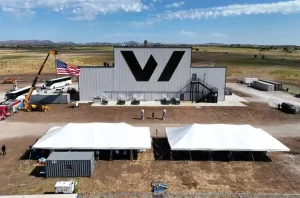
By focusing on these regions, the U.S. hopes to create a “China-plus-one” strategy for the global mining industry. This shift is already being reflected in private sector movements, such as the Vanguard Mining strategic foothold in the Athabasca Basin, which highlights how Western operators are aggressively securing jurisdictions with lower geopolitical risk.
More Read

A New Mandate for Global Lending
Historically, the World Bank’s mining involvement has focused on governance and regulatory frameworks rather than direct project equity or heavy infrastructure lending. Bessent is calling for a reversal of this trend. The proposal includes:
- Direct Equity Stakes: Encouraging the International Finance Corporation (IFC) to take larger equity positions in junior mining companies that hold high-grade assets.
- Infrastructure Tie-ins: Funding the rail, power, and water infrastructure specifically required for remote mining sites to lower the All-In Sustaining Costs (AISC) for Western-backed operators.
- Refining Hubs: Incentivizing the creation of regional processing centers in “friendly” jurisdictions to bypass the need for shipping raw concentrates to Chinese ports.
This pivot aligns with broader industry trends where operators are finding that 2026 margins favor revamping old pits over the high-risk endeavor of greenfield discovery. If the World Bank provides the necessary “patient capital,” the financial viability of brownfield expansions in emerging markets could shift overnight.
Addressing the Geopolitical Deficit
The Treasury Department’s push is not merely about market economics; it is a defensive maneuver. As the world moves toward a hardware-centric energy grid, the “mineral deficit” is becoming the most significant threat to GDP growth in developed nations.
Recent data suggests that the demand for copper alone is facing a 30% deficit through 2030, a gap that cannot be filled by existing Western mines. By urging the World Bank to fund projects in the “Copper Belt” of Africa and the Andean regions of South America, Washington aims to lock in supply before it is further monopolized by state-backed entities from the East.

“We are seeing a convergence of policy and necessity,” says a senior analyst at Skillings Mining Intelligence. “The World Bank was created to rebuild Europe after World War II. Today, the challenge is rebuilding a global supply chain that is currently brittle and over-centralized. Without institutional backing, the cost of capital for a new lithium or cobalt project in a frontier market is often double what a state-owned enterprise in China might pay.”
Resistance and Realignment
Bessent’s proposal has met with mixed reactions from some member nations who worry that a pivot toward “strategic minerals” might divert funds from traditional poverty-reduction programs or climate adaptation grants. However, the Treasury’s counter-argument is that mineral wealth, if managed through high-standard institutional lending, is the most direct path to industrialization for developing economies.
The inclusion of high-tech minerals on the World Bank’s priority list also reflects the changing nature of the global economy. As highlighted in the Top 10 Mining Innovators powering the AI grid, the minerals required for data centers and artificial intelligence are just as critical as those for electric vehicles.

Market Implications for 2026 and Beyond
For investors and operators, the potential for World Bank de-risking could lead to a surge in activity within junior mining sectors. Government-backed insurance against political risk and currency fluctuation: traditional tools of the World Bank: could make projects in traditionally “high-risk” areas suddenly bankable for commercial lenders.
Furthermore, the focus on rare earth elements (REEs) is expected to intensify. With China’s 90% grip on REE processing, even minor disruptions have massive ripple effects across the defense and aerospace industries. A World Bank-funded REE processing facility in a neutral jurisdiction would be a “black swan” event for the current market structure, likely leading to a re-rating of Western REE assets.
Conclusion: The Strategic Road Ahead
The Spring Meetings in Washington have set the stage for a transformative period in global resource policy. Treasury Secretary Bessent’s call to action serves as a reminder that the “invisible hand” of the market is currently being guided by heavy state intervention elsewhere.
If the World Bank adopts this pivot, the mining industry will see a massive infusion of liquidity directed toward strategic independence. For those tracking the sector, the focus is now on the upcoming G20 summit, where the specific mechanics of a “Critical Minerals Lending Facility” are expected to be debated.

As the geopolitical landscape shifts, the ability of Western institutions to adapt will determine the winners of the 2030 resource cycle. The message from Washington is clear: the status quo of 90% dominance is no longer an acceptable risk.
Market Snapshot: Strategic Metals (April 16, 2026)
| Commodity | Current Price (USD) | 24h Change | YTD Change |
|---|---|---|---|
| Copper (lb) | $4.82 | +1.2% | +14.5% |
| Lithium (Carbonate) | $19,400/t | +0.5% | -2.1% |
| Cobalt (lb) | $16.50 | -0.2% | +8.9% |
| Neodymium (kg) | $84.20 | +2.4% | +11.2% |
2026 Lithium Power Map: The definitive guide to the global lithium supply chain. Secure your early access copy and stay ahead of the margin gravity shift. Get the Report Here