2026 Lithium Power Map : Early Access Open ($59) | Get the latest sector data and secure your copy here: https://skillings.short.gy/LithiumPreSale


By Penny Langford
ALEXANDRIA, Louisiana : Ucore Rare Metals Inc. (TSXV: UCU) (OTCQX: UURAF) has officially reached a critical operational milestone in the development of a domestic North American rare earth supply chain. The company confirmed on Monday, April 20, 2026, that it has received the first commercial-scale shipment of heavy rare earth element (HREE) concentrate at its Strategic Metals Complex (SMC) in Alexandria, Louisiana.
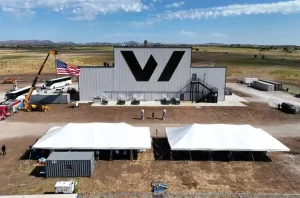
The arrival of the feedstock at the 80,800-square-foot facility at England Airpark marks the transition from the construction and equipment installation phase to active commissioning of the RapidSX™ Commercial Demonstration Plant. For industry observers and policymakers, the event represents more than just a logistical delivery; it is a tangible step toward breaking China’s near-monopoly on the separation and purification of the heavy rare earths essential for high-performance permanent magnets used in electric vehicle (EV) motors, wind turbines, and advanced defense systems.
More Read

Breaking the Midstream Bottleneck
While mining projects for rare earth elements (REEs) have gained momentum across North America and Australia, the “midstream”: the chemical processing required to separate mixed concentrates into individual high-purity oxides: remains the primary bottleneck. Historically, almost all mixed rare earth concentrates produced globally have been shipped to China for final processing.

Ucore’s Louisiana SMC aims to disrupt this flow by utilizing its proprietary RapidSX™ technology. Unlike traditional solvent extraction (SX), which often requires hundreds of stages and massive physical footprints, RapidSX™ is designed to be more efficient, occupying a smaller footprint and significantly reducing separation times.
“The receipt of this first feedstock is the starting gun for our 2026 production ramp-up,” a company representative noted during the offloading process. “We are no longer talking about theoretical capacity; we are now moving into the phase where we prove the scalability of domestic HREE separation on U.S. soil.”
More Read


The intersection of Department of Defense funding and critical mineral security has been a primary catalyst for midstream development in 2026.
Department of Defense Support and Strategic Significance
The development of the Louisiana SMC has been heavily supported by federal initiatives aimed at de-risking the critical minerals sector. Ucore previously secured approximately US$18.4 million in grant funding from the U.S. Department of Defense (DoD) under the Industrial Base Analysis and Sustainment (IBAS) Program.
This funding was specifically targeted at accelerating the construction and procurement of long-lead equipment for the Alexandria facility. In the current geopolitical climate of 2026, the DoD has prioritized the establishment of a “mine-to-magnet” supply chain that does not rely on adversarial nations. Heavy rare earths, particularly Dysprosium (Dy) and Terbium (Tb), are of paramount importance because they allow permanent magnets to maintain their magnetic properties at the high temperatures found in jet engines and missile guidance systems.
The Louisiana facility’s proximity to the Port of New Orleans provides a strategic advantage for importing feedstocks from allied nations, including Australia and Canada, while the local infrastructure at England Airpark supports the heavy industrial requirements of chemical separation.
Timeline and Production Scaling
The Louisiana SMC is scheduled to scale its operations in distinct stages. According to the company’s updated 2026 roadmap:
- Phase 1 (Mid-2026): Commissioning and initial production of 2,000 tonnes per annum (tpa) of total rare earth oxides (TREO).
- Phase 2 (2027): Expansion of processing capacity to 5,000 tpa.
- Phase 3 (2028+): Potential expansion to 7,500 tpa, depending on market demand and additional feedstock agreements.
This phased approach is designed to allow the technical team to optimize the RapidSX™ circuits for various feedstock compositions. The first shipment received today is a heavy rare earth-rich concentrate, which will be used to calibrate the separation of NdPr (neodymium-praseodymium) and the more elusive heavy elements.
For context on the global landscape of these materials, the industry continues to monitor proven rare earth reserves to determine how many years of supply remain available for these high-growth technologies.
Feedstock Diversity: The Key to Resilience
A significant risk for any midstream processor is the consistency and security of feedstock. Ucore has moved to mitigate this by pursuing a “feedstock-agnostic” strategy. While the specific source of the first shipment was not disclosed in the immediate breaking news alert, Ucore has previously explored agreements with various international partners.
In 2025 and early 2026, Ucore intensified negotiations for enriched rare earth concentrates, including potential offtake from the Yangibana project and other emerging miners. By creating a facility capable of processing different mineralogies, Ucore aims to avoid the “single-source” trap that has historically plagued the industry.

2026 Market Outlook and Commodity Dynamics
The rare earth market in 2026 remains volatile but structurally undersupplied for heavy elements. While light rare earth elements (LREEs) like Neodymium and Praseodymium have seen increased production from sites like Mountain Pass in California and Per Geijer in Sweden, heavy rare earths remain scarce outside of Chinese-controlled operations in Myanmar and Southern China.
Projected North American REO Production (2026-2028)
| Facility | Location | 2026 Target (tpa) | Primary Output | Status |
|---|---|---|---|---|
| Ucore SMC | Louisiana, USA | 2,000 | Heavy & Light REO | Commissioning |
| MP Materials | California, USA | 6,000+ | NdPr Oxide | Operational |
| Saskatchewan SRC | Canada | 1,000 | NdPr / Mixed HREE | Scaling |
| Lynas Seadrift | Texas, USA | 2,500 (est) | Heavy REO | Under Construction |
The successful commissioning of the Louisiana SMC could provide a blueprint for other modular processing facilities. This development is part of a broader global battery revolution where the focus has shifted from merely mining the ore to the sophisticated chemistry of refining.
Technical and Economic Risks
Despite the milestone, several risks remain for Ucore as it enters the commissioning phase:
- Technical Scale-up: While RapidSX™ has been proven at the demonstration scale, maintaining purity levels at commercial volumes (99.9%+) is the industry standard requirement for magnet manufacturers.
- Price Volatility: Rare earth prices are subject to rapid fluctuations based on Chinese export quotas and global EV demand. Low prices can squeeze margins for higher-cost Western producers.
- Regulatory Scrutiny: Chemical processing involves the management of reagents and potentially radioactive tailings (thorium/uranium) often found in rare earth ores. Ucore’s Louisiana facility must maintain rigorous environmental standards to ensure long-term social license.

The Louisiana SMC utilizes a modular design to allow for rapid expansion as feedstock availability increases.
Conclusion
The arrival of the first feedstock in Alexandria is a definitive signal that the “Road to 100K” in North American mineral processing capacity is moving from policy papers to industrial reality. For the residents of Alexandria and the broader U.S. manufacturing sector, the Louisiana SMC represents a vital link in a supply chain that has, until now, been almost entirely offshore.
As Ucore begins the complex task of “turning the valves” and processing this initial shipment, the mining world will be watching closely to see if Louisiana can indeed become the new hub for Western rare earth separation.
2026 Lithium Power Map : Early Access Open ($59) | Get the latest sector data and secure your copy here: https://skillings.short.gy/LithiumPreSale