2026 Lithium Power Map : Early Access Open ($59) | Get the latest sector data and secure your copy here: https://skillings.short.gy/LithiumPreSale


By Penny Langford
The global energy landscape in April 2026 is no longer defined by the slow, regulated cadence of traditional utilities. Instead, it is being reshaped by the urgent, capital-heavy demands of the “hyperscalers”: Amazon, Google, and Microsoft. As the computation requirements for generative AI and Large Language Models (LLMs) continue to scale vertically, the bottleneck has shifted from chips to the electrical grid. To bypass this gridlock, Big Tech is moving upstream, emerging as a critical source of finance for the mining and nuclear sectors.
For decades, the relationship between technology and mining was one of customer and supplier. In 2026, that relationship has transformed into a strategic partnership defined by direct equity investments, off-take guarantees, and the financing of Small Modular Reactors (SMRs). The “AI-Energy Nexus” is now the primary driver of capital allocation in the critical minerals space.
More Read

The Death of the Virtual PPA
Until recently, hyperscalers managed their carbon footprints and energy needs through Virtual Power Purchase Agreements (VPPAs): financial instruments that allowed them to claim “green” energy use without actually connecting their data centers to a specific renewable asset. However, as AI data centers now consume several gigawatts of power in single clusters, the physical reality of the grid has caught up with the financial engineering.

Intermittency in wind and solar, coupled with a decade of underinvestment in transmission, has left the U.S. and European grids unable to support the 2026 demand spike. Consequently, hyperscalers are pivoting toward “direct-to-asset” financing. They are no longer just buying credits; they are funding the physical infrastructure required to produce and move electrons.
This shift is most visible in the sudden influx of tech capital into the copper and nuclear sectors. Without massive new quantities of copper for grid expansion and reliable, baseload carbon-free power from SMRs, the AI revolution effectively hits a ceiling.
More Read

Copper: The Red Thread of AI Growth
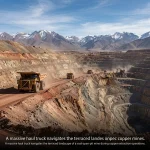
In April 2026, the copper market is facing a structural deficit that has sent prices to record highs. As detailed in the Copper Price Forecast 2026, smelting caps and declining ore grades in traditional jurisdictions like Chile have created a “margin gravity” effect.
Hyperscalers are responding by acting as “anchor tenants” for new mining projects. By signing long-term off-take agreements at fixed premiums, they provide the bankability required for junior miners to secure project financing. In some cases, we are seeing tech firms provide direct bridge loans or equity to expedite the development of high-yield assets.

For example, projects in the Central African Copperbelt and South America are seeing a resurgence of interest not just from traditional mining majors, but from tech-backed consortia. This trend is particularly evident in regions like Zambia, where Makor Resources is targeting expansion to capture the demand for electrification materials.
The Nuclear Solution: SMRs and Data Centers
Perhaps the most significant development in the 2026 AI-Energy Nexus is the direct integration of Small Modular Reactors (SMRs) with data center campuses. Microsoft, Amazon, and Google have all announced or finalized deals to deploy SMR technology to provide behind-the-meter, carbon-free baseload power.
SMRs offer a modularity that fits the hyperscaler model perfectly. Unlike traditional large-scale nuclear plants that take a decade to build, SMRs can be deployed in stages, matching the expansion of a data center cluster. In the current 2026 outlook, the SMR has become the “ultimate battery” for AI.
The financing of these projects has shifted. Rather than waiting for government subsidies or utility-led development, hyperscalers are providing the upfront capital for the first generation of commercial SMR deployments. This direct financing de-risks the technology for the broader market, effectively turning Big Tech into a venture capitalist for the nuclear renaissance.
Bypassing Geopolitical Volatility
The move upstream by tech giants is also a defensive maneuver against resource nationalism and geopolitical instability. As countries rethink their roles in the global supply chain: as seen in the Resource Nationalism trends in West Africa: hyperscalers are seeking “strategic partnerships” that ensure supply security.
By investing in mining technology and infrastructure, tech firms are helping to stabilize supply chains that were previously subject to the whims of the spot market. This includes funding for advanced processing techniques that reduce the environmental footprint of mineral extraction, such as Direct Lithium Extraction (DLE), which is crucial for the backup battery systems integrated into the modern power grid.

The Efficiency Mandate: Modular and Autonomous
Hyperscalers are not just bringing cash; they are bringing a “tech-first” mindset to the mining sector. There is an increasing emphasis on autonomous haulage and AI-driven efficiency. When a tech giant invests in a mine, they often demand the implementation of digital twins and real-time data analytics to ensure that the project meets ESG (Environmental, Social, and Governance) targets while maximizing throughput.
This convergence of “Big Data” and “Big Iron” is creating a new class of mining operations. These sites are increasingly modular, highly automated, and powered by captive energy sources: replicating the architecture of the data centers they serve.

Strategic Outlook for 2026
The entry of hyperscalers into mining finance marks a permanent shift in the industry’s capital structure. For mining companies, this means a new source of deep-pocketed, long-term capital that is less sensitive to short-term commodity price fluctuations and more focused on long-term security of supply.
However, this new nexus also brings risks. The concentration of demand within a few massive tech firms could lead to a “two-tier” mining market: projects that are “tech-grade” (verified green, highly automated, secured supply) and the rest. Furthermore, the reliance on hyperscalers for grid stability raises questions about the long-term role of public utilities.
Key Trends to Watch in H2 2026:
- Direct Equity Stakes: Look for announcements where a major tech firm takes a minority equity position in a copper or lithium junior to fast-track production.
- Grid-Independent SMRs: The first commercial data centers powered exclusively by on-site SMRs will likely move from the planning phase to construction.
- Vertical Integration of ESG: Hyperscalers will deploy proprietary AI tools to track the carbon footprint of every pound of copper from the pit to the data center.
As we look toward the remainder of the year, the AI-Energy Nexus will remain the most influential force in mining finance. Those who understand the intersection of “bits and atoms” will be the ones who navigate this new landscape successfully.