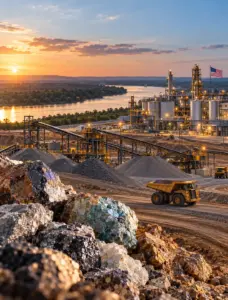
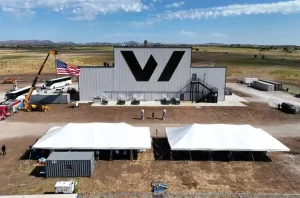
A mining exploration camp situated in the high-altitude Andes Mountains on the Chile-Argentina border.

By Charles Pitts
In the thin, oxygen-starved air of the high Andes, a geological transformation is taking place that could redefine the global copper supply chain for the next half-century. The Vicuña District, a remote mineral belt straddling the border between Argentina’s San Juan Province and Chile’s Atacama Region, has emerged as the most significant “frontier” mining story of 2026.
Led by the Lundin Group and bolstered by a massive strategic partnership with BHP, the district represents a high-stakes play for “giant” porphyry deposits. As the world faces a looming 2026 copper deficit, the industry is watching to see if the Vicuña District can deliver on its promise of becoming a multi-decade production hub.
The Genesis of a Mining Powerhouse
The Vicuña District is not a single mine, but a collection of world-class copper-gold-silver deposits. The district’s rise is the result of decades of persistent exploration by the Lundin family, often operating in environments where others saw too much risk or too little infrastructure.
More Read

In early 2026, the development of this district entered a new phase with the formalization of the Lundin-BHP joint venture (JV). This 50/50 partnership, operating under the banner of Vicuña Corp., consolidated two anchor projects: Josemaria and Filo del Sol. The US$2.1 billion entry price paid by BHP signaled a massive vote of confidence in the region’s geology and the long-term demand for critical minerals.

Anchors of the District: Josemaria and Filo del Sol
The development strategy for the Vicuña District is tiered, focusing on the immediate potential of Josemaria and the massive long-term upside of Filo del Sol.
Josemaria is currently the most advanced project in the district. It is an “oven-ready” porphyry deposit with a clear path to production. In February 2026, the JV partners announced an $18 billion multi-year development plan, with Stage 1 focusing on the Josemaria deposit. This initial phase involves a $7 billion capital expenditure (capex) program aimed at bringing the mine online by 2030.
More Read

Filo del Sol, located just 10 kilometers away, is the geological crown jewel. It is a complex, high-grade core that continues to grow with every drill program. The 2026 integrated technical report confirmed that Filo del Sol’s high-grade core contains 606 million tonnes (Mt) at 1.14% copper equivalent (CuEq).

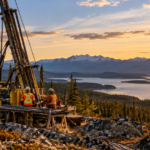
A heavy-duty diamond core drill rig operating on a windswept ridge in the high Andes.
Market Snapshot: Vicuña District Project Comparison (2026 Data)
To understand the scale of the Vicuña District, one must look at the resource estimates and projected output compared to traditional tier-one assets.
| Project | Ownership (2026) | Resource (M&I) | Grade (CuEq) | Key Contained Metals |
|---|---|---|---|---|
| Josemaria | 50% Lundin / 50% BHP | ~200 Mt | 0.73% | 4.5 Mt Cu, 7 Moz Au |
| Filo del Sol | 50% Lundin / 50% BHP | 606 Mt | 1.14% | 4.5 Mt Cu, 9.6 Moz Au, 259 Moz Ag |
| Los Helados | NGEx Minerals | 2.1 Bt (Inferred) | 0.51% | 17.6 Blb Cu, 10.1 Moz Au |
Source: Compiled from 2026 Corporate Fillings and Integrated Technical Reports.
The Policy Tailwinds: Argentina’s RIGI and Geopolitical Shifts
For years, the Argentine side of the Andes was considered a secondary priority compared to the established mining jurisdictions of Chile. However, 2026 marks a turning point in policy. The implementation of the Incentive Regime for Large Investments (RIGI) in Argentina has provided the fiscal stability and legal certainty required for an $18 billion project.
RIGI offers long-term tax stability, reduced corporate tax rates, and exemptions from import duties on essential mining machinery. This policy shift was essential for the Lundin-BHP partnership to greenlight Stage 1 of the development. While Chile remains a mining powerhouse, the Vicuña District showcases how South America’s next great mining frontier is expanding eastward into the San Juan Province.
Technical Challenges: Mining at 4,000+ Meters
The Vicuña District is as challenging as it is rewarding. The deposits are located at elevations exceeding 4,000 meters above sea level. This high-altitude environment presents significant operational hurdles, from logistical supply chains to the physiological impact on the workforce.
The 2026 engineering plan for Josemaria includes the construction of a dedicated power line and a high-altitude processing plant. The partners are also exploring “Stage 2” development at Filo del Sol, which would involve a leachable oxide plant (SX/EW) to produce copper cathode directly on-site, reducing the volume of material that needs to be transported down the mountain.

Copper-gold porphyry ore samples under inspection at a field exploration site.
The Role of Copper in the Energy Nexus
The urgency behind the Vicuña District development is driven by the global energy transition. By 2026, the demand for copper from the electric vehicle (EV) sector and renewable energy infrastructure has outpaced the rate of new mine discovery.
Analysts suggest that for the world to meet its decarbonization targets, several “Vicuña-sized” districts must come online every decade. However, discovered “giant” deposits: those capable of producing over 300,000 tonnes of copper per year: are increasingly rare.
The Vicuña District’s projected average annual output of 395,000 tonnes of copper and 711,000 ounces of gold over its first 25 years positions it as a cornerstone asset for the global market. At peak production in later stages, the district could exceed 500,000 tonnes of copper annually, rivaling some of the largest mines in the world, such as Escondida or Grasberg.
The BHP Synergy: De-risking the Frontier
BHP’s entry into the district is about more than just capital. The diversified major brings immense technical expertise in large-scale open-pit operations and complex logistics. This synergy is intended to de-risk the project for Lundin Mining shareholders while providing BHP with a massive, high-grade growth lever.
“The partnership between Lundin and BHP is a blueprint for frontier mining,” says an industry analyst tracking the region. “Lundin provides the exploration DNA and the local relationships, while BHP brings the ‘big engine’ engineering and the balance sheet to build a $10-plus billion infrastructure footprint.”

A vast open-pit mining excavation in a high-altitude desert environment, reflecting the scale of planned Vicuña operations.
2026 and Beyond: The Exploration Upside
While the market focuses on the development of Josemaria, the exploration potential of the broader Vicuña District remains largely untapped. In 2026, a 50,000-meter drilling campaign is underway at Filo del Sol. This program is not just about expanding the existing resource but testing deeper targets that could link several known mineralized zones.
The district is also home to other significant assets, such as NGEx Minerals’ Los Helados project. As infrastructure: including roads and power: is established for the Lundin-BHP JV, the economics of satellite deposits in the region improve dramatically.
Conclusion: A Generational Asset
The Vicuña District represents the next generation of copper mining. It is a testament to the belief that the world’s future mineral needs will be met not through incremental expansions of old mines, but through the bold development of new, high-grade frontiers.
For investors and industry professionals, the progress at Vicuña Corp. over the next four years will be a primary indicator of the industry’s ability to close the copper supply gap. With Stage 1 engineering advancing and a stable regulatory environment in place, the high-altitude gamble of the Lundin Group appears set to pay off.

Mining industry professionals reviewing operational plans at a South American exploration site.