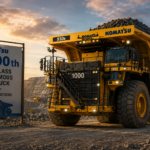
LONDON/BRISBANE : Anglo American PLC has reached a definitive agreement to sell its Australian steelmaking coal portfolio to Dhilmar Limited for a total consideration of up to US$3.875 billion ($3.9 billion), marking the diversified miner’s complete exit from the coal sector.
The divestment, announced Tuesday, includes Anglo American’s interest in five major producing mines and several development projects in Queensland’s Bowen Basin. The deal is a cornerstone of Chief Executive Duncan Wanblad’s strategy to simplify the company’s portfolio and sharpen its focus on “future-facing” metals like copper and iron ore, particularly as the group prepares for a highly anticipated merger with Teck Resources later this year.
Under the terms of the agreement, Dhilmar: a UK-registered private mining group: will pay US$2.3 billion in cash upfront upon completion. The remaining US$1.575 billion is structured as a price-linked earnout over five years, contingent on steelmaking coal prices exceeding specific benchmarks.
The transaction is expected to close by the first quarter of 2027, subject to competition and regulatory approvals.
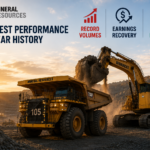
A Portfolio Transformed: The Asset Breakdown
The sale encompasses a massive industrial footprint that has defined Anglo American’s presence in Australia for decades. The assets included in the Dhilmar deal are:

- Moranbah North and Grosvenor (88% interest): Located near Moranbah, these are high-capacity underground longwall operations producing premium hard coking coal (HCC).
- Capcoal (70% interest): A complex comprising both open-cut and underground operations (Grasstree) in the German Creek area.
- Dawson (51% interest): A large-scale open-cut operation near Moura.
- Aquila (80% interest): A relatively new underground longwall operation that recently achieved full production.
- Roper Creek and Development JVs: Various interests in exploration and potential expansion sites across the Bowen Basin.
Moranbah North, which has been in operation since 1998, remains one of the world’s most significant sources of premium hard coking coal. While its environmental permits allow for up to 13.5 million tonnes per annum (Mtpa) of run-of-mine (ROM) coal, its practical saleable capacity typically sits between 5 and 6 Mtpa.
Grosvenor, situated just 15 kilometers away, has faced a more turbulent operational path. Following a localized ignition event in mid-2024, the mine moved into a project phase for safety remediation. Anglo American confirmed that the mine is currently in a staged re-entry process, with 2026 expected to be a critical ramp-up year. For Dhilmar, the successful stabilization and full return to nameplate capacity at Grosvenor represents a significant portion of the deal’s potential upside.

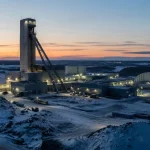
Advanced underground mining technology, including longwall systems, is central to the operations at Moranbah North and Aquila.
Strategic Pivot: The Copper-First Future
The decision to exit steelmaking coal is not merely about offloading assets; it is a calculated repositioning of Anglo American’s balance sheet. The proceeds from the Dhilmar sale, combined with the earlier US$1 billion divestment of the Jellinbah mine, bring the total coal exit proceeds to approximately US$4.9 billion.
Industry analysts suggest that this liquidity is being earmarked to reduce net debt and streamline the company ahead of a proposed tie-up with Teck Resources. By shedding its coal exposure, Anglo American is presenting a “cleaner” ESG profile to institutional investors, focusing heavily on the copper deficit expected to dominate the late 2020s.
“This is the final hurdle in the simplification of Anglo American,” said one London-based mining analyst. “They are betting that the market will value a copper-heavy, coal-free major at a significantly higher multiple than a diversified miner with lingering thermal or metallurgical coal legacies.”
The move mirrors broader industry trends where majors are distancing themselves from carbon-intensive commodities. However, unlike thermal coal, which many miners have exited via spin-offs, Anglo’s steelmaking coal assets have retained high demand due to their essential role in the blast-furnace steel production process.
Steelmaking Coal Market: The 2026 Outlook
Dhilmar’s acquisition comes at a time when the steelmaking coal market is entering a new phase of supply-demand dynamics. While the global push for “Green Steel” (hydrogen-based DRI) is accelerating, the transition remains capital-intensive and slow to scale at a global level.
By 2026, market forecasts suggest that seaborne demand for premium hard coking coal will remain robust, primarily driven by India. With India’s domestic steel production continuing its aggressive expansion to meet infrastructure goals, the demand for high-CSR (Coke Strength after Reaction), low-impurity Australian coal is expected to outpace supply growth.

Operational efficiency and real-time monitoring are critical for managing the high-pressure environments of the Bowen Basin mines.
The earnout structure of the deal: capped at $1.575 billion: is pegged to a benchmark price broadly aligned with Premium HCC at approximately US$259 per tonne. If 2026 prices remain in the forecast band of US$180–$260/t, Dhilmar will effectively pay for the acquisition through the mines’ own cash flow. However, any supply shocks: recurrent in the cyclone-prone Queensland region: could trigger significant earnout payments back to Anglo American.
Who is Dhilmar Ltd?
Dhilmar Limited, though less of a household name than the mining majors, has been aggressively expanding its footprint. Registered in the UK, the group gained significant attention in 2025 following its acquisition of the Éléonore gold mine in Canada from Newmont.
Led by a management team with extensive experience in both underground and surface operations across North America and Africa, the Australian coal acquisition represents a massive jump in scale for the company. Dhilmar’s strategy appears to involve acquiring high-quality, cash-generative assets that larger majors are divesting for ESG or strategic reasons.
“Dhilmar is positioning itself as the new mid-tier champion of essential industrial commodities,” noted a Brisbane-based mining consultant. “They aren’t afraid of the complexity of underground longwalls or the regulatory scrutiny of the coal sector, provided the asset quality is top-tier.”

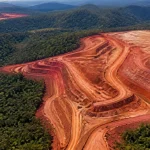
The acquisition includes a massive fleet of surface mining equipment across the Dawson and Capcoal open-cut sites.
Execution Risks and Regulatory Hurdles
Despite the binding agreement, the road to completion by Q1 2027 is not without obstacles. The transaction must navigate several layers of approval:
- Foreign Investment Review Board (FIRB): Given the scale of the Australian assets, Australian federal oversight will be stringent, particularly regarding Dhilmar’s funding structure and operational commitments to the local workforce.
- Queensland Government: Royalties and environmental bonds are significant factors in Bowen Basin transactions. The state government will require assurances that Dhilmar can maintain the rigorous safety standards required for underground gassy mines.
- Pre-emption Rights: Some of the joint venture partners in assets like Dawson or Capcoal may hold pre-emption rights, though Anglo American has indicated it expects the Dhilmar deal to proceed as structured.
For the Australian mining sector, this divestment signals the end of an era. Anglo American has been a staple of the Queensland coal landscape for generations. As the company exits to chase the copper-driven energy transition, it leaves behind a consolidated, high-performing portfolio that will now anchor Dhilmar’s entry into the top tier of global coal producers.